Basic hollandaise sauce
This basic hollandaise sauce combines rich butter, creamy egg yolks, and zesty lemon for a classic French condiment. It's perfect for drizzling over eggs benedict, vegetables, or fish.
Cook time 13 min
Prep time 10 min
Ingredients:
3 yolks1 tbsp water
2/3 cup butter
2 tbsp lemon juice
salt & pepper to taste
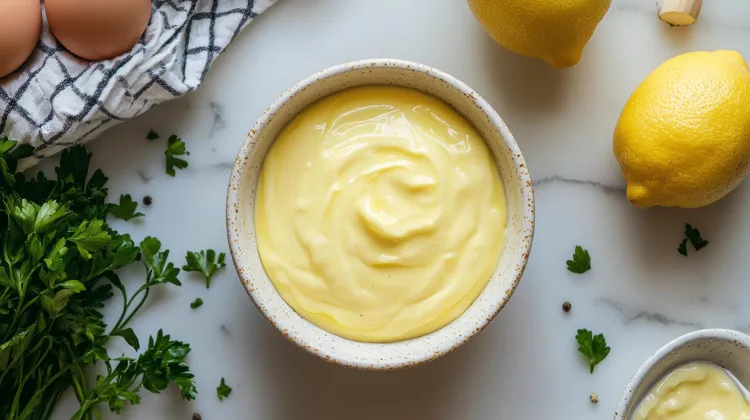
Hollandaise sauce is a classic French sauce known for its rich, creamy texture and tangy flavor. It is a staple in many gourmet dishes, often served with eggs benedict, steamed vegetables, or grilled fish. This recipe for basic hollandaise sauce is simple and perfect for both beginners and experienced cooks alike.
Instructions:
- Melt the butter over low heat in a small saucepan. Once melted, keep it warm over very low heat while you prepare the egg mixture.
- In a heatproof bowl, add the 3 egg yolks and 1 tablespoon of water.
- Whisk vigorously for about 2 minutes until the mixture is pale and frothy.
- Set up a double boiler by filling a medium saucepan with a few inches of water. Bring the water to a simmer over medium-low heat.
- Place the heatproof bowl with the egg yolk mixture on top of the saucepan. Ensure that the bottom of the bowl does not touch the water.
- Continuously whisk the egg yolk mixture over the simmering water. Be careful to keep the heat low to avoid scrambling the eggs.
- Continue whisking until the mixture thickens and doubles in volume, about 3-5 minutes.
- Once the yolk mixture has thickened, slowly start to add the melted butter. Pour in a few drops at a time while continuously whisking to create an emulsion.
- Gradually increase the amount of butter you pour in, ensuring that each addition is fully incorporated before adding more. Continue this process until all the butter is blended into the yolk mixture.
- Remove the bowl from the heat. Whisk in the 2 tablespoons of lemon juice slowly to combine.
- Season with salt and pepper to taste, and whisk until fully combined.
- Hollandaise sauce should be served warm. If needed, you can keep it warm for a short period by placing the bowl back over the saucepan with simmering water, but be careful not to overheat it.
Mastering the basic hollandaise sauce opens up a world of culinary possibilities. This versatile sauce can elevate everything from breakfast dishes to elegant dinners. With a little practice and attention to detail, you'll be able to create a hollandaise sauce that impresses your family and friends. Enjoy your culinary adventure!
Basic hollandaise sauce FAQ:
Preparing basic hollandaise sauce typically takes about 15-20 minutes, including melting the butter and whisking the egg yolks until thickened.
If your hollandaise sauce is too thick, you can whisk in a small amount of warm water or lemon juice gradually until you reach the desired consistency.
Store leftover hollandaise sauce in an airtight container in the refrigerator for up to 2 days. Reheat gently over a double boiler, whisking continuously.
While butter is traditional for hollandaise, you can use ghee or clarified butter as substitutes. However, substituting with oils may alter the flavor and texture significantly.
The hollandaise sauce is done when it has thickened, doubled in volume, and coats the back of a spoon. It should be smooth and creamy, not grainy.
Cooking Tips:
- Use fresh, high-quality ingredients for the best flavor.
- Make sure the egg yolks are at room temperature before starting to ensure a smooth emulsification.
- Melt the butter slowly to prevent it from separating.
- Whisk constantly to avoid the yolks from curdling.
- If the sauce becomes too thick, you can thin it with a few drops of warm water.
- Keep the sauce warm, but not hot, to maintain its smooth texture.
Nutrition Facts
6 ServingsCalories 210kcal
Protein 1.59g
Carbohydrates 0.22g
Fiber 0.00g
Sugar 0.23g
Fat 22g
More recipes
Vanilla-infused whole-grain crepes with butter and milk
Delicious vanilla-infused whole-grain crepes perfect for breakfast.
05 May 2026Leek and swiss cheese quiche
A creamy leek and Swiss cheese quiche, perfect for any meal.
05 May 2026Chocolate and hazelnut croissants
Delicious chocolate and hazelnut croissants made with puff pastry.
05 May 2026Apple tarte tatin
Classic French Apple Tarte Tatin with caramelized apples and puff pastry.
05 May 2026