Basil Butter: A Compound Butter for Steaks and Bread
A simple compound butter recipe using fresh basil, with a log-and-freeze method for easy portioning.
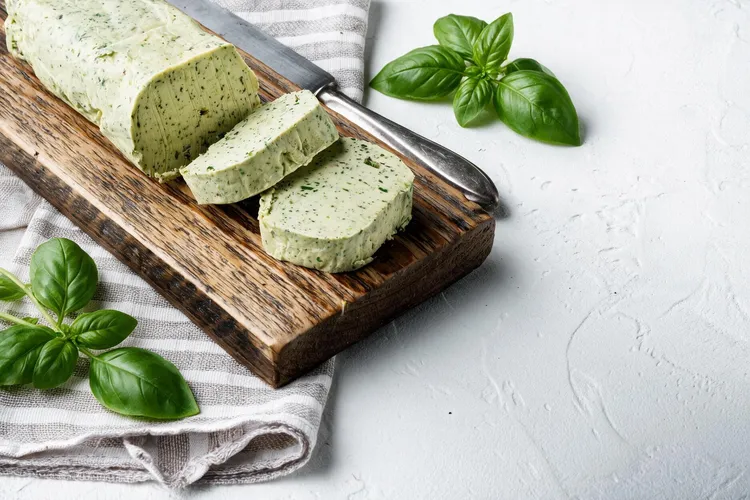
Compound butter is one of the smallest-batch ways to use basil on this list, but it's also one of the most convenient to have on hand, since a single slice off a frozen log turns into a finished sauce in the time it takes a steak to rest.
Basic Recipe
Combine 1/2 cup softened unsalted butter with 1/4 cup finely chopped basil, 1 small clove garlic (finely minced or grated), a small squeeze of lemon juice, and salt to taste. Mash together with a fork until evenly combined, or pulse briefly in a food processor if making a larger batch.
Chopping the basil fine matters more here than in pesto, since the pieces stay visible and distinct in the finished butter rather than being blended into a paste.
The Log-and-Freeze Method
- Spoon the finished butter mixture onto a sheet of parchment paper or plastic wrap in a rough line
- Roll the paper around the butter, shaping it into a log about 1 to 1.5 inches thick
- Twist the ends closed tightly, like a piece of candy, to seal out air
- Freeze the log flat for at least 2 hours, or until fully solid
Once frozen, the log can be sliced straight from frozen with a sharp knife, no thawing needed for most uses. Each round, roughly a quarter-inch thick, is one portion.
Storage Life
Refrigerated, basil butter keeps about 1 week before the fresh basil flavor starts to fade and the garlic can turn slightly sharp. Frozen, it holds good flavor for up to 3 months, which makes freezing the better default unless you know you'll use the whole batch within a few days.
Ways to Use It
- On a finished steak: lay a round on top right after it comes off the heat and let it melt into the resting meat
- Grilled corn: brush or rub a softened piece over hot corn on the cob
- Bread: spread on crusty bread and broil briefly for a quick basil garlic bread
- Pasta finish: toss a slice into hot pasta right before serving in place of a separate sauce
- Roasted vegetables: melt over hot roasted zucchini, potatoes, or green beans
Scaling Up for a Larger Glut
This recipe uses less basil per batch than pesto or oil, so if you're working through a genuinely large harvest, compound butter works better as one of several preservation methods rather than the main one. Making two or three logs at once, using the full quarter cup of basil each time, is a reasonable way to use a moderate amount without it being your only outlet for the glut. For the bigger picture on which method fits which volume of basil, see the Basil Glut Guide.
Variations
Add a tablespoon of grated Parmesan for a saltier, more savory version suited to steaks and roasted vegetables. Swap the lemon juice for a small amount of balsamic vinegar for a slightly deeper flavor that pairs well with grilled meats. A pinch of red pepper flakes adds a background heat that works well with corn or pasta.
Pairing Basil Butter With Other Herbs From the Garden
A basil glut often overlaps with a surplus of other soft herbs, particularly parsley, chives, and sometimes tarragon, all of which mature on a similar summer timeline. Compound butter is a natural place to combine a basil surplus with smaller amounts of whatever else is on hand, rather than making a separate butter for every herb. A blend leaning mostly basil with a smaller supporting amount of another herb often tastes more rounded than a single-herb butter, and it's a practical way to use small quantities of herbs that aren't quite enough on their own for a dedicated recipe.
Choosing Salted or Unsalted Butter
Unsalted butter is the better starting point since it lets you control the total salt level precisely, especially important if the butter will be used on already-salted dishes like a seasoned steak. If only salted butter is on hand, reduce or skip the added salt in the recipe and adjust to taste at the end.
Getting an Even, Attractive Log
For a cleaner cylindrical shape, roll the parchment-wrapped butter along the counter a few times, applying gentle even pressure, the same motion used to shape a log of cookie dough. If the ends look uneven or lopsided, a quick trim with a knife after the log is frozen solid gives cleaner slices.
For a more polished presentation, roll the shaped log in extra finely chopped basil or coarse salt just before it fully sets, pressing gently so it adheres to the outside. This is optional but adds visual appeal if the butter will be served directly at the table.
Common Mistakes
- Using basil straight from the fridge or freshly washed and wet. Excess moisture in the basil can make the butter slightly grainy once frozen and thawed. Pat basil fully dry before chopping.
- Adding too much garlic. Raw garlic's flavor intensifies over the butter's storage time, particularly in the fridge. What tastes balanced fresh can taste sharp after a few days; starting with a smaller amount and adjusting the next batch is a safer approach than guessing high.
- Slicing while still very soft. Butter sliced before it's fully frozen smears rather than cutting cleanly. Let the log firm up completely, at least 2 hours, before the first slice.
Frequently Asked Questions
Can I use dried basil instead of fresh in compound butter?
Fresh is strongly preferred here since the butter isn't cooked, and dried basil's flavor doesn't fully rehydrate or release the way it does in a simmered dish. If fresh basil isn't available, this isn't the best recipe to substitute into.
How far in advance can I make basil butter for a specific meal?
It can be made up to a week ahead if refrigerated, or months ahead if frozen as a log and sliced as needed. For a dinner party, making it a day or two ahead and keeping it refrigerated is a reasonable middle ground.
Can I add other herbs alongside basil?
Yes, a small amount of parsley or chives blends well with basil in a compound butter without overwhelming it. Keep basil as the dominant flavor by using it in a roughly 2-to-1 or greater ratio over any additional herb.
Tips for Success
Use softened, not melted, butter; melted butter won't hold the log shape and the herbs tend to sink rather than stay evenly distributed. If the butter is too soft to roll, chill it in the bowl for 10 minutes before shaping. Label the frozen log with the date, since flavor, not safety, is the limiting factor over time. A frozen log of basil butter is easy to overlook, so noting it in an upcoming meal plan for steak night or a pasta dinner helps make sure it actually gets sliced and used.
Latest