Basil pesto
Basil pesto is a classic Italian sauce made from fresh basil leaves, garlic, pine nuts, parmesan cheese, and olive oil. This vibrant, aromatic sauce is easy to prepare and enhances dishes like pasta and sandwiches.
Cook time 0 min
Prep time 15 min
Ingredients:
1.50 cups basil leaves2 garlic cloves
1/3 cup pine nuts
1/3 cup grated parmesan cheese
1/2 cup olive oil
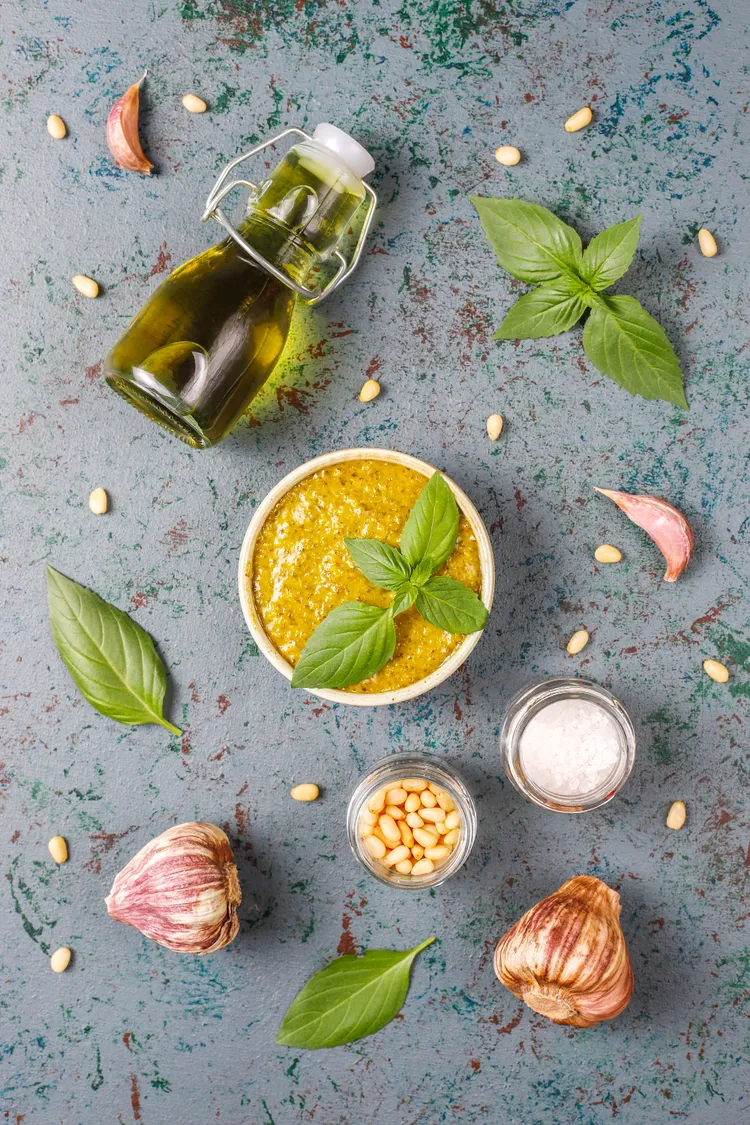
Basil pesto is a classic Italian sauce that is simple to prepare and bursting with fresh flavors. This vibrant green sauce, made with fresh basil leaves, garlic, pine nuts, parmesan cheese, and olive oil, can be used in a variety of dishes including pasta, sandwiches, and as a dip. Follow this easy recipe to bring a taste of Italy to your kitchen!
Instructions:
- Rinse the basil leaves thoroughly under cold water to remove any dirt or residue. Gently pat them dry with a clean kitchen towel or paper towel.
- Peel the garlic cloves.
- In a dry skillet over medium-low heat, add the pine nuts. Toast them gently, stirring frequently, until they are golden brown and fragrant. This usually takes about 3-5 minutes. Keep a close eye on them to prevent burning.
- Remove from heat and let them cool slightly. Toasting the pine nuts enhances their flavor but can be skipped if desired.
- In a food processor, combine the basil leaves, garlic cloves, toasted or untoasted pine nuts, and grated Parmesan cheese.
- Pulse the mixture several times until the ingredients are coarsely chopped and well-combined.
- With the food processor running on a low speed, gradually pour in the olive oil. Continue to process until the mixture becomes smooth and creamy.
- If you prefer a chunkier pesto, you can pulse the olive oil in stages rather than adding it all at once.
- Taste the pesto and adjust the seasoning if necessary. Although not included in the basic recipe, you can add a pinch of salt or a squeeze of lemon juice to enhance the flavor, if desired.
- Transfer the pesto to a clean, airtight container. Basil pesto can be used immediately or stored in the refrigerator for up to a week.
- To prevent the pesto from turning brown, you can pour a thin layer of olive oil on top before refrigerating.
Making basil pesto at home is a quick and rewarding process. With minimal ingredients and effort, you can create a versatile sauce that adds a burst of freshness to any meal. Enjoy your homemade basil pesto as a topping for pasta, spread on sandwiches, or as a zesty dip for your favorite snacks!
Basil pesto FAQ:
Basil pesto should be stored in an airtight container in the refrigerator. It can last up to a week. To prevent it from turning brown, pour a thin layer of olive oil on top before sealing.
Yes, pine nuts can be substituted with walnuts, almonds, or even sunflower seeds. However, keep in mind that this will slightly alter the flavor and texture of the pesto.
Pine nuts are done toasting when they are golden brown and emit a fragrant aroma, usually taking about 3-5 minutes over medium-low heat. Watch closely to avoid burning.
Yes, if you don’t have a food processor, you can finely chop the basil, garlic, and pine nuts by hand, then mix them with the Parmesan cheese and olive oil until combined.
You can enhance pesto flavor by adding a pinch of salt, a squeeze of lemon juice, or even additional herbs like parsley or oregano, depending on your taste preference.
Cooking Tips:
- For the best flavor, use fresh basil leaves and high-quality extra virgin olive oil.
- Toast the pine nuts lightly in a dry skillet before adding them to the pesto to enhance their nutty flavor.
- If you prefer a thinner pesto, you can add a little more olive oil.
- Pesto can oxidize and turn brown when exposed to air. To keep it fresh and green, store it in an airtight container with a thin layer of olive oil on top.
- If you have leftover pesto, it can be frozen in ice cube trays for easy portioning and use later.
Nutrition Facts
10 ServingsCalories 50kcal
Protein 1.58g
Carbohydrates 1.22g
Fiber 0.23g
Sugar 0.20g
Fat 16g
More recipes
Pumpkin and ricotta frittata
A creamy and sweet pumpkin and ricotta frittata, perfect for any meal.
05 May 2026Oven-baked garlic and chilli shrimp risotto
A creamy oven-baked risotto with garlic, chili, and shrimp.
05 May 2026Baked cheesy eggplant rolls
Enjoy delicious baked cheesy eggplant rolls filled with ricotta.
05 May 2026Rigatoni with brie, tomatoes, olives and basil
Creamy rigatoni with brie, cherry tomatoes, and olives.
05 May 2026Mixed mushroom, chicken and thyme risotto
Creamy mushroom, chicken, and thyme risotto, perfect for dinner.
05 May 2026