The Food Science of Garlic: Allicin, Heat, and Why It Burns
The enzyme chemistry behind garlic's flavor transformation, why cutting method changes intensity, why resting crushed garlic matters, and why garlic burns so easily.
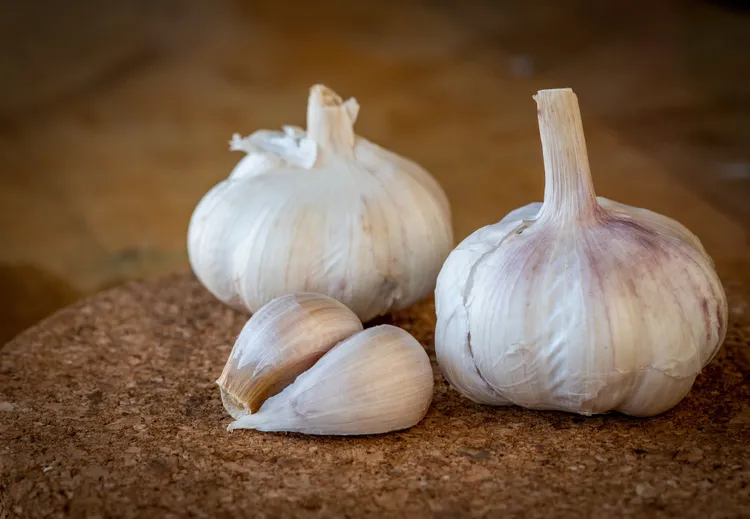
No common ingredient changes character as dramatically across preparations as garlic does. Raw, it's sharp and assertive. Slowly roasted, it turns sweet and spreadable. Burnt for even thirty seconds too long, it turns bitter enough to ruin a dish. All three outcomes trace back to the same underlying enzyme chemistry.
The Alliin-Alliinase Reaction
Intact garlic cells keep alliin, a stable sulfur-containing amino acid, physically separate from the enzyme alliinase that acts on it. Cutting, crushing, or chewing garlic ruptures cell walls and lets the two combine, producing allicin within seconds, along with a cascade of related sulfur compounds that continue forming and transforming over the following minutes. This single reaction is the starting point for essentially every flavor and aroma characteristic associated with fresh garlic; an undamaged clove, before any cutting, is actually much milder-smelling than most people expect, since the flavor compounds simply haven't formed yet.
Why Cutting Method Changes Flavor Intensity
How much a clove is damaged directly controls how much of the alliin-alliinase reaction occurs, since more cell rupture means more contact between the two components. This produces a real, practical spectrum: a whole, unpeeled clove barely reacts at all; a smashed clove (crushed with the flat of a knife but not minced) ruptures a moderate number of cells; a finely minced or microplane-grated clove ruptures the most cells and produces the most intense, sharpest flavor and aroma. This is why the same weight of garlic tastes noticeably different depending on how finely it's cut, independent of cooking method entirely.
Why Resting Crushed Garlic Changes the Result
Allicin and its related compounds continue developing for roughly 10 minutes after a clove is crushed before beginning to break down further into other, milder compounds. Cooks who crush garlic and let it sit briefly before adding it to a hot pan get a noticeably sharper, more pungent result than cooks who crush and immediately cook, since the immediate-heat approach interrupts flavor development before it peaks. Neither approach is "wrong," they simply produce different results, useful to choose deliberately depending on how assertive you want the garlic flavor in a given dish.
Why Heat Mellows Garlic
Cooking does two separate things to garlic's flavor compounds. First, heat denatures the alliinase enzyme, meaning any garlic cooked before it's cut (whole roasted cloves) never develops the same sharp compounds a raw, cut clove would. Second, and separately, heat breaks down the sharp, unstable sulfur compounds that do form into milder, sweeter compounds over time, which is why even garlic that's cut and then cooked mellows considerably compared to the same garlic eaten raw. Slow, moderate heat (as in roasting or confit) allows this breakdown to happen gradually and fully, producing garlic's characteristic sweet, mellow roasted flavor, essentially unrecognizable in intensity compared to a raw clove.
The Maillard Reaction and Caramelization in Roasted Garlic
Beyond the breakdown of sharp sulfur compounds, roasted garlic also develops flavor through Maillard browning and the caramelization of the clove's own natural sugars, both of which require sustained heat over time, exactly what a 45-to-60-minute roast provides. This is why roasted garlic isn't just "milder raw garlic," it's actively developed a new set of sweet, nutty, caramelized flavor compounds that raw garlic simply doesn't have, regardless of how long raw garlic might otherwise sit.
Why Burnt Garlic Turns Bitter
Garlic's high sugar content relative to its small size makes it especially prone to burning compared to many other aromatics, and once its natural sugars pass from caramelization into genuine scorching, typically within seconds once a pan gets too hot, the result is a sharp, lingering bitterness that's very difficult to cook around once it's happened. This is why so many recipes specifically warn to add garlic later than other aromatics like onion, and to watch it closely rather than walking away, since the window between "perfectly golden and fragrant" and "burnt and bitter" is often a matter of 15 to 30 seconds in a hot pan.
Why Garlic Confit Avoids This Risk Entirely
Cooking garlic slowly submerged in oil at a low temperature, well below oil's smoke point and far below the temperature at which garlic's sugars would scorch, sidesteps the burning risk that stovetop sautéing carries. This is the core reason garlic confit produces such a reliably sweet, soft result: the low, controlled temperature allows full sugar caramelization and sulfur compound breakdown without ever approaching the scorching threshold, a much wider margin for error than a hot, dry pan offers.
Frequently Asked Questions
Why does garlic smell stronger on my hands than on my cutting board? The sulfur compounds responsible for garlic aroma bind readily to proteins on skin, which is why the smell persists on hands longer than on a non-porous cutting board surface; rubbing hands on stainless steel under running water is a commonly cited (though only partially effective) trick for reducing this, since some stainless steel surfaces can bind and help rinse away a portion of the sulfur compounds.
Does garlic powder go through the same chemistry as fresh garlic? Garlic powder is made from dehydrated, then ground garlic, and the drying process itself triggers much of the alliin-alliinase reaction before packaging, meaning powder's flavor compounds are already substantially different from a freshly cut clove's, generally milder and without the same peak-fresh sharpness.
Why do some recipes call for smashing garlic instead of mincing? Smashing (crushing with the flat side of a knife) damages fewer cells than mincing, producing a milder background flavor useful when garlic is meant to infuse a dish subtly, like flavoring oil, without becoming the dominant, sharp note a fine mince would create.
Is there a way to reduce garlic's sharpness without cooking it? Soaking chopped raw garlic briefly in an acid like lemon juice or vinegar mellows some of its sharpness through a different mechanism than heat, useful for raw preparations like a vinaigrette where you want garlic's presence without its full raw intensity.
Comparing Garlic's Chemistry to Onion
Onion undergoes a broadly similar enzyme-triggered reaction to garlic when cut, which is why both share the sting and tearing effect associated with fresh cutting, though the specific compounds differ enough that onion and garlic have distinctly different aromas and flavors despite the chemical similarity in mechanism. Onion's version of this reaction also produces a volatile compound specifically responsible for eye irritation during cutting, a related but not identical phenomenon to garlic's flavor chemistry.
Why Garlic Doesn't Cause the Same Eye Irritation as Onion
Despite the chemical similarity, cutting garlic doesn't typically cause the same tearing response cutting onion does, largely because garlic's specific volatile compounds are less prone to becoming airborne and reaching the eyes in the same way onion's syn-propanethial S-oxide does. This is a genuine chemical difference between the two alliums' reaction products, not simply a matter of garlic being used in smaller quantities per cut.
The Practical Effect of Garlic Press vs. Knife
A garlic press crushes cloves more thoroughly and uniformly than most knife techniques, rupturing a larger proportion of cells and typically producing a sharper, more intense result than a coarser knife mince, closer to the effect of a fine microplane grate. Cooks aiming for a milder background garlic presence often prefer knife mincing or smashing specifically to avoid the more intense result a press tends to produce.
Why Some People Perceive Garlic More Intensely Than Others
Individual variation in taste perception, including genetic differences in how strongly people perceive certain sulfur compounds, means the same garlic preparation can register as mild to one person and quite sharp to another. This is a real, documented aspect of taste perception generally, not unique to garlic, but worth knowing when a recipe's stated garlic quantity doesn't match a particular cook's own sense of what tastes balanced.
Frequently Asked Questions
Does the color of garlic (white vs. purple-streaked varieties) indicate a chemistry difference? Color variation between varieties mostly reflects different pigment compounds in the skin rather than a fundamental difference in the alliin-alliinase flavor chemistry, though different varieties do genuinely vary in flavor intensity and complexity independent of skin color specifically.
Why does my kitchen smell like garlic for hours after cooking with it? The same volatile sulfur compounds responsible for garlic's flavor are also readily airborne, especially when heated, and can linger in a kitchen's air and on surfaces for an extended period; good ventilation during and after cooking reduces how long this lingers.
Is there a scientific reason garlic pairs so well with fat? Several of garlic's flavor compounds are fat-soluble, meaning they dissolve into and are carried effectively by oil, butter, and other fats, both enhancing perceived flavor and helping distribute garlic's presence more evenly through a dish than water alone would achieve.
Does freezing garlic change its flavor chemistry? Freezing itself doesn't trigger the alliin-alliinase reaction the way cutting does, but the ice crystal formation and later thawing does rupture some cell structure, meaning previously frozen garlic sometimes tastes slightly different, often a bit milder, than fresh garlic prepared the same way.
A Summary of the Key Mechanisms
- Alliin and alliinase combine only when a clove is physically damaged, producing allicin.
- Cutting method controls flavor intensity, minced and pressed garlic hits harder than smashed or whole.
- Resting crushed garlic for about 10 minutes lets allicin formation peak before cooking interrupts it.
- Heat mellows garlic two ways: deactivating the enzyme, and breaking sharp compounds into sweeter ones.
- Burning scorches garlic's sugars past caramelization into a bitterness that's hard to cook around.
Why This Chemistry Rewards Attention
Of all the ingredients covered across this content series, garlic is arguably the one where understanding the underlying chemistry most directly improves everyday cooking outcomes, since the difference between a perfectly sautéed and a burnt clove is often a matter of seconds, and the difference between raw and roasted garlic is dramatic enough to change what a dish tastes like entirely.
From Chemistry to the Kitchen
None of the mechanisms covered here require a chemistry background to apply practically. Once the basic pattern is familiar, more damage to the clove means sharper flavor, more time resting means more allicin, more heat means more mellowing, the specific numbers matter less than recognizing which lever to adjust for a given dish.
Cooks who understand why garlic behaves the way it does, rather than simply following a recipe's stated technique without knowing the reasoning, tend to adapt more confidently when a recipe doesn't quite match the ingredients or timing available in a real kitchen on a given night. This kind of underlying understanding is what separates following instructions from genuinely knowing how to cook with an ingredient.
Applying This Understanding to Unfamiliar Recipes
When encountering a new recipe that calls for garlic prepared in an unfamiliar way, smoked, fermented, or otherwise processed beyond the common methods covered in this guide, the same underlying chemistry, enzyme-triggered reactions, heat-driven mellowing, sugar caramelization, still applies as a useful framework for anticipating roughly how that preparation might taste, even without direct prior experience with that specific technique.
Garlic's flavor chemistry rewards the kind of attention most ingredients don't require, since the difference between raw, sautéed, roasted, and burnt garlic is so much more dramatic than the equivalent range for most other common ingredients. Understanding why is what turns garlic from a simple background aromatic into an ingredient worth genuinely mastering.
Even a cook with no formal culinary training can put this chemistry to immediate, practical use simply by paying closer attention to how a clove is cut and how long it spends over heat.
Once internalized, this pattern rarely needs conscious thought again.
Latest









