The Food Science of Ginger: Gingerol, Shogaol, and Zingerone
The chemistry behind why fresh, dried, and cooked ginger taste so different, gingerol's transformation into shogaol and zingerone, and ginger's meat-tenderizing enzyme.
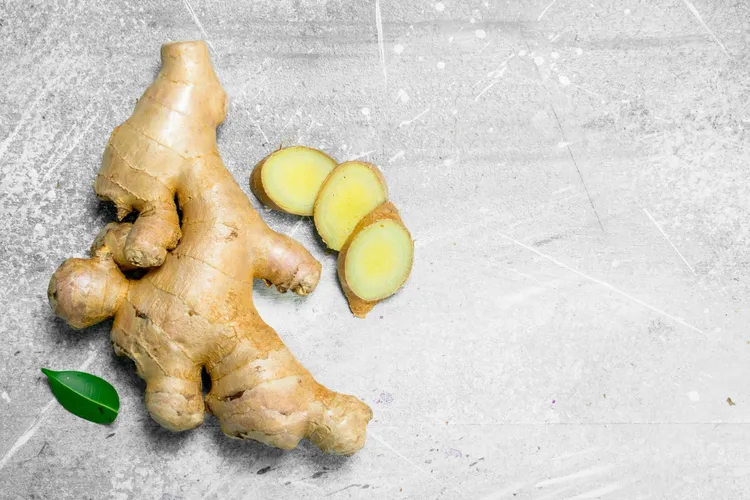
Fresh ginger, dried ginger, and long-cooked ginger can taste different enough that they seem like three separate spices rather than one ingredient in different forms. The explanation is a single compound taking three different chemical paths depending on what's done to it.
Gingerol as the Starting Point
Fresh ginger's characteristic sharp, citrusy bite comes primarily from gingerol, present in the intact rhizome without needing the kind of cell-damage trigger that garlic's allicin requires. This is a genuine structural difference from garlic covered elsewhere in this framework: cutting or crushing ginger releases and distributes gingerol more thoroughly, and does damage cell walls that can affect texture and juiciness, but doesn't create gingerol from separate precursor compounds the way garlic's alliin-alliinase reaction does.
The Drying Transformation: Gingerol to Shogaol
When ginger is dried, whether through prolonged dehydration or the industrial processing used for ground spice-jar ginger, a dehydration reaction converts a substantial portion of gingerol into shogaol. This isn't simple water loss concentrating an unchanged compound, it's a genuine chemical transformation, which is why dried ginger doesn't taste like a more concentrated version of fresh ginger so much as a differently sharp, hotter one. Shogaol is generally considered to have a more intense, sometimes described as "hotter" or more one-dimensional pungency compared to gingerol's brighter, more complex fresh character.
The Heat Transformation: Gingerol to Zingerone
Cooking triggers a different transformation. Sustained heat, particularly the kind of prolonged, moist cooking found in a simmered soup or braise, converts gingerol into zingerone, a compound with a notably milder, sweeter profile than either gingerol or shogaol. This explains why ginger added early to a long-simmered dish mellows so much more than the same amount added at the very end; it's not just dilution into a larger volume of liquid, it's the compound itself chemically changing into something gentler.
Why Timing of Addition Matters
A cook wanting ginger's sharpest, brightest presence in a finished dish should add fresh ginger late in cooking, minimizing the time available for the gingerol-to-zingerone conversion to occur. A cook wanting ginger's flavor to fully integrate as a warm, rounded background note, common in many long-simmered soups, curries, and braises, benefits from adding ginger early and letting it cook through the full duration, allowing more complete conversion to the milder zingerone.
Why Ground Ginger Isn't a 1-to-1 Substitute for Fresh
Beyond simple concentration differences (dried ginger is more concentrated by weight since water has been removed), the shogaol-heavy compound profile of dried ginger means it genuinely tastes different, not just stronger, than fresh ginger. This is why baking recipes calling for ground ginger specifically, and savory recipes calling for fresh, aren't reliably interchangeable at any conversion ratio; the flavor character itself has shifted, not just the intensity.
Ginger's Enzymatic Meat-Tenderizing Property
Fresh ginger contains an enzyme called zingibain, a protease capable of breaking down protein structures, similar in function (though a different specific enzyme) to the papain found in papaya or bromelain in pineapple. This is the chemical basis behind ginger's traditional use as a meat tenderizer in some marinades, particularly in East and Southeast Asian cooking; grated fresh ginger left in contact with meat for even a short time can measurably soften texture through this enzymatic action, an effect that dried ginger, having lost much of this enzyme activity through processing, doesn't replicate nearly as effectively.
Why Ginger Can Curdle Dairy
Fresh ginger's natural acidity and the zingibain enzyme's protein-disrupting activity together mean adding fresh ginger to a hot dairy-based liquid, milk or cream, can occasionally cause curdling, particularly with prolonged direct heat contact. This is a genuine, if often overlooked, practical consideration in dishes combining ginger and dairy; adding ginger later, off the highest heat, or using a milder ginger-infused liquid rather than direct fresh ginger in a dairy base reduces this risk.
Frequently Asked Questions
Why does fresh ginger sometimes taste citrusy? Fresh ginger contains aromatic terpene compounds, including some that overlap with compounds found in citrus, contributing a bright, slightly lemony top note that's largely lost once ginger is dried or cooked for an extended time, since these more volatile aromatic compounds degrade faster than gingerol itself.
Does peeling ginger remove much of its flavor? The skin itself carries relatively little of ginger's flavor compared to the flesh directly beneath it; a thin peel, taking care not to remove excessive flesh along with the skin, retains nearly all of ginger's flavor potential.
Why does a microplane grate produce a different result than chopping? A fine microplane grate ruptures far more cell structure than coarse chopping, releasing gingerol more thoroughly and producing a more intensely flavored, almost pulpy result, useful when maximum flavor extraction in a small amount is the goal, as in a dressing or marinade.
Is there a reason some recipes call for "ginger juice" specifically? Ginger juice, extracted by grating ginger finely and squeezing out the liquid through a cloth or fine strainer, delivers concentrated flavor without the fibrous texture of the grated flesh itself, useful in delicate applications like a clear beverage or a dressing where fibrous bits would be undesirable.
A Summary of the Key Mechanisms
- Gingerol is present in fresh ginger without needing a cell-damage trigger, unlike garlic's allicin.
- Drying converts gingerol into shogaol, producing a sharper, more one-dimensional heat.
- Cooking converts gingerol into zingerone, producing a milder, sweeter character.
- Zingibain, an enzyme in fresh ginger, breaks down protein, giving ginger real meat-tenderizing power.
- Cutting method changes flavor intensity by controlling how much cell structure and gingerol get released.
Why This Chemistry Rewards Attention
Of the ingredients covered across this content series, ginger's transformation across forms is among the most dramatic and most directly useful to understand, since reaching for the wrong form, fresh instead of dried, or vice versa, changes a dish's character more than a simple quantity adjustment ever could.
Comparing Ginger's Chemistry to Chili Peppers
Gingerol and capsaicin both trigger a related heat-sensing pathway in the body (the TRPV1 receptor), part of why ginger and chili pair so naturally, covered in the pairings guide, and part of why both can produce a similar warming, slightly sweating sensation when eaten in quantity, despite coming from entirely unrelated plants.
Frequently Asked Questions
Does the zingibain enzyme survive cooking? No; like most enzymes, zingibain denatures with heat, meaning its meat-tenderizing effect is specific to fresh, uncooked ginger used in a marinade before cooking begins, not something that continues working once a dish is actively cooking.
Why does ginger sometimes taste almost soapy or bitter if used in excess? At very high concentrations, ginger's sharper compounds can tip from pleasantly warm into an overwhelming, sometimes soapy-tasting intensity for some palates, a dose-dependent perception similar to how excessive cilantro can taste soapy to certain individuals due to genetic taste variation.
Does ginger's chemistry change much between different cultivated varieties? Yes, to some degree; different ginger varieties and growing conditions can produce meaningful variation in overall pungency and specific compound ratios, similar to how different garlic varieties vary in flavor intensity.
Is there a reason ginger is sometimes added at the very start of cooking oil, before other aromatics? Ginger's flavor compounds are fat-soluble and benefit from a brief period infusing into hot oil before other ingredients are added, similar in principle to blooming spices, extracting more flavor into the fat that will carry it through the rest of the dish.
From Chemistry to the Kitchen
None of the mechanisms covered here require a chemistry background to apply practically. Once the basic pattern is familiar, fresh means gingerol and brightness, dried means shogaol and sharper heat, cooked means zingerone and mellow warmth, the specific compound names matter less than recognizing which form and timing a given dish actually calls for.
A Foundation for the Rest of This Guide
This chemistry underlies nearly every other practical recommendation elsewhere in this framework, why fresh and ground ginger aren't interchangeable, why timing of addition matters in a simmered dish, why fresh ginger works as a marinade tenderizer. Treating this guide as foundational rather than a standalone curiosity makes the rest of the framework click into place with more clarity.
Why Understanding This Chemistry Builds Real Kitchen Confidence
Cooks who understand why ginger behaves the way it does, rather than simply following a recipe's stated form and timing without knowing the reasoning, tend to adapt more confidently when a recipe doesn't quite match what's available in a real kitchen on a given night, swapping fresh for dried with realistic expectations rather than assuming a flawless substitution.
Applying This Understanding to Unfamiliar Recipes
When encountering a new recipe calling for ginger prepared in an unfamiliar way, ginger juice, a ginger-infused oil, or ginger fermented into a bug starter, the same underlying chemistry still applies as a useful framework for anticipating roughly how that preparation might taste and behave, even without direct prior experience with that specific technique.
Why This Chemistry Differs Meaningfully From Garlic's
Unlike garlic, where allicin doesn't exist until a clove is physically damaged, ginger's gingerol is present in the intact rhizome from the start, meaning cutting technique affects flavor distribution and intensity but doesn't trigger an entirely new compound's formation the way it does with garlic, a genuine and useful distinction between two of the most common aromatics covered across this framework.
Ginger's flavor chemistry rewards the kind of attention most ingredients don't require, since the difference between fresh, dried, and long-cooked ginger is so much more dramatic than the equivalent range for most other common spices and aromatics. Understanding why is what turns ginger from a simple pantry staple into an ingredient worth genuinely understanding.
Even a cook with no formal culinary training can put this chemistry to immediate, practical use simply by paying closer attention to which form of ginger a recipe actually calls for and why.
Comparing Fresh Ginger's Behavior to Cooked Ginger in the Same Dish
A dish that includes both a base layer of long-simmered ginger and a fresh garnish of grated ginger added at serving time offers a direct, tastable demonstration of the gingerol-to-zingerone conversion covered throughout this guide, the simmered portion mellow and rounded, the fresh garnish sharp and bright, both from the same original rhizome.
Once this pattern, fresh brightness, dried sharpness, cooked warmth, is internalized, it rarely needs conscious thought again; it simply becomes part of how a cook instinctively reaches for the right form of ginger for a given dish.
That understanding, once it clicks, changes how a cook reads every ginger-related instruction in every recipe from that point forward.
Sharing This Understanding
Explaining the gingerol-shogaol-zingerone relationship to a curious fellow cook is one of the more satisfying pieces of food science to pass along, since it immediately makes sense of something most people have tasted, fresh versus dried versus cooked ginger, without ever quite knowing why they tasted so different.
It's a small piece of knowledge that pays off often.
Trying a small, deliberate side-by-side taste test, a pinch of fresh grated ginger against a pinch of ground ginger against a spoonful of long-simmered ginger from the same original rhizome, is one of the more effective ways to internalize this chemistry firsthand rather than just reading about it.
A direct taste test teaches more in five minutes than a page of explanation ever could.
Worth trying at least once in any kitchen curious about the science behind the spice rack.
A worthwhile experiment for any curious cook.
Simple, memorable, and genuinely useful in the kitchen.
A small insight with lasting kitchen value.
The same curiosity that makes ginger's chemistry rewarding to understand applies just as well to the other ingredients covered across this content series, garlic's allicin, tomato's acid-sugar balance, each with its own underlying logic worth learning once and applying for years afterward.
Latest









