Garlic Nutrition: What Allicin Actually Does
What allicin is, why it only forms when garlic is damaged, why resting crushed garlic before cooking matters, and what the research on garlic's health effects actually supports.
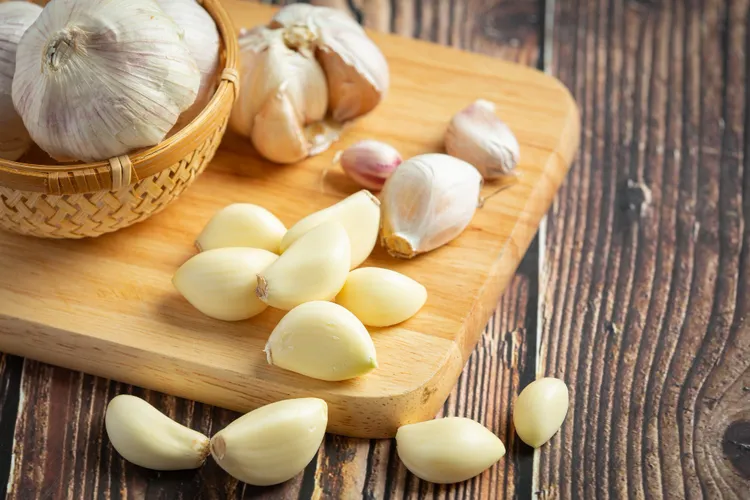
A single garlic clove weighs about 3 grams and contributes almost nothing to daily calorie or macronutrient totals. Nearly everything notable about garlic nutritionally traces back to one unstable, short-lived compound: allicin, which doesn't even exist in an intact clove.
Basic Nutritional Profile
A single clove (about 3g) contains roughly 4 to 5 calories, less than a gram of carbohydrate, and negligible protein and fat. At typical serving sizes, garlic isn't a meaningful source of calories or macronutrients; its nutritional relevance is almost entirely about specific bioactive compounds rather than bulk nutrition.
Allicin: What It Actually Is
Intact garlic cloves contain a stable compound called alliin along with an enzyme called alliinase, kept physically separate within different cell compartments. Only when a clove is cut, crushed, or chewed do these two components mix, triggering a reaction that produces allicin, the compound responsible for both garlic's characteristic pungent smell and most of its studied health effects. This means allicin genuinely doesn't exist in a whole, undamaged clove; it's formed on demand by physical damage to the cell structure, not present as a stable stored compound waiting to be consumed.
Why Resting Crushed Garlic Matters
Allicin formation isn't instantaneous. Research on garlic chemistry has found allicin levels continue rising for roughly 10 minutes after crushing before beginning to decline again, since allicin itself is unstable and breaks down into other sulfur compounds over time. This is the chemical basis for a common kitchen tip: crushing garlic and letting it rest for 10 minutes before cooking allows allicin formation to peak before heat (which deactivates the alliinase enzyme) has a chance to interrupt the process. Adding crushed garlic to a hot pan immediately, without any rest time, produces meaningfully less allicin than crushing, resting, then cooking.
What Heat Does to Allicin
Heat denatures the alliinase enzyme responsible for allicin formation, meaning cooking garlic before it's been cut or crushed (whole roasted cloves, for instance) produces very little allicin at all, since the enzyme reaction that creates it barely has a chance to occur. This is a big part of why raw and cooked garlic are sometimes described very differently in nutrition discussions: they're genuinely delivering different compounds, not just the same compound in different concentrations.
What the Research Actually Supports
Garlic and allicin specifically have been studied for potential effects on cardiovascular markers (modest effects on blood pressure and cholesterol in some studies), antimicrobial activity (allicin has documented antibacterial and antifungal properties in laboratory settings), and general antioxidant activity. It's worth being precise about what this evidence does and doesn't support: laboratory antimicrobial activity doesn't translate directly into a claim that eating garlic prevents or treats infections in the body, and cardiovascular study results have been modest and inconsistent enough that garlic functions as a reasonable, generally healthy addition to a diet rather than a proven treatment for any specific condition on its own.
Garlic Supplements vs. Whole Garlic
Garlic supplements vary enormously in how they're processed, and this matters directly for allicin content specifically. Some supplement forms (aged garlic extract, for instance) are deliberately processed in ways that reduce or eliminate allicin in favor of other, more stable sulfur compounds, while allicin-focused supplements attempt to preserve or standardize allicin content through specific processing methods. Comparing "garlic supplement" studies to whole fresh garlic isn't always a direct comparison, since the actual compound profile can differ significantly between forms.
Other Nutrients in Garlic
Beyond allicin and its related sulfur compounds, garlic contains modest amounts of vitamin C, vitamin B6, and manganese, along with a range of other antioxidant compounds. Given typical serving sizes (a few cloves in a dish, not a whole bulb eaten at once), garlic's contribution to these nutrients is real but modest compared to dedicated sources like citrus for vitamin C or leafy greens for manganese.
A Practical Takeaway
If allicin specifically is the goal, crush or chop garlic and let it rest 10 minutes before adding heat, rather than cooking whole cloves or adding crushed garlic directly to a hot pan. If flavor and general nutrition are the priority rather than maximizing one specific compound, cooking method can follow whatever a dish calls for, since garlic contributes real value in multiple forms, not just as a raw, allicin-maximized ingredient. For anyone tracking specific compounds or nutrients as part of a broader health plan, our nutrition calculators can help translate general guidance like this into figures specific to an actual recipe and serving size.
Frequently Asked Questions
Does garlic breath indicate how much allicin was consumed? Garlic breath comes from sulfur compounds, related to but not identical to allicin, absorbed into the bloodstream and later exhaled through the lungs, a process that can continue for hours after eating. It's a rough indicator of sulfur compound exposure generally, not a precise allicin measurement.
Is black garlic nutritionally different from regular garlic? Black garlic, made through a weeks-long fermentation and aging process, has a substantially different compound profile than fresh garlic, generally lower in allicin (since the slow aging process degrades it) but higher in certain other antioxidant compounds formed during fermentation. It's a genuinely different nutritional and flavor product, not simply aged regular garlic.
How much garlic would I need to eat to get a meaningful health effect? Most studies showing measurable effects use daily or near-daily consumption over weeks to months, generally 1 to several cloves worth per day, rather than an occasional large amount. There's no established single serving that delivers a guaranteed effect.
Are there any groups who should be cautious about garlic intake? Garlic has mild blood-thinning properties and can interact with anticoagulant medications; anyone on blood thinners or preparing for surgery should discuss garlic intake, particularly in supplement form, with a healthcare provider rather than assuming general nutrition guidance applies to their specific situation.
How Garlic Compares Nutritionally to Other Alliums
Onions, leeks, shallots, and garlic all share the same general allium family chemistry, sulfur compounds formed through cell damage, but garlic's concentration of these compounds per gram is considerably higher than most of its relatives, which is part of why garlic's flavor and aroma impact so far exceeds what its small typical serving size might suggest. Onions, eaten in far larger quantities per serving, deliver a real but more diluted version of similar chemistry.
Garlic's Role in Traditional and Folk Medicine
Garlic has a long history of use in traditional medicine systems across many cultures, often for purposes ranging from general wellness to specific claimed treatments for infection or cardiovascular concerns. Some of this traditional use has found partial support in modern research, particularly around garlic's antimicrobial properties, while other traditional claims remain unverified by rigorous modern study. It's worth treating traditional use as a starting point for scientific interest rather than as established medical evidence on its own.
Sulfur Compounds Beyond Allicin
Allicin itself is unstable and breaks down relatively quickly into a range of other sulfur compounds, including diallyl disulfide and ajoene among others, some of which carry their own documented biological activity independent of allicin itself. This means garlic's overall health-relevant chemistry is genuinely more complex than a single-compound story; allicin is the best-known and most-studied starting point, but not the entire picture.
Cooking Method and Nutrient Retention Beyond Allicin
Beyond allicin specifically, garlic's modest vitamin C and B6 content follows more typical rules for heat-sensitive nutrients, meaning extended cooking does reduce these somewhat compared to raw garlic, similar to the pattern seen in many other vegetables. Since garlic is rarely eaten in large enough quantities for these vitamins to be a primary dietary source anyway, this loss matters less practically than the allicin-specific chemistry covered above.
Frequently Asked Questions
Does chopping garlic finer always mean more allicin? Generally yes, up to a point; finer chopping or crushing damages more cells and produces more of the alliin-alliinase reaction, though extremely prolonged processing (like commercial garlic paste production) can also lead to some allicin breakdown during processing itself, meaning very finely processed commercial products don't always retain the peak allicin level a freshly hand-crushed clove would.
Is there a "best" time of day to eat garlic for health benefits? There's no strong evidence supporting a specific optimal timing; consistency of intake over time matters more in the research base than timing within a given day.
Do all garlic varieties have similar allicin content? Allicin potential varies somewhat by variety, generally correlating loosely with how pungent and sharp a variety tastes raw, though precise allicin content isn't something most home gardeners or cooks have practical means to measure directly.
Can cooking destroy all of garlic's beneficial compounds? No; while heat reduces allicin formation and breaks down some heat-sensitive compounds, cooked garlic still retains meaningful antioxidant activity and other sulfur compounds, along with developing new flavor and aroma compounds through the Maillard reaction and caramelization covered in the food science guide. Cooked garlic isn't nutritionally "empty," it simply offers a different compound profile than raw.
A Quick Nutrition Summary
- Calories: Roughly 4 to 5 kcal per clove, nutritionally negligible in bulk terms.
- Key compound: Allicin, formed only when a clove is cut or crushed, not present in an intact clove.
- Best for allicin: Crushed or minced, rested 10 minutes, then used raw or added late in cooking.
- Other nutrients: Modest vitamin C, B6, and manganese.
Keeping the Claims in Perspective
Garlic's genuinely interesting chemistry sometimes gets overstated in popular health discussions, credited with effects well beyond what the current research base actually supports. Treating garlic as one reasonable, flavorful component of an overall healthy diet, rather than as a standalone remedy for a specific condition, is the more accurate way to think about its role nutritionally.
Nutrition as One Piece of a Bigger Picture
None of the nutrition information here is meant to turn garlic cooking into a purely functional exercise focused on maximizing one compound. Flavor and how a dish comes together matter as much as any single nutrient figure, and fortunately, the preparation that tends to maximize allicin, crushed and rested briefly before use, is also simply a normal, flavorful way many dishes already call for garlic to be prepared.
Putting the Guidance to Practical Use
The most actionable takeaway from this guide isn't a strict rule to follow every time, it's a general awareness: if a dish benefits from garlic's sharpest, most pungent character, crush and rest it; if a dish calls for garlic's milder, sweeter side, roast or confit it instead. Both are legitimate, valuable ways to use garlic, not a right and wrong approach.
A Note on Reading Nutrition Headlines Critically
Garlic and allicin specifically attract a lot of enthusiastic health coverage online, not all of it equally well-supported by the underlying research. Approaching bold claims about garlic with the same healthy skepticism applied to any single-ingredient health claim, checking whether a cited study actually supports the specific claim being made, is a reasonable habit for anyone using nutrition information to guide real dietary decisions.
Considering Garlic Alongside Other Allium Family Members
For anyone specifically interested in the broader category of sulfur-compound-rich vegetables for potential health benefits, onions, leeks, and shallots offer related but distinct compound profiles worth considering alongside garlic rather than treating garlic as the sole allium worth including in a varied diet.
Allicin's genuinely unusual chemistry, forming only on damage, peaking minutes after crushing, breaking down with heat, makes garlic one of the more interesting ingredients to understand nutritionally. Even a rough grasp of this pattern is enough to make more informed choices about how to prepare garlic when a specific compound is the actual goal.
Approaching garlic's nutrition with this kind of grounded, specific understanding serves a home cook far better than either dismissing garlic's health relevance entirely or treating it as a cure-all beyond what the evidence actually supports.
That grounded approach, appreciating garlic's real chemistry without overselling it, tends to serve both cooking and health goals better in the long run.
Curiosity paired with a healthy dose of skepticism tends to serve any home cook well here.
Latest









