Ginger Nutrition: What Gingerol Actually Does
What gingerol is, how it converts to shogaol with drying and zingerone with cooking, and what current research supports about ginger and nausea, inflammation, and digestion.
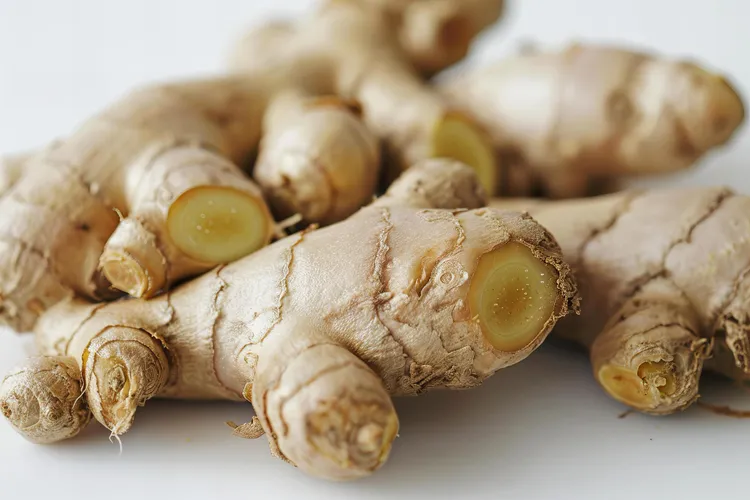
A tablespoon of fresh grated ginger carries almost no calories but a genuinely well-studied compound, gingerol, responsible for both its sharp bite and most of its research interest. Unlike garlic's allicin, gingerol doesn't need cutting or crushing to exist, it's present in the intact rhizome, but it transforms into different compounds depending entirely on how the ginger is processed.
Basic Nutritional Profile
A tablespoon of fresh grated ginger (about 6g) contains roughly 5 calories, just over a gram of carbohydrate, and negligible protein and fat. Like garlic and most aromatics used in modest quantities, ginger's relevance nutritionally has little to do with bulk macronutrients and everything to do with specific bioactive compounds.
Gingerol: The Primary Active Compound
Gingerol is the main pungent compound in fresh ginger, structurally related to capsaicin (the compound responsible for chili heat) and piperine (found in black pepper), part of a broader family of plant compounds that trigger a similar heat-sensing pathway in the body. Gingerol is most concentrated in fresh, raw ginger and is what gives fresh ginger its characteristic sharp, slightly citrusy bite.
What Happens to Gingerol With Drying
When ginger is dried, whether into the ground powder found in a spice jar or through a slower dehydration process, gingerol converts substantially into a related compound called shogaol. Shogaol is generally considered more pungent and sharper-tasting than gingerol, which is part of why dried, powdered ginger tastes noticeably hotter and more one-dimensional than an equivalent amount of fresh ginger, despite coming from the same starting rhizome.
What Happens to Gingerol With Cooking
Heat has a different effect than drying: prolonged cooking tends to convert gingerol into zingerone, a compound with a milder, sweeter, less sharply pungent character than either gingerol or shogaol. This is a meaningful part of why long-simmered ginger, in a soup or braise, tastes noticeably gentler and warmer than the same ginger used raw or briefly cooked, independent of any dilution effect from the surrounding liquid.
A Practical Summary of the Three Forms
- Fresh, raw ginger: Highest gingerol content, sharpest and brightest flavor.
- Dried, ground ginger: Elevated shogaol, generally hotter and more concentrated per gram than fresh.
- Long-cooked ginger: Elevated zingerone, milder, sweeter, warmer character.
None of these forms is objectively "better," they're simply different, useful for different applications depending on whether a dish wants ginger's sharpest bite, its most concentrated heat, or its gentlest background warmth.
What the Research Actually Supports
Ginger has a genuinely substantial research base specifically around nausea, with multiple clinical studies supporting its use for nausea related to pregnancy, chemotherapy, and motion sickness, one of the better-established use cases among common food-based remedies. Research on ginger's anti-inflammatory properties is also active, with some studies showing modest effects on markers of inflammation and muscle soreness, though this research base is generally less conclusive than the nausea evidence and shouldn't be treated as an established treatment for any specific inflammatory condition.
Ginger and Digestion
Beyond nausea specifically, ginger has a long traditional use supporting general digestion, and some research supports a modest effect on gastric emptying (how quickly the stomach moves food into the digestive tract), which may partly explain its traditional reputation for settling an upset stomach beyond nausea alone.
A Practical Takeaway
If nausea relief specifically is the goal, research generally supports fresh or dried ginger in food or beverage form (ginger tea, for instance) at modest, regular doses rather than a single large amount. If flavor and general use are the priority, choosing between fresh, dried, or long-cooked ginger comes down to which flavor character a dish actually calls for, sharp and bright, hot and concentrated, or mellow and warm, rather than any single form being nutritionally superior. For anyone tracking specific compounds or nutrients as part of a broader health plan, our nutrition calculators can help translate general guidance like this into figures specific to an actual recipe and serving size.
Frequently Asked Questions
Is ginger tea as effective as fresh ginger for nausea? Ginger tea made from fresh or dried ginger steeped in hot water retains meaningful gingerol and related compounds, and is a commonly used, reasonably well-supported form in nausea-related research specifically, making it a practical option for anyone seeking this particular benefit.
Does candied ginger offer the same benefits as fresh? Candied ginger retains real ginger compounds but comes with substantial added sugar, meaning it's a less nutritionally efficient way to get ginger's specific compounds compared to fresh or dried forms, even though it's a genuinely pleasant way to eat ginger.
Can ginger interact with medications? Ginger has mild blood-thinning properties similar to garlic, and in large or supplement-level amounts can interact with anticoagulant medications; anyone on blood thinners or with an upcoming surgery should discuss ginger intake, particularly in concentrated supplement form, with a healthcare provider.
How much ginger is typically used in nausea-focused research? Study doses vary, but many clinical trials on nausea use somewhere in the range of 1 to 1.5 grams of ginger daily, split across doses, closer to a modest but regular culinary amount than an extreme quantity.
A Quick Nutrition Summary
- Calories: Roughly 5 kcal per tablespoon, nutritionally negligible in bulk terms.
- Key compound: Gingerol, present in fresh ginger, converting to shogaol when dried and zingerone when cooked.
- Best-supported use: Nausea relief, with a genuinely substantial clinical research base.
- Other areas of interest: Modest anti-inflammatory and digestive effects, less conclusively established.
Comparing Ginger to Other Common Spices Nutritionally
Turmeric, ginger's close relative, carries its own well-studied compound, curcumin, with a different but overlapping research profile focused heavily on inflammation. Black pepper's piperine is structurally related to gingerol and is sometimes paired with turmeric specifically to improve curcumin absorption, an interesting cross-spice interaction worth knowing about for anyone interested in this broader category of pungent plant compounds.
Keeping Claims in Perspective
Ginger's genuinely solid nausea research sometimes gets extended in popular health discussion to broader claims not as well supported by current evidence. Treating the nausea research as a reasonably confident, specific finding, while treating broader anti-inflammatory or general wellness claims with more caution, is the more accurate way to engage with ginger's health reputation.
Frequently Asked Questions
Does ginger ale contain enough real ginger to offer any of these benefits? Most commercial ginger ale contains only a small amount of actual ginger flavoring, often far less than the doses used in nausea research; it's a reasonable mild remedy for some people but shouldn't be assumed equivalent to fresh ginger or a concentrated ginger tea.
Is raw ginger juice more potent than grated ginger? Ginger juice concentrates gingerol without the fibrous bulk of whole grated ginger, meaning a given volume of juice generally delivers more concentrated compound exposure than the same volume of grated flesh, though total gingerol content from the same starting amount of ginger is similar either way.
Are ginger supplements standardized for gingerol content? This varies considerably by product and manufacturer; unlike a pharmaceutical with strict dosing standards, ginger supplements can differ meaningfully in actual gingerol content, worth checking a specific product's labeling rather than assuming standardization.
Does cooking ginger destroy its nausea-relief properties? Not entirely; while cooking converts some gingerol to the milder zingerone, cooked ginger, as in a ginger tea made from simmered fresh ginger, retains meaningful compound activity and is a commonly used form in nausea-focused research and traditional use alike.
Considering Ginger Alongside a Broader Anti-Nausea Toolkit
For anyone specifically managing nausea, whether from pregnancy, motion sickness, or another cause, ginger is one option among several evidence-based approaches, worth discussing alongside other strategies with a healthcare provider rather than relying on it as a sole solution, particularly for nausea significant or persistent enough to warrant medical attention.
Nutrition as One Piece of a Bigger Picture
None of the nutrition information here is meant to turn ginger cooking into a purely functional exercise focused on maximizing one compound. Flavor and how a dish comes together matter as much as any single nutrient figure, and fortunately, ginger's genuinely pleasant, versatile flavor across savory and sweet applications means reaching for it regularly serves both goals at once.
Reading Nutrition Headlines Critically
Ginger attracts a lot of enthusiastic health coverage online, not all of it equally well-supported by the underlying research base. Approaching bold claims about ginger with the same healthy skepticism applied to any single-ingredient health claim, checking whether a cited study actually supports the specific claim being made, is a reasonable habit for anyone using nutrition information to guide real dietary decisions.
Putting the Guidance to Practical Use
The most actionable takeaway from this guide isn't a strict rule to follow every time, it's a general awareness: fresh ginger for brightness and gingerol, dried for concentrated shogaol-driven heat, cooked for gentle zingerone-driven warmth. All three are legitimate, valuable ways to use ginger, not a right and wrong approach.
How Ginger Compares Nutritionally to Other Common Spices
Relative to turmeric's curcumin or chili's capsaicin, ginger's gingerol occupies a similar role as a well-studied, pungency-driving compound with real but specific research support, part of a broader category of plant compounds that share overlapping biological mechanisms despite coming from entirely different plants.
Nutrition and Flavor Working Together
It's worth noting how often ginger's most nutritionally interesting preparations, fresh ginger tea, a ginger-forward marinade, also happen to be genuinely enjoyable ways to eat it, meaning there's rarely a real tradeoff between chasing a specific health angle and simply cooking with ginger because it tastes good.
Gingerol's genuinely unusual chemistry, present without needing cell damage, transforming differently under drying versus cooking, makes ginger one of the more interesting ingredients to understand nutritionally among the crops covered across this content series. Even a rough grasp of this pattern is enough to make more informed choices about which form to reach for when a specific compound or effect is the actual goal.
That grounded, curious-but-skeptical approach tends to serve both cooking and any specific health goals better in the long run than either dismissing ginger's chemistry entirely or overselling it beyond what the evidence actually supports.
Considering Ginger Alongside a Balanced Overall Diet
As with garlic and most single-ingredient nutrition discussions covered across this content series, ginger's real value comes through consistent inclusion as part of an overall varied, reasonably balanced diet, not through any single large dose or as a substitute for broader dietary patterns or medical care when those are genuinely needed.
Curiosity paired with a healthy dose of skepticism tends to serve any home cook well when engaging with ginger's genuinely interesting, but sometimes overstated, health reputation.
That balanced approach, appreciating ginger's real chemistry without overselling it, tends to serve both cooking and health goals better in the long run.
Ongoing Curiosity
As ginger research continues to develop, staying reasonably informed, while maintaining the same healthy skepticism applied throughout this guide, is a sound long-term approach for anyone interested in following how the evidence base evolves over time.
Balanced curiosity is the right mindset throughout.
For anyone specifically using ginger with a health goal in mind, keeping a simple log of intake and any noticed effects, while not a substitute for clinical evidence, can be a reasonable personal way to track whether a specific use, like nausea management, seems to be working for that individual.
Personal observation, paired with good evidence, is a reasonable way to navigate any single-ingredient health question.
A sensible, grounded approach serves best over the long run.
Keep it balanced, keep it evidence-based.
That's the healthiest way to think about any single ingredient.
Simple, sensible, effective.
For households already tracking nutrition information for other ingredients covered across this content series, folding ginger's modest but genuinely interesting compound profile into that same broader awareness, rather than treating it as an isolated curiosity, builds a more complete picture of how everyday cooking choices connect to overall diet.
A complete picture serves better than an isolated fact ever could.
Latest









