How to Dry Basil at Home (Air, Oven, Dehydrator)
Three home methods for drying basil, with realistic timing, temperature settings, and how dried basil differs from fresh.
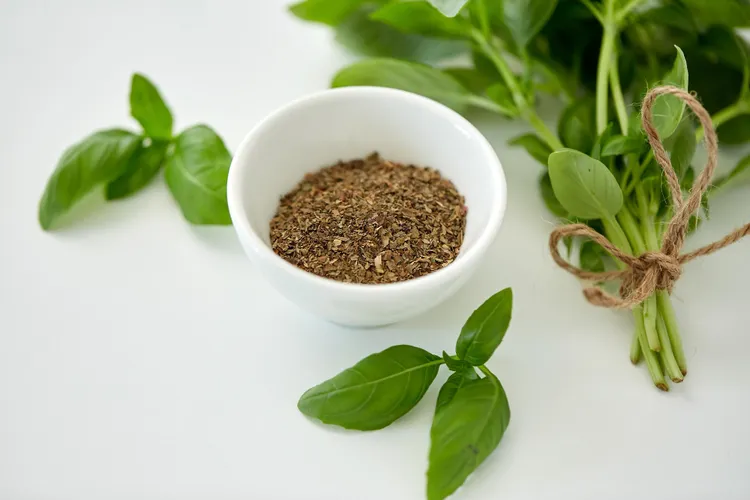
Dried basil is a different ingredient from fresh basil, not a shelf-stable version of the same thing. The bright, slightly peppery top notes that make fresh basil distinctive fade significantly during drying, leaving behind a more muted, hay-like flavor that works in slow-cooked dishes but won't substitute well in anything meant to taste fresh.
Setting Expectations
Basil has a higher water content and more volatile aromatic oils than herbs like oregano or thyme, which is why it dries less gracefully than they do. Expect to use roughly three times as much dried basil as fresh to get a comparable flavor intensity, and expect the flavor profile itself to shift, less bright, more savory. Dried basil is genuinely useful, just not a one-to-one swap.
Method 1: Air Drying
Bundle small groups of stems, no more than 6 to 8 stems per bundle, and hang them upside down in a warm, dry, well-ventilated spot out of direct sunlight. A closet, pantry, or covered porch works. Direct sun bleaches color and speeds the loss of aromatic oils.
Air drying takes 1 to 2 weeks depending on humidity. Leaves are ready when they crumble easily between your fingers rather than feeling leathery or bendable. This method is the lowest effort but also the slowest and the most flavor loss of the three, since basil's volatile oils have a long window to evaporate.
Method 2: Oven Drying
Set the oven to its lowest possible setting, ideally 170°F (77°C) or lower if your oven allows it. Spread whole leaves in a single layer on a baking sheet lined with parchment. Prop the oven door open slightly with a wooden spoon to let moisture escape.
Check every 20 minutes; total time usually runs 1 to 3 hours depending on oven temperature and leaf thickness. Leaves are done when they crumble easily and show no flexibility at all. Oven drying is faster than air drying but runs a higher risk of scorching if the temperature creeps up, since most home ovens don't hold a precise low temperature.
Method 3: Dehydrator
Arrange whole leaves in a single layer on dehydrator trays without overlap. Set the temperature to 95 to 115°F (35 to 46°C), a low herb setting if your dehydrator has one. Drying typically takes 2 to 4 hours.
This is the most consistent method and generally preserves the most flavor of the three, since the low, steady temperature evaporates moisture without cooking the leaf. If you're processing a large glut and drying is your main preservation method, a dehydrator is worth the investment over repeated oven batches.
Method Comparison
- Air drying: 1 to 2 weeks, no equipment needed, most flavor loss
- Oven drying: 1 to 3 hours, needs a low-temperature oven and attention to avoid scorching
- Dehydrator: 2 to 4 hours, most consistent results, best flavor retention of the three
Storing Dried Basil
Once fully dry and cooled, crumble leaves by hand or leave them whole and crush just before use, whole leaves hold flavor slightly longer. Store in an airtight jar, away from light and heat, ideally in a cabinet rather than a shelf near the stove. Properly dried and stored basil holds reasonable flavor for 6 to 12 months, though it will keep indefinitely in a food-safety sense; it will simply become less flavorful over time.
When to Dry Versus Freeze
Drying makes sense for basil headed into soups, stews, sauces, and spice blends where a milder, long-cooked flavor is fine. Freezing, especially as oil or pesto, preserves something closer to fresh basil's brightness and suits dishes where basil is more central to the flavor. See How to Freeze Basil for a side-by-side comparison, or the full Basil Glut Guide for how drying fits into an overall glut plan.
Knowing When Basil Is Fully Dry
Underdrying is the most common failure across all three methods and the one most likely to cause problems in storage. A leaf that feels dry to the touch but still bends without breaking has residual moisture inside that can support mold growth once jarred. The correct test is a crumble test, not a touch test: pick up a leaf and try to crumble it between your fingers. If it bends or folds instead of breaking into pieces, it needs more time regardless of which method is being used.
Thicker leaves and thicker stem sections near the base of a leaf take longer to fully dry than thin leaf tips. If a batch dries unevenly, pull out and store the pieces that are fully crisp, and return the rest to the dehydrator, oven, or drying spot for additional time rather than storing a mixed-moisture batch together.
Rehydrating and Cooking With Dried Basil
Dried basil is best added earlier in a cooking process than fresh basil, since it needs some moisture and heat to release its flavor fully. Adding it at the start of a simmering sauce or soup, rather than at the very end the way fresh basil is used, gives the dried leaves time to rehydrate and distribute their flavor through the dish.
As a rule of thumb, use about one-third the amount of dried basil compared to what a recipe calls for in fresh basil; if a recipe calls for a tablespoon of chopped fresh basil, a teaspoon of dried is a reasonable substitute, adjusted to taste.
Common Mistakes
- Drying basil in direct sunlight. This bleaches color and accelerates the loss of aromatic oils, the opposite of what slow, indirect drying achieves.
- Overcrowding trays or bundles. Leaves or bundles that touch each other trap moisture between them and dry unevenly, sometimes molding in the touching spots even while the rest of the batch dries fine.
- Storing dried basil in a clear jar on an open shelf. Light exposure over time degrades color and flavor even after drying is complete. An opaque or dark container, or a cabinet away from light, preserves quality longer.
- Crumbling basil into powder before storing. Powdered basil loses flavor faster than basil left in whole crumbled leaf form, since more surface area is exposed to air. Crush leaves just before use instead of in advance.
Frequently Asked Questions
Can I dry basil in a microwave?
It's possible in short bursts, 20 to 30 seconds at a time between paper towels, checking frequently, but it's harder to control than the three methods above and more prone to scorching a portion of the batch before the rest is dry.
Is dried basil as nutritious as fresh?
Some heat- and light-sensitive compounds degrade during drying, similar to most dried herbs, but dried basil still retains meaningful flavor and mineral content and remains a reasonable pantry staple rather than an empty substitute.
Why does my dried basil taste like hay?
This usually means the leaves dried too slowly, often from air drying in a slightly too-humid space, which allows more of the fresh aromatic character to fade before the leaf fully dries. A faster method like a dehydrator or a properly low oven usually preserves more of basil's characteristic flavor.
Tips for Success
Only dry basil that's fully dry on the surface; any residual moisture from washing invites mold during the drying process. If you rinsed the leaves, pat them completely dry and let them air-dry on a towel for an hour before starting any of these methods. Discard any batch that develops a musty smell or visible mold rather than trying to salvage it. A jar of dried basil is easy to forget about in the back of a cabinet, so working it into a regular meal-planning routine helps it actually get used before flavor fades.
Latest