How to Freeze Basil: Ice Cubes, Oil, and Whole Leaves
Three ways to freeze basil compared for texture, flavor retention, and how you'll actually use it later.
Basil doesn't freeze the way spinach or berries do. Whole leaves turn black and mushy the moment they thaw, which puts a lot of people off freezing it at all. The trick isn't avoiding the freezer, it's picking a method that accounts for what happens to basil's cell structure at freezing temperatures.
Why Whole Frozen Basil Leaves Look Wrong (But Still Work)
Freezing ruptures plant cell walls as water inside expands into ice crystals. On sturdy vegetables this barely matters. On a leaf as delicate as basil, it means the leaf collapses into a limp, dark, slightly slimy version of itself the moment it thaws. This is cosmetic, not spoilage, but it does mean frozen-then-thawed basil is never going into a fresh salad again. It's for cooking, not garnish.
Method 1: Ice Cube Trays (Best for Sauces and Soups)
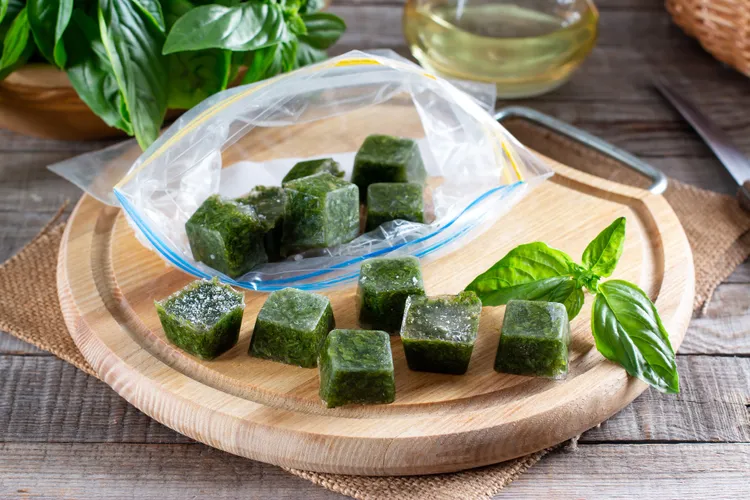
Chop or blend basil with a small amount of water, stock, or olive oil, then portion into ice cube trays. Once solid, transfer the cubes to a labeled freezer bag. Each cube is a pre-measured amount, usually around 1 to 2 tablespoons, ready to drop straight into a simmering sauce, soup, or stew.
This method is the most convenient for cooking use, since there's no chopping required after thawing and the portion sizes make it easy to add a little at a time. It's less suited to anything where you want to see or taste distinct basil texture, like a finishing herb on a plate.
Method 2: Basil Oil Cubes (Best Flavor Retention)
Blend basil leaves with a neutral or olive oil until smooth, then freeze in ice cube trays the same way. The oil coats the leaf particles and protects some of the volatile aromatic compounds that plain water freezing doesn't. This method generally holds basil's characteristic aroma better over a 3 to 6 month freezer life than the water-based cube method.
A full blanched-and-blended version of this approach, done at a slightly larger scale, is really just basil oil made for freezer storage rather than counter storage. See Basil Oil: How to Make and Store an Infused Oil for the blanching step that keeps color and flavor at their best, whether you're freezing it or keeping it in the fridge for near-term use.
Method 3: Whole Leaves, Flash Frozen
Lay whole, unwashed basil leaves in a single layer on a baking sheet and freeze until solid, usually 1 to 2 hours, before transferring to a freezer bag. This keeps leaves separate rather than frozen into a solid clump, so you can pull out just what you need. Expect the leaves to darken and go limp on thawing, as described above. This method suits recipes where the basil will be cooked down anyway, like a simmered sauce, rather than anything relying on leaf texture.
Method Comparison
- Ice cube trays (water or stock base): most convenient portioning, good for sauces and soups, moderate flavor retention
- Oil cubes: best flavor retention, works in both savory cooking and finishing drizzles once thawed, slightly more prep
- Whole flash-frozen leaves: least prep upfront, most flexible use later, but leaves collapse completely on thawing
How Long Frozen Basil Lasts
All three methods hold reasonable quality for 3 to 6 months in a standard freezer. Flavor gradually fades past that point rather than the basil becoming unsafe, so label bags with the date and try to use older batches first.
Choosing a Method for Your Glut
If you're processing a large harvest and want the least kitchen time, whole flash-frozen leaves are fastest. If you know most of the basil is going into pasta sauces or soups over the next few months, ice cube trays with a liquid base save a chopping step later. If you want the best possible flavor and don't mind a bit more prep now, the oil method wins. For a full picture of where freezing fits alongside drying and other preservation methods, see the Basil Glut Guide.
Thawing and Using Frozen Basil
Frozen basil cubes, whichever method was used, generally go straight into hot food without thawing first. Drop an ice cube tray portion directly into a simmering sauce, soup, or stew during the last few minutes of cooking. There's no need to thaw first; the ice will melt and the basil will disperse into the dish within a minute or two.
For whole flash-frozen leaves, a quick 30-second thaw at room temperature is enough before chopping and adding to a cooked dish. Don't plan to use thawed whole leaves raw or as a garnish; their collapsed texture makes that impractical regardless of how carefully they were frozen.
Freezer Organization for a Large Glut
If freezing is the main preservation method for a big harvest, a little organization goes a long way. Label bags clearly with the method (water base, oil base, or whole leaf) and the date frozen. Store different methods in separate labeled bags rather than mixing cubes together, since oil-based and water-based cubes can look nearly identical once frozen and behave differently once added to a dish.
Flattening bags before freezing, rather than leaving them puffy, saves freezer space and makes cubes easier to portion out without needing to thaw the whole bag first to break pieces apart.
Common Mistakes
- Freezing basil in a large clump instead of pre-portioned. A single frozen block of basil is much harder to use than pre-portioned cubes, since it requires thawing (and wasting) the whole batch to use any part of it.
- Expecting frozen basil to work in raw preparations. All three freezing methods change the leaf's texture permanently. Reserve fresh basil for salads and garnishes, and use frozen basil exclusively in cooked applications.
- Leaving basil in the freezer far past 6 months. It won't spoil in a food-safety sense, but flavor fades steadily, and freezer-burned basil past a year is rarely worth using compared to a fresh batch next season.
Frequently Asked Questions
Can I freeze basil pesto instead of plain basil?
Yes, and this is often a better use of freezer space since the basil is already processed into something immediately usable. See Classic Basil Pesto (and 3 Variations for a Glut) for a freezer-specific version that holds up especially well.
Does freezing basil destroy its nutritional value?
Freezing causes some loss of volatile aromatic compounds and a modest reduction in certain heat- and light-sensitive nutrients, but it's still one of the better preservation methods for retaining overall nutritional content compared to drying, which involves more prolonged exposure to heat and air.
Which method should I choose if I only have room for one?
Oil cubes generally offer the best balance of flavor retention and convenience for most home cooks, since the oil base transitions easily into both cooking and finishing uses.
Tips for Success
Don't wash basil right before freezing if you can help it; excess surface water forms extra ice crystals that do more damage to leaf structure. Pat leaves dry if they were rinsed. Label every bag with the method and date, since frozen basil oil, water cubes, and whole leaves can be hard to tell apart once solid. Working a few frozen portions into an upcoming week's meal plan is a simple way to make sure the freezer stash actually gets used rather than sitting untouched for months.
Latest