One-Bowl Banana Bread: The Ratio That Never Fails
The 3:2:1:1 ratio behind every reliable banana bread, plus the one-bowl method and troubleshooting fixes for gummy centers, dense loaves, and sunken middles.
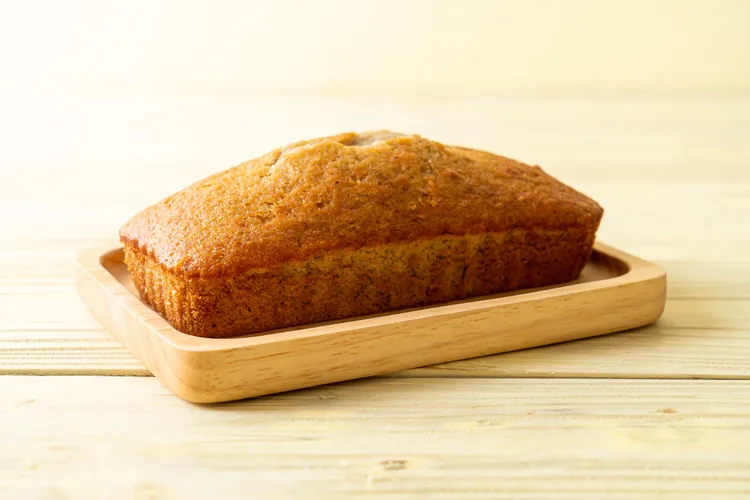
Most banana bread recipes fail for one of two reasons: too much flour makes it dry and cakey, too little makes it gummy in the middle. The fix isn't a better recipe. It's understanding the ratio underneath every good one, so you stop needing a recipe at all.
The Ratio
Strip away the mix-ins and every solid banana bread comes down to the same proportions, by weight:
- 3 parts mashed ripe banana
- 2 parts flour
- 1 part sugar
- 1 part fat (melted butter or neutral oil)
- 1 egg per 2 medium bananas
- 1/2 teaspoon baking soda per cup of flour
- 1/4 teaspoon salt per cup of flour
In practical kitchen terms, that's about 3 medium bananas (roughly 1 1/3 cups mashed), 1 3/4 cups flour, 3/4 cup sugar, 1/2 cup melted butter, 2 eggs, 1 teaspoon baking soda, and 1/2 teaspoon salt. That combination fills a standard 9x5-inch loaf pan and bakes in 55 to 65 minutes at 350°F.
The banana is doing more work than people assume. It's not just flavor, it's most of the moisture and a good chunk of the structure. That's why banana bread doesn't behave like a standard cake recipe once you start scaling it.
Why the Ratio Matters More Than the Recipe
Once you know the ratio, you can react to what's actually in your kitchen instead of running out for ingredients. Only two ripe bananas instead of three? Scale the flour, sugar, and fat down with it, don't just use less banana in a recipe built for more. Out of butter? Any neutral fat in the same volume works, because the ratio cares about function, not brand.
This is also why banana bread is such a forgiving practice ground for understanding ratios in baking generally. The banana supplies liquid and some binding, similar to how buttermilk or yogurt would in a different quick bread. Swap the fruit for applesauce or pumpkin puree at the same ratio and you get a workable quick bread, though the leavening and bake time will shift slightly since those purees carry more water and less natural sugar.
The One-Bowl Method
The one-bowl part isn't a shortcut that sacrifices quality, it's the correct method for this ratio. Quick breads rely on minimal gluten development, so there's no reason to dirty a stand mixer.
- Mash the bananas directly in the mixing bowl until mostly smooth, a few small lumps are fine.
- Whisk in the melted fat, sugar, and eggs until combined. The batter will look slightly broken at this stage, that's normal.
- Add the dry ingredients (flour, baking soda, salt) directly on top and fold with a spatula just until no dry streaks remain, 15 to 20 strokes. Stop as soon as the flour disappears.
- Fold in any mix-ins last, so they don't get worked into the batter during the flour stage.
- Pour into a greased and lined 9x5-inch pan and bake at 350°F for 55 to 65 minutes, until a skewer in the center comes out with a few moist crumbs, not wet batter.
The overmixing point is the one place people lose the loaf. Every extra stroke past "no dry streaks" develops gluten and pulls moisture out of the crumb, which is what produces that tough, tunneled texture instead of a tender one.
Troubleshooting by Ratio, Not Guesswork
Most banana bread problems trace back to one part of the ratio being off, which makes them easy to diagnose once you know where to look.
Gummy or wet center, done on the outside: Usually too much banana relative to flour, or the oven running cool so the outside sets before the center finishes. Weigh your bananas next time, "3 bananas" can range from 300g to 450g depending on size, and that swing is enough to throw off the ratio.
Dense, heavy loaf that doesn't rise much: Baking soda older than six months loses potency fast. Test it by dropping a pinch into vinegar, if it doesn't fizz vigorously, replace it before you blame the recipe.
Tough or rubbery texture: Overmixing after the flour goes in. Fold less than feels sufficient, the batter should still look slightly streaky before you stop.
Sunken middle: Usually underbaked, not overleavened. Pull it a few minutes later next time and check with a skewer instead of relying on total time, ovens vary by up to 25°F from their dial setting.
Overflows the pan: Too much batter for the pan size, or too much leavening. Stick to the 1/2 teaspoon baking soda per cup of flour ratio and don't fill a loaf pan past two-thirds.
Scaling and Variations
Because the whole thing is ratio-based, scaling up for muffins or two loaves is just multiplication. Doubling the batch for two loaves means doubling every part exactly, no adjustment to leavening percentage needed. For muffins, the same batter works, just cut baking time to 18-22 minutes at the same oven temperature and expect about 12-14 standard muffins from a single-loaf batch.
Swaps that hold the ratio intact:
- Whole wheat flour: Replace up to half the flour by weight without changing anything else. Going beyond that starts to dry out the crumb since whole wheat absorbs more liquid.
- Reduced sugar: Cutting sugar down to 1/2 cup still works structurally, since banana bread doesn't rely on sugar for structure the way a cake does. Below that, the crust won't brown as well.
- Oil instead of butter: Neutral oil at the same volume produces a slightly moister, denser crumb than butter, and it stays moist longer at room temperature because oil doesn't solidify the way butter fat does when cooled.
- Mix-ins: Up to 1 cup of nuts, chocolate chips, or dried fruit folds in without disrupting the ratio. Toss them in a spoonful of the measured flour first so they don't all sink to the bottom.
Storage
Banana bread keeps at room temperature, wrapped tightly, for about 4 days. It actually improves on day two as the crumb settles and the banana flavor deepens. For longer storage, wrap the fully cooled loaf in plastic then foil and freeze for up to 3 months. Thaw at room temperature still wrapped, unwrapping too early lets condensation form on the surface and makes it soggy.
Once this ratio is second nature, you'll notice you stop checking recipes for banana bread entirely, you just check how many bananas are going soft on the counter and work backward from there.
Latest