Rosemary Brown Butter Sauce for Pasta, Chicken, and Vegetables
A five-minute rosemary brown butter sauce that works across pasta, chicken, and vegetables, building nutty depth and herb flavor at the same time.
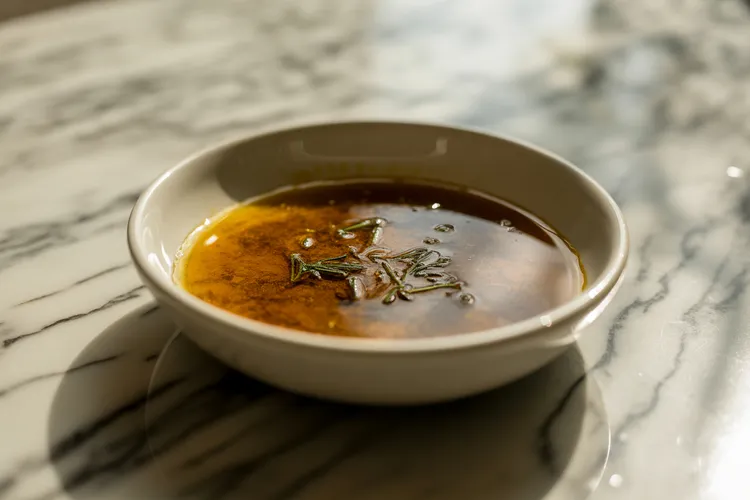
Browning butter takes about five minutes and transforms it from a simple fat into something nutty and complex - adding rosemary to the process lets the herb infuse directly into the butter as it browns, building two layers of flavor at once.
Rosemary Brown Butter Sauce
Prep time: 2 minutes | Cook time: 6 minutes | Makes: about 1/2 cup, enough for 4 servings
Ingredients
- 1/2 cup (1 stick) unsalted butter
- 2 sprigs fresh rosemary, plus 1 tbsp finely chopped fresh rosemary
- 1 garlic clove, smashed (optional)
- Squeeze of fresh lemon juice
- Salt and black pepper, to taste
Instructions
- Add the butter, rosemary sprigs, and smashed garlic clove if using to a light-colored pan (this makes it easier to judge the color as it browns) over medium heat.
- Once melted, the butter will foam. Swirl the pan occasionally and watch closely - it will go from foamy to golden to a nutty brown fairly quickly.
- Once you see brown flecks forming at the bottom of the pan and it smells distinctly nutty (around 4 to 6 minutes total), remove from the heat immediately - butter can go from browned to burnt in a matter of seconds.
- Remove and discard the rosemary sprigs and garlic clove.
- Stir in the finely chopped fresh rosemary and a squeeze of lemon juice. Season with salt and pepper.
- Use immediately, spooned over pasta, chicken, or vegetables.
Notes
This sauce doesn't hold well - the fresh rosemary flavor is best right after making it. If needed, the plain brown butter (before adding fresh rosemary) can be made ahead and gently rewarmed, with the fresh herb stirred in just before serving.
What to Use It On
Rosemary brown butter is excellent tossed with fresh pasta, particularly something simple like tagliatelle or ravioli where the sauce doesn't have to compete with a lot of other flavors. It's equally good spooned over pan-seared chicken breast, roasted or seared salmon, or simple steamed or roasted vegetables like squash, green beans, or cauliflower.
Watching for the Right Moment
The line between browned butter and burnt butter is narrow - once the milk solids start turning golden brown and you can smell a nutty aroma, it's ready, and waiting even 30 seconds longer risks burning it. Removing the pan from heat entirely once it's browned (rather than just lowering the heat) helps prevent overshooting, since the pan retains enough heat to continue cooking briefly even off the burner.
Variations
- Sage instead of rosemary: A classic alternative, particularly with pasta - though rosemary holds up to heartier proteins better.
- Nutty finish: Toasted pine nuts or walnuts stirred in at the end add texture, especially over pasta.
- Parmesan pasta: Toss the sauce with pasta and a generous amount of grated Parmesan and a splash of pasta cooking water to loosen it into a light coating sauce.
This is one of the fastest ways to make rosemary the centerpiece of a dish rather than a background note. For more quick rosemary recipes, see the complete rosemary guide.
Latest