Sheet Pan Gnocchi: Crispy, Not Boiled
A one-pan method for roasting gnocchi until golden and crisp instead of boiling it, with vegetables and a quick Parmesan finish, ready in under 40 minutes.
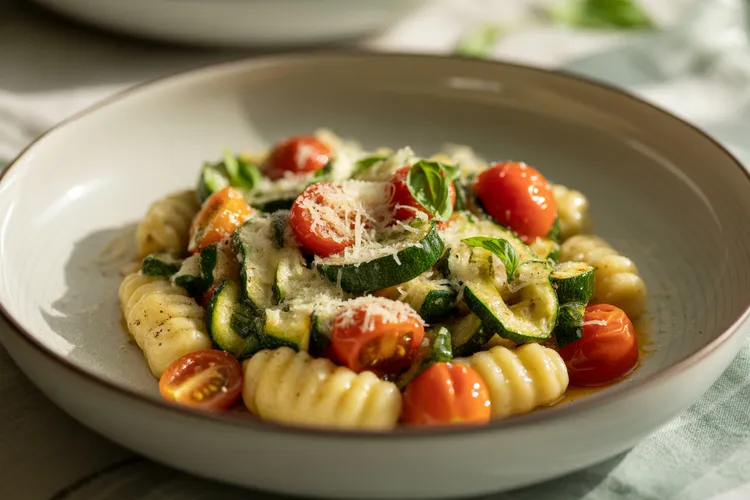
Boiled gnocchi has one texture: soft. Roast the same bag on a sheet pan and you get crisp, blistered edges on the outside while the inside stays pillowy - no extra pot, no draining, no risk of a gluey clump sticking to the colander.
Why Roasting Beats Boiling Here
Store-bought potato gnocchi is already cooked through in the package - boiling it is really just reheating and hydrating the dough. High, dry oven heat does something boiling water can't: it drives moisture off the surface and browns the starch, so you get a crust. A 425°F oven and 25-30 minutes is enough. No blanching step, no pre-boil.
The other advantage is the pan itself. Everything - gnocchi, vegetables, protein if you're adding one - cooks in the fat and juices released along the way. That's flavor a stovetop sauce has to fake with butter and stock. It's also fewer dishes: one sheet pan and a mixing bowl, compared to a pot for boiling, a colander, and a separate skillet for the sauce.
There's a timing benefit too. Boiled gnocchi floats within 2-3 minutes and turns mushy fast if you're distracted for even a minute past that. Roasted gnocchi has a much wider window - it holds its texture for the full 25-30 minutes and doesn't collapse if you're five minutes late checking on it.
What Kind of Gnocchi Works Best
Shelf-stable, vacuum-sealed potato gnocchi (the kind sold in a plastic pouch, not refrigerated) roasts the most reliably. It starts drier than fresh or refrigerated gnocchi, so it browns faster and holds its shape better under high heat.
Refrigerated gnocchi from the deli case works too, but it has slightly more surface moisture, so expect a few extra minutes in the oven before the edges start to color. Fresh, uncooked gnocchi from a specialty store or homemade dough is the most delicate of the three - it's more prone to sticking to the pan and needs a shorter first roast before flipping. Cauliflower gnocchi and other vegetable-based versions also work, though they release more water as they cook and will need closer to 35 minutes total to crisp properly.
Whichever type you use, don't rinse it and don't add it to the pan wet. Pat dry with a paper towel first if the package left any surface moisture - that alone can be the difference between blistered edges and a pale, steamed result.
Ingredients
- Gnocchi: 1 lb (16 oz) shelf-stable or refrigerated potato gnocchi, uncooked, straight from the package
- Cherry tomatoes: 1 pint, halved
- Zucchini or yellow squash: 1 medium, cut into half-moons
- Red onion: 1 small, cut into wedges
- Garlic: 3 cloves, smashed and roughly chopped
- Olive oil: 3 tbsp, divided
- Kosher salt: 3/4 tsp
- Black pepper: 1/4 tsp
- Red pepper flakes: 1/4 tsp (optional)
- Parmesan, grated: 1/3 cup, plus more for serving
- Fresh basil: a handful, torn, for finishing
- Balsamic vinegar: 1 tbsp (optional, for finishing)
The vegetable mix here is a starting point, not a rule. Anything that roasts well at 425°F in 20-30 minutes and doesn't release excessive water will work - see the variations section below for swaps that hold up.
Instructions
- Heat the oven to 425°F. Do not preheat with the pan inside - a cold pan gives you room to work fast while the gnocchi is still dry, and starting the pan cold slightly extends the first roasting stretch, which helps the bottom layer brown rather than scorch.
- Do not boil or thaw the gnocchi first. Tip it straight from the package onto a rimmed sheet pan, breaking apart any pieces that are stuck together.
- Add the cherry tomatoes, zucchini, red onion, and garlic to the same pan. Drizzle with 3 tablespoons olive oil and sprinkle with salt, pepper, and red pepper flakes. Toss everything with your hands until coated - this gets oil into the crevices of the gnocchi, which is what actually crisps, not just the surface.
- Spread into a single layer with space between pieces. Overcrowding steams the gnocchi instead of browning it - use two pans if your gnocchi and vegetables don't fit with room to spare. A half-sheet pan (18x13 inches) is the right size for this amount; anything smaller and you'll need to split the batch.
- Roast for 15 minutes, then pull the pan out and flip everything with a spatula. The gnocchi on the bottom will look pale; that's fine, the flip fixes it. Scrape along the pan surface rather than just stirring, since the pieces touching the metal are the ones that need turning.
- Return to the oven for another 10-15 minutes, until the gnocchi is golden and blistered at the edges and the tomatoes have started to collapse and release their juices.
- Pull the pan out, scatter the Parmesan over everything while it's still hot so it melts slightly into the vegetables and gnocchi, and toss once more.
- Finish with torn basil and a drizzle of balsamic vinegar if using. Serve straight from the pan - it holds heat well and saves you a dish.
Nutrition (per serving)
Makes 4 servings. Values are estimates based on standard packaged gnocchi and will shift with brand and add-ins.
- Calories: ~340 kcal
- Protein: 9g
- Carbs: 48g
- Fats: 13g
This is a carb-forward dish by design - gnocchi is potato and flour. Adding a protein like chickpeas or sausage (see variations) shifts the macro balance closer to a full dinner rather than a side.
Getting the Crisp Right
Three things determine whether this comes out crispy or just warm and soft:
Skip the boil, skip the thaw. Gnocchi straight from the fridge or shelf has a dry, floury surface. Boiling it first - or letting frozen gnocchi thaw into a puddle - adds moisture the oven then has to cook off before it can brown, which costs you 10-15 extra minutes and usually still doesn't crisp evenly.
Give it room. A half-sheet pan fits one pound of gnocchi plus vegetables in a single layer. If it looks like more than one layer once spread out, split it across two pans. Crowded gnocchi releases steam that has nowhere to go, and steam is the enemy of crisp.
Use a metal pan, not glass. Metal conducts heat faster and browns the bottom layer of gnocchi in direct contact with the pan. Glass or ceramic bakeware runs cooler and softer, and you'll likely need an extra 10 minutes to get the same result, if you get it at all.
A fourth factor worth mentioning: parchment paper is optional here, and skipping it actually helps. Bare metal browns gnocchi faster than parchment does, since parchment insulates slightly. If cleanup is the priority, use parchment and expect a touch less crispness; if crispness is the priority, go bare and give the pan a good soak afterward.
Variations
This recipe is a template more than a fixed dish. A few swaps that hold up well:
Add protein: Toss in a can of drained chickpeas for extra protein and crunch, or add pre-cooked Italian sausage, sliced, for the last 10 minutes of roasting so it doesn't dry out. For a starting point on pan technique with meat, our one-pan balsamic chicken with mushrooms and cherry tomatoes uses a similar high-heat, single-pan approach and is worth a look if you want to build a heavier protein into the same method.
Swap the vegetables: Broccoli florets, bell peppers, or mushrooms all roast well alongside gnocchi at 425°F. If you want a template for getting vegetables properly crisp rather than steamed, the technique in our roasted broccoli with garlic and olive oil transfers directly - same high heat, same single-layer rule. Brussels sprouts work too; halve them so the cut side gets direct contact with the pan, similar to the approach in our crispy Brussels sprouts recipe.
Root vegetables instead of summer produce: In colder months, swap the zucchini and cherry tomatoes for cubed carrots or cauliflower. They need a slightly longer first roast, closer to 18-20 minutes, before the flip - carrots in particular benefit from the mustard-forward finish in our roasted carrots with mustard and herbs, which pairs well spooned over the finished gnocchi.
Make it a pesto version: Skip the Parmesan-and-balsamic finish and instead toss the roasted gnocchi with 2-3 tablespoons of parsley and walnut pesto right off the pan. The residual heat loosens the pesto into a light coating instead of a heavy sauce, and it holds up better than a cream sauce would for leftovers.
Homemade gnocchi: This method works with fresh, uncooked homemade gnocchi too, though it's more delicate - shave the first roast to 12 minutes before flipping and use a wide, flat spatula rather than tongs, since fresh dough tears more easily than the shelf-stable kind. If you're making your own dough, our whole-grain gnocchi with olive oil recipe is a good base to start from.
Add a sharper finish: If balsamic feels too sweet for your taste, a squeeze of lemon and a handful of chopped chimichurri-style herbs brightens the dish instead - the sauce from our roasted caulini with chimichurri works well spooned over the top.
Serving Suggestions
This is filling enough to stand alone as a vegetarian main for two, or as a side for four alongside a simple roasted or pan-seared protein. A green salad with a sharp vinaigrette cuts through the richness of the Parmesan and olive oil well - the acidity does more work than a heavier side would. For a heartier plate, add crusty bread to soak up the pan juices left behind, which carry most of the flavor from the roasted garlic and tomatoes.
Leftover portions also work cold or room-temperature the next day, tossed with a little extra olive oil and lemon juice, more like a pasta salad than a reheated dinner.
Meal Prep and Storage
Gnocchi loses some crispness in the fridge, but it's still good reheated - just don't microwave it. Store leftovers in an airtight container for up to 3 days. To reheat, spread on a sheet pan and roast at 400°F for 8-10 minutes; the dry heat brings back most of the crust that a microwave would turn soggy and leathery instead.
For batch cooking, double the gnocchi and vegetables across two pans rather than piling everything onto one - the crisping only works with a single layer, and doubling the quantity on the same pan just brings back the overcrowding problem. Portion into containers once fully cooled, so residual steam doesn't soften the gnocchi in the container. If you're building this into a bigger weekly rotation, our batch cooking guide covers which components hold up best over several days and which are better prepped fresh, which is useful context since gnocchi falls somewhere in the middle - fine for 3 days, not great much beyond that.
This dish doesn't freeze particularly well once roasted; the texture that made it crisp in the first place tends to go soft and slightly gummy after a freeze-thaw cycle. If you want a freezer-friendly option, freeze the uncooked gnocchi and vegetables separately and roast fresh from frozen instead.
Common Questions
Can I use frozen gnocchi? Yes, but roast it frozen, straight from the freezer, never thawed. Add 5-8 minutes to the total cook time and expect slightly less crisp than shelf-stable gnocchi, since frozen gnocchi carries more surface moisture as it thaws in the oven.
Why is my gnocchi soft instead of crispy? Almost always overcrowding or a wet pan. Check that pieces have space around them before roasting, and make sure you're not lining the pan with foil, which traps moisture underneath rather than letting it evaporate.
Do I need to oil the pan first? No - the oil tossed with the gnocchi and vegetables is enough. Extra oil on the pan itself tends to fry the bottom layer rather than roast it, which browns unevenly and can leave some pieces greasy while others stay pale.
Can I make this dairy-free? Skip the Parmesan and use the pesto or chimichurri finish instead - both variations above work without cheese and don't rely on it for flavor.
What if I don't have a rimmed sheet pan? A rim matters here more than usual, since the vegetables release liquid as they roast. A flat cookie sheet will let that liquid run off the edges and onto the oven floor, so stick with a rimmed pan or a large oven-safe skillet if that's what you have.
Latest