How to Hit 40 Grams of Protein at Breakfast
Most breakfasts deliver 10-15g of protein at best. Getting to 40g before noon is easier than it sounds - and research consistently shows it changes how hungry you are for the rest of the day.
Front-loading protein at breakfast reduces ghrelin (the primary hunger hormone) more effectively than spreading the same calories across later meals. Multiple controlled studies show that high-protein breakfasts reduce afternoon and evening calorie intake even when subjects aren't told to restrict food. The effect is reliable enough that if you make one change to your daily eating, shifting breakfast protein is probably the highest-leverage option available.
40g is the practical target. Below 25g and the satiety effect is modest. Above 50g at breakfast doesn't produce meaningfully better outcomes for most people. 35-40g is the range where the hunger-suppression effect is strong and where meal assembly remains practical on a weekday morning.
Why Most Breakfasts Fall Short
Standard Western breakfast foods are structured around carbohydrates and fat. Cereal: 3-6g protein. Toast with peanut butter: 8-10g. Granola with milk: 8-12g. A banana and coffee: under 2g. Even a smoothie - unless deliberately constructed around protein - typically delivers 5-10g from fruit, milk, and maybe some oats. None of these are bad foods. They're just not protein anchors.
The challenge at breakfast is time. People have less of it in the morning than at any other meal. The solution is either batch cooking ahead of time or choosing protein sources that require almost no preparation at all.
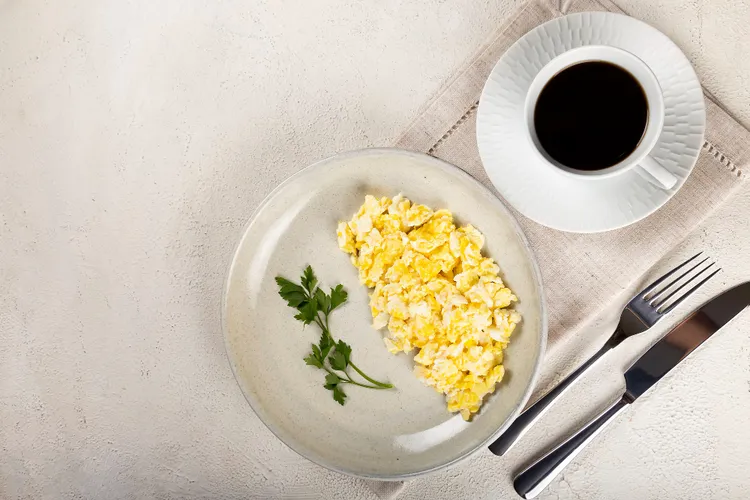
Build 1: Eggs and Cottage Cheese Scramble (~37g protein, 340 kcal, 8 minutes)
Three whole eggs scrambled with 150g low-fat cottage cheese stirred in at the end of cooking. The cottage cheese melts into the eggs and adds a creamy, slightly denser texture - most people cannot identify it as cottage cheese when eating. The flavour is mild and takes hot sauce, fresh herbs, or chilli flakes well.
- Add 2 slices of turkey bacon to push past 40g protein
- Add a slice of sourdough for a more filling meal at ~480 kcal
- Works cold from the fridge if batch-cooked the night before
The structured version of this build is the egg and cottage cheese omelet - same ingredients, slightly more organised presentation, useful when you have 12 minutes rather than 8.
Macros: ~37g protein, ~14g fat, ~4g carbs, 340 kcal
Build 2: Batch-Cooked Egg Muffins (~40g protein, 370 kcal, 0 minutes on the day)
The best breakfast for people who have no time on weekday mornings. Make 12 egg, spinach and bacon muffins on Sunday (about 35 minutes total). Each muffin delivers roughly 9-10g protein. Three muffins gives ~28g. Add 150g of Greek yogurt on the side to clear 40g easily.
- Store in the fridge for 5 days, or freeze individual muffins for up to 3 months
- Eat cold or microwave 60 seconds - no decision required in the morning
- The Sunday prep time costs about 10 minutes of active work (the rest is oven time)
Macros (3 muffins + 150g yogurt): ~40g protein, ~16g fat, ~12g carbs, 370 kcal
Build 3: Greek Yogurt Protein Bowl (~42g protein, 380 kcal, 3 minutes)
200g non-fat Greek yogurt mixed with 1 scoop (30g) of whey protein powder, topped with 30g oats and a handful of berries. Stir the protein powder into the yogurt before adding dry toppings - this prevents clumping and gives a thick, pudding-like consistency.
- Choose a flavoured protein powder (vanilla or unflavoured work best) to add interest without adding sugar
- Swap berries for banana if you want a higher-carb morning after a training session
- This is also the fastest build on this list - prep time under 3 minutes, no cooking
Macros: ~42g protein, ~3g fat, ~38g carbs, 380 kcal
Build 4: High-Protein Overnight Oats (~46g protein, 460 kcal, 5 minutes the night before)
Standard overnight oats deliver 8-12g protein depending on the recipe - mostly from oats and a small amount of milk. To push toward 40g, two changes are needed: replace half the liquid with blended cottage cheese or add a scoop of protein powder, and use Greek yogurt as part of the base.
Using the blueberry chia overnight oatmeal as the base recipe, adding 1 scoop of protein powder and substituting 100g of cottage cheese for half the liquid gives you approximately 46g protein - a strong breakfast that requires zero morning effort.
- Prep 3 jars on Sunday night to cover Monday, Tuesday, Wednesday
- The chia seeds thicken overnight and slow digestion further, extending satiety
- Eat cold directly from the jar - no reheating or assembly needed
Macros (modified): ~46g protein, ~10g fat, ~52g carbs, 460 kcal
Build 5: Smoked Salmon and Cottage Cheese Bowl (~35g protein, 280 kcal, 2 minutes)
100g smoked salmon on 200g low-fat cottage cheese with fresh dill, a squeeze of lemon, and optionally some capers or sliced cucumber. Zero cooking. Ready in 2 minutes. The smoked salmon and cottage cheese bowl is the highest-protein zero-cook breakfast available - the best option for people who genuinely will not touch a pan or a stove before 9am.
The protein is slightly lower than the other builds at ~35g, but add two hard-boiled eggs on the side (batch-cooked from Sunday) and you're at 47g.
- Cost is higher than egg-based breakfasts due to smoked salmon pricing - best saved for 3-4 mornings per week rather than every day
- Works on rye crackers or sourdough if you want a more substantial meal
Macros: ~35g protein, ~8g fat, ~6g carbs, 280 kcal
What About Protein Shakes?
A shake with 2 scoops of protein powder in milk or water delivers 40-50g protein in under 2 minutes. This works as a practical anchor for busy mornings but functions better as a bridge between meals than as a meal in itself - liquid protein doesn't suppress hunger as effectively as solid food at equivalent protein loads. If you use a shake as breakfast, pair it with something solid (even a hard-boiled egg or small portion of oats) to extend satiety.
The oatmeal banana protein shake is a more substantial version that blends protein powder with oats and banana - more filling than a pure shake because the oats and fruit add volume and fibre.
The Foods to Avoid Using as the Anchor
Granola, muesli, cereal, toast, fruit, most yogurts (non-Greek), and smoothies without protein powder are all low-protein foods. They're not off-limits - but they can't carry a 40g breakfast on their own. Use them to round out the carbohydrate and fat contribution around a protein anchor, not as the anchor itself.
Making It Consistent
Breakfast habit change succeeds when you remove the decision from the morning. Pick one or two builds from this list, batch-prep what can be prepped, and run the same breakfast 4-5 days per week. Variety is nice but is the enemy of consistency when time is short. The protein-first cooking method guide covers the full daily structure for hitting 150g across all three meals.
The Science: Why Morning Protein Works
Multiple controlled trials confirm that high-protein breakfasts reduce total daily calorie intake compared to lower-protein breakfasts at equivalent calories. The mechanism is hormonal: protein suppresses ghrelin more effectively in the morning, and this suppression carries through the day. If you snack heavily in the afternoon or struggle to control total calorie intake, increasing breakfast protein is the highest-leverage single dietary change you can make.
What About Intermittent Fasting?
If you skip breakfast and begin eating at noon, the protein-first logic applies to your first meal rather than a morning time slot. Hit 40-50g protein at your first eating occasion, whatever the time. Total daily protein distribution matters more than the specific meal timing for most people. If you skip breakfast and find it hard to hit protein targets by end of day - a common scenario - try shifting more protein to your first meal rather than trying to consume 100g in two evening meals.
Building a Sustainable Breakfast Rotation
Variety is useful but the enemy of consistency on weekday mornings. Pick 2-3 of these builds and rotate through them. The egg muffins and overnight oats require Sunday prep; the cottage cheese bowl requires no prep at all. Running a Sunday batch of egg muffins alongside 3 overnight oat jars covers 6 weekday breakfasts with zero weekday effort. For the full daily structure, see the protein-first cooking method guide.
What to Expect in the First Week
Most people who shift breakfast to 35-40g protein report two immediate changes: they are noticeably less hungry by mid-morning, and they consume fewer calories in the afternoon and evening without trying to. These effects typically appear within 3-5 days of consistent high-protein breakfasts. They are not placebo - the hormone response to protein is measurable and reliable. Give the change at least 5 weekdays before evaluating whether it's working. The habit of prepping ahead (batch muffins, overnight oats) is the thing that makes it stick past the first week. For the full daily protein structure, see the protein-first cooking method guide.
One final practical note: if you try a build and find the portion too large or too small to hit your exact target, adjust only the protein source quantity - not the supporting ingredients. Adding 50g more Greek yogurt to a bowl costs 5g protein and 30 kcal. Removing 50g brings it down by the same. The supporting ingredients (oats, berries, toast) stay constant. This keeps the meal balanced while letting you dial protein up or down precisely to fit your daily distribution target.
Latest