Basil Pruning and Pinching to Stop Bolting
How to spot early flower spikes on basil, pinch them before they cost you flavor, and recover a plant that's already bolted.
Basil bolts fast once it starts, and by the time flower spikes are obvious, the leaves nearby have usually already turned bitter. Catching it early is less about willpower and more about knowing exactly where to look.
What Bolting Actually Is
Bolting is a plant's shift from vegetative growth, leaves and stems, into reproductive growth, flowers and eventually seed. It's triggered by heat, long daylight hours, plant maturity, or stress from underwatering. Once a basil plant commits to flowering, it stops putting significant energy into new leaf growth, and existing leaves get tougher and more bitter as the plant redirects sugars toward the flower spike.
Basil doesn't die from flowering the way some annuals slow down gracefully. It can go from a few small buds to a full flower spike in under a week during hot weather, which is why it feels sudden even though the plant has been signaling it for days.
Spotting It Early
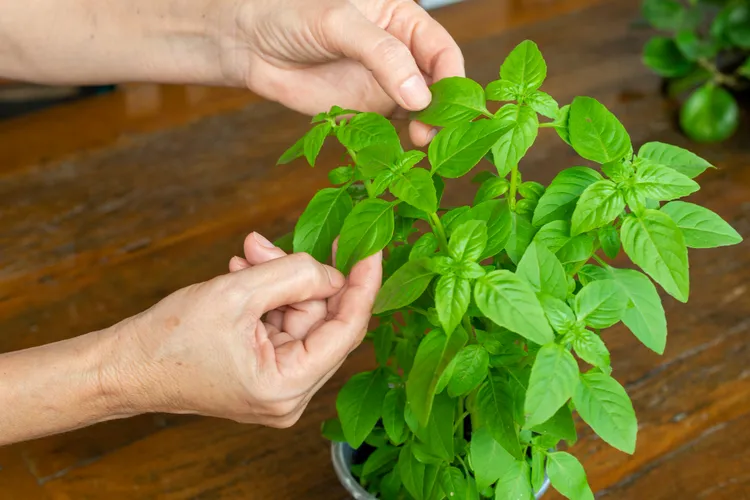
Look at the very top of each stem, at the growing tip. Before an obvious flower spike forms, you'll see the tip start to elongate slightly and the newest leaves get smaller and more tightly clustered than the pair below them. This tight clustering is the tell. A healthy, non-flowering stem tip has evenly spaced, similarly sized leaf pairs all the way up.
Check the growing tips every time you harvest, not just when you notice a problem. By the time a flower spike is visible without close inspection, the plant has already started the shift.
How to Pinch It Out
Using your fingernails or small scissors, remove just the growing tip, the top quarter inch to half inch of the stem, right above the topmost fully developed leaf pair. This is a much smaller cut than a full harvest cut. You're not trying to get leaves for cooking here, you're interrupting the signal that's telling the plant to flower.
Do this across every stem showing the early signs, not just the most obvious one. Basil plants often start several stems toward flowering around the same time once conditions trigger it, particularly during a heat wave or after the plant reaches full size.
If It's Already Flowering
A plant with open flowers isn't a lost cause, but the leaves closest to the flower spike will taste noticeably more bitter and are better used in cooked dishes than raw. Cut the entire flowering stem back hard, well below the flower spike, down to a point with healthy leaf pairs. This won't undo the bitterness in leaves already affected, but it removes the active flower and gives the plant a chance to push new, better-tasting growth from lower nodes.
Expect a short lag, usually 7 to 10 days, before new growth appears after a hard recovery cut on a flowering plant. This is normal. The plant is redirecting stored energy back toward vegetative growth.
A Weekly Pinching Routine
- Every time you harvest, check every stem tip for the tight-cluster signal before cutting for the kitchen
- Pinch any early flower signs immediately, even from stems you're not harvesting from that day
- During heatwaves, check every 3 to 4 days instead of weekly, since heat accelerates the shift to flowering
- Combine flower pinching with your regular harvest cuts described in How to Harvest Basil So It Keeps Producing so you're not making two separate passes over the plant
Why This Matters for a Glut
A plant that's kept from flowering all season produces more total leaf volume, spread more evenly over time, than one that's allowed to bolt and gets cut back only after the fact. Ironically, good pinching discipline is one of the best tools against an overwhelming, all-at-once glut, since it keeps the plant in a steady production cycle instead of a boom-and-bust one. If you're already past that point and have more basil than you know what to do with, the Basil Glut Guide covers storage and preservation for everything you cut.
What Triggers Bolting Beyond Heat
Heat gets most of the blame, but day length plays an equally large role. Basil is sensitive to photoperiod, the ratio of daylight to darkness, and many varieties shift toward flowering once days pass a certain length threshold regardless of temperature. This is why basil grown in late summer, as days start shortening again, sometimes bolts even during a mild stretch of weather, seemingly out of nowhere.
Plant maturity compounds both factors. A basil plant that's been growing for 10 to 12 weeks is simply more prone to flowering than a younger plant, even under identical light and water conditions, since flowering is part of the plant's natural end-of-life reproductive cycle. This is part of why succession planting, starting new plants partway through the season, helps maintain a steadier supply than relying on a single plant to produce all season without ever bolting.
Recognizing the Difference Between Stress Wilting and Bolting
Gardeners sometimes confuse a heat-stressed, wilting plant with one that's beginning to bolt, but the signs are distinct. A wilting plant droops broadly across all its leaves and typically recovers within an hour or two of watering or evening cooling. A bolting plant doesn't droop in this uniform way; instead, specific growing tips show the tight leaf clustering described above, and watering alone won't reverse it. If a plant is both wilting and showing early bolt signs, address the water stress first, since drought is itself a bolting trigger, then check growing tips again once the plant has recovered.
Common Mistakes
- Only checking the most obvious stems. Flowering can start on interior or lower stems that aren't the first ones you see. A full pass over the plant, not just the tallest or most visible growth, catches early signs sooner.
- Pinching too little. Removing just the very tip of a flower spike, rather than cutting back to a full node with healthy leaves, often isn't enough to stop the flowering signal once it's underway. When in doubt, cut back further rather than less.
- Assuming one pinch is permanent. Basil can attempt to bolt again from the same plant later in the season, especially after a heat wave. Ongoing monitoring, not a single intervention, is what keeps a plant productive long-term.
Frequently Asked Questions
Are basil flowers edible?
Yes, basil flowers are edible and have a milder version of the leaf's flavor. They make a reasonable garnish even though the priority for leaf production is usually to remove them before they fully open.
Can I let one plant flower on purpose to collect seeds?
Yes. If seed saving is a goal, dedicate one plant to flowering and seed production rather than trying to harvest leaves and save seeds from the same plant. Keep this plant separate from the ones being actively harvested for the kitchen.
Will pinching flowers reduce the total harvest for the season?
No, the opposite. Preventing flowering keeps a plant in vegetative growth mode longer, which generally produces more total leaf volume over a full season than a plant that's allowed to bolt and is only cut back afterward.
Tips for Success
Keep basil consistently watered during hot stretches; drought stress is one of the biggest bolting triggers and is fully within your control, unlike day length. Mulching around the base helps retain soil moisture and reduces the temperature swings that push a plant toward flowering. If you're managing several basil plants at once, a simple written schedule for checking and pinching makes it far easier to stay ahead of bolting than relying on memory, and folding that check into a broader weekly garden and meal plan keeps it from getting overlooked during a busy week.
Latest