How to Harvest Basil So It Keeps Producing
The cutting technique that makes a basil plant branch and produce faster, plus how often to harvest without stressing it.
Most people harvest basil the way they'd harvest lettuce: pull off a few leaves from wherever looks biggest and move on. That approach works for one meal. It does nothing for the next one, because it doesn't trigger the branching response that makes a basil plant productive all season.
Why Cutting Location Matters
Basil grows from a main stem with leaf nodes spaced along it in pairs. Each node has the potential to produce two new stems if it's exposed to light after the growth above it is removed. Snapping single leaves off the top leaves those nodes buried under more foliage, so they never activate. Cutting the whole stem just above a node forces that node to split into two new stems within days.
This is the entire logic behind basil's reputation as a "cut and it grows back" herb. It's not that basil is unusually resilient. It's that hard, correctly placed cuts trigger a specific growth response that light picking never does.
The Technique
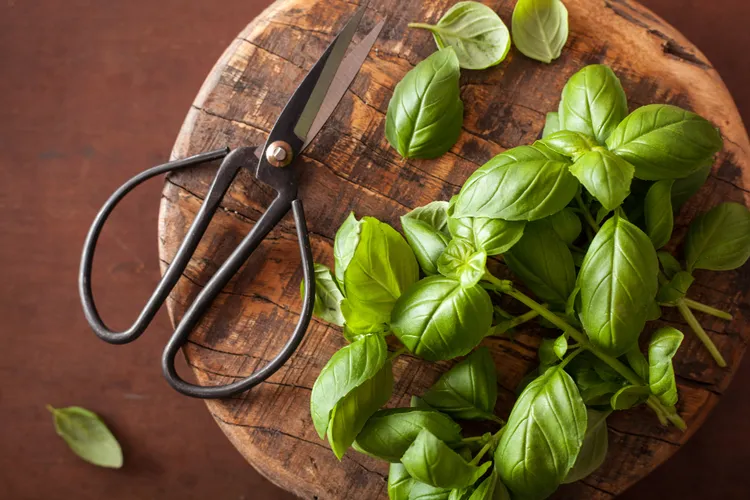
Find a stem with at least three or four sets of leaves. Count down two sets from the top and cut just above that node, at a slight angle, using clean scissors or a sharp knife. You're removing the top third to half of the stem in one cut. This feels aggressive the first time. It's the correct amount.
Repeat this across the plant rather than concentrating cuts on one or two stems. A plant harvested evenly across all its stems produces a more even, continuous supply than one where a few stems are hammered and the rest are ignored.
How Often to Harvest
Once a basil plant is established, roughly six to eight true leaves per stem, it can handle a hard cut every one to two weeks during peak growing season. Faster than that and the plant doesn't have enough leaf area left to photosynthesize and regrow quickly. Slower than that and stems get leggy, flower spikes start forming, and the harvest quality drops.
Young plants, under four inches tall, should not be cut hard yet. Let them establish a full set of side branches first, usually two to three weeks after transplanting, before starting the regular harvest cycle.
Signs You're Harvesting Correctly
- New growth appears at the cut node within 5 to 7 days
- The plant gets bushier, not taller, over the season
- Leaf size stays relatively consistent rather than getting smaller and smaller
- Flowering is delayed compared to an unpruned plant of the same age
If a plant looks stretched, tall, and thin with leaves clustered only at the very top, it hasn't been cut hard enough or often enough. A single hard cut back to just above a lower set of leaves will usually correct this within two weeks.
What Not to Do
Avoid cutting more than 50 to 60 percent of the plant's total foliage in a single session, even if it's overdue. Removing too much at once can stress the plant enough to slow regrowth rather than speed it up, especially in hot weather when the plant is also managing water stress. If a plant has gotten away from you, take it back in two sessions a week apart instead of one drastic cut.
Also avoid harvesting from a plant that's actively flowering without addressing the flower spikes first. Leaves harvested after flowering has started tend to taste more bitter, and the plant's energy is already redirected away from leaf production. See Basil Pruning and Pinching to Stop Bolting for how to catch and reverse this before it costs you the rest of the season.
After the Cut: What to Do With What You've Harvested
A well-timed hard harvest from a mature plant can produce more leaves at once than a single meal needs, which is usually the moment a basil glut starts. Fresh-cut basil holds up for several days if stored properly rather than left loose in the fridge; see The Best Way to Store Fresh Basil for the water-jar method that keeps it usable well past the first day. For a full plan on getting from a big cutting to actual meals, the Basil Glut Guide lays out the order of operations from storage through preservation to recipes.
Adjusting the Routine Through the Season
Early season harvests, in the first few weeks after transplanting, should be lighter and less frequent than midsummer harvests. A young plant with only two or three sets of true leaves doesn't have the reserves to bounce back from a hard cut the way a mature, bushy plant does. Wait until a plant has at least four sets of leaves and a well-branched structure before starting the full harvest cycle described above.
Midsummer, when growth is fastest and days are longest, is when the one-to-two-week hard-cut cycle applies most directly. As days shorten in early fall, basil's growth rate slows even if temperatures are still warm, and the same cutting schedule may need to stretch to every two to three weeks to avoid over-harvesting a plant that can't regrow as fast as it did in July.
Common Mistakes That Slow Regrowth
- Picking only the top few leaves repeatedly. This is the single most common harvesting mistake. It feels gentle but actually stresses the plant more over time than fewer, harder cuts, since it never triggers the branching response and instead just thins out the top growth.
- Harvesting the same few stems every time. This creates uneven growth, with some stems overharvested and stunted while others go unpicked and eventually flower. Rotate which stems get cut each session.
- Ignoring flower spikes while harvesting. Cutting leaves while flower spikes are already forming elsewhere on the plant doesn't stop the flowering process. Check every stem for early bolting signs during each harvest session, not just the ones you're cutting from.
- Cutting during the heat of the day. Leaves harvested in full afternoon sun wilt faster after cutting and hold up less well in storage than morning-harvested basil.
Frequently Asked Questions
Can I harvest basil the same day I plant it?
No. Give a new transplant at least two to three weeks to establish roots and put on some size before any harvesting begins, even light picking.
What if I need a small amount of basil right now and don't want to disrupt the harvest cycle?
Take a single leaf or two from a stem that's not due for its full cut yet, rather than repeatedly picking from the same spot. This has minimal impact on the plant's overall growth pattern as long as it's occasional rather than the main harvesting method.
Does harvest technique differ between basil varieties?
The cutting technique itself is the same across sweet basil, Genovese, and Thai basil. What differs is bolting speed and heat tolerance; see Thai Basil vs Sweet Basil vs Genovese for variety-specific notes.
Tips for Success
Harvest in the morning once dew has dried. Essential oil content, and therefore flavor, is highest before the day heats up. Use clean, sharp scissors rather than pinching with your fingers; a clean cut heals faster and is less likely to introduce disease into the stem. If you're planning to plant a second basil crop or bring a plant indoors before frost, a mapped-out weekly plan makes it easier to time harvests around cooking days instead of guessing. Lining up harvest days with a simple weekly meal plan is often what actually keeps a productive plant from turning into an overwhelming glut.
Latest