Classic Basil Pesto (and 3 Variations for a Glut)
The traditional pesto ratio plus nut-free, vegan, and freezer-batch versions built for using up a large basil harvest.
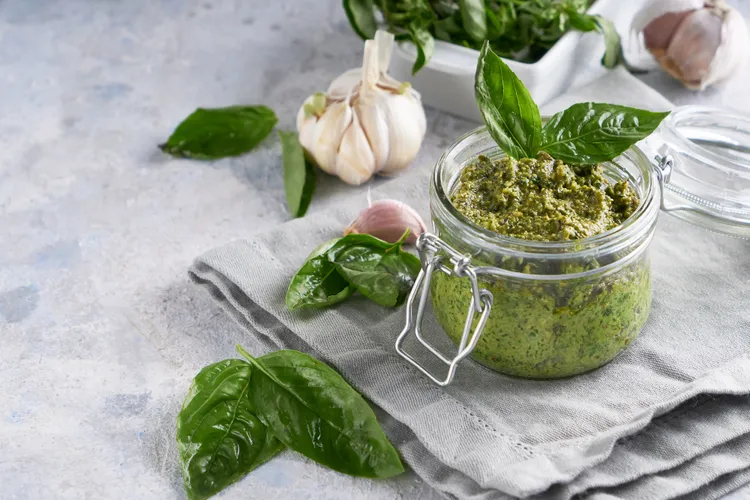
Pesto uses more basil per batch than almost any other common recipe, which makes it the first thing worth making when a glut hits. A standard batch uses two full cups of packed leaves, roughly what a single hard harvest off two or three mature plants produces.
Classic Basil Pesto
The traditional ratio is 2 cups packed basil leaves, 1/2 cup grated Parmesan, 1/2 cup olive oil, 1/3 cup pine nuts, 2 to 3 cloves garlic, and salt to taste.
- Toast the pine nuts in a dry pan over medium heat for 2 to 3 minutes until fragrant; this step makes a noticeable difference and is worth the extra minute
- Combine basil, garlic, and pine nuts in a food processor and pulse until roughly chopped
- With the processor running, slowly stream in the olive oil until the mixture forms a coarse paste
- Stir in the Parmesan by hand rather than processing it, this keeps the texture from turning gummy
- Season with salt to taste; the cheese and nuts already carry some salt, so taste before adding more
This makes about 1.5 cups of pesto, enough for roughly 1 pound of pasta with extra left for spreading on sandwiches or swirling into soup.
Variation 1: Nut-Free Pesto
Swap the pine nuts for an equal amount of toasted sunflower seeds or pepitas. Toast them the same way as pine nuts, in a dry pan until fragrant, and process identically. The flavor shifts slightly earthier but the texture and function in recipes is nearly identical. This version is useful for anyone cooking around a nut allergy without losing the body that nuts give traditional pesto.
Variation 2: Vegan Pesto
Replace the Parmesan with 2 to 3 tablespoons of nutritional yeast plus an extra pinch of salt. The umami depth won't be identical to aged Parmesan, but nutritional yeast gets close enough that the pesto still reads as savory and rounded rather than flat. If a sharper flavor is wanted, a small squeeze of lemon juice, about a teaspoon, brightens the whole batch and compensates for the missing cheese tang.
Variation 3: Freezer-Batch Pesto
For pesto made specifically to freeze rather than eat within the week, leave the Parmesan out of the batch entirely and stir it in fresh after thawing. Cheese can turn slightly grainy after freezing and thawing, while the basil-oil-garlic base freezes perfectly. Portion the cheese-free base into ice cube trays, freeze solid, then transfer to a labeled freezer bag. Each cube is roughly 2 tablespoons, enough for a single serving of pasta once thawed and mixed with fresh Parmesan.
This freezer base holds good flavor for up to 6 months, longer than a fully assembled pesto with cheese already mixed in.
Getting the Most Basil Into Every Batch
Use whole leaves, not just the top tender growth. Slightly larger, more mature leaves work fine in pesto since everything gets processed into a paste anyway, texture differences that would matter in a salad don't matter here. This makes pesto a good use for basil harvested lower on the stem or leaves that got a little sun-worn.
If a harvest is bigger than what one batch can use, double or triple the recipe rather than making smaller, more frequent batches. Processing more basil per session saves time and the freezer-batch version scales cleanly.
Beyond Pasta
Pesto isn't limited to pasta. Spread it on sandwiches in place of mayonnaise, swirl a spoonful into a bowl of tomato soup, use it as a pizza base instead of tomato sauce, or thin it with a little extra oil and lemon juice for a salad dressing. Spreading pesto across multiple meals rather than one big pasta night is often the fastest way to burn through a large batch before it needs freezing.
For more ways to use basil in volume alongside a tomato glut, which often ripens at the same time, see Tomato and Basil Recipes for Peak Summer Harvest. For the full picture of how pesto fits into an overall glut strategy, see the Basil Glut Guide.
Fixing Common Pesto Problems
Bitter pesto usually comes from one of three causes: garlic that's too raw or too much of it, basil that had already started to bolt before harvest, or over-processing that heats the mixture in the food processor and causes the chlorophyll to break down. Using slightly less garlic, avoiding flowering-stage basil, and pulsing rather than running the processor continuously all help.
Pesto that separates, with oil pooling visibly on top, usually just needs a stir; this is a normal result of the oil and solid components settling differently over time in the fridge, not a sign anything has gone wrong. If a batch separates significantly, blending in a small extra splash of oil while pulsing briefly can bring it back together.
Pesto that's too thick to spread easily can be thinned with a little extra olive oil or a spoonful of the pasta cooking water when using it as a sauce, which also helps it cling to the pasta better than oil alone.
Scaling Ingredient Ratios for a Large Batch
The base ratio (basil, oil, nuts, cheese, garlic) scales linearly, so doubling or tripling the recipe is straightforward, but a food processor's capacity is the real limiting factor. Most standard home food processors handle about 4 cups of packed basil comfortably before the blade struggles to reach all the leaves evenly. For anything beyond that, process in two batches and combine, rather than overloading the bowl and ending up with unevenly chopped basil at the bottom while whole leaves sit untouched near the top.
Common Mistakes
- Adding all the oil at once instead of streaming it in. A slow stream while the processor runs creates a smoother, more emulsified texture than dumping the full amount in at the start.
- Processing the cheese with everything else. Cheese processed at high speed with everything else can turn gummy rather than staying distinct in the finished pesto. Stir it in by hand at the end instead.
- Using cold basil straight from the fridge. Basil that's been refrigerated, even briefly, may already have some cold damage that affects both flavor and color in the finished pesto. Use basil stored at room temperature via the water-jar method described in The Best Way to Store Fresh Basil whenever possible.
Frequently Asked Questions
Can I make pesto without a food processor?
Yes, a mortar and pestle produces a more traditional, slightly coarser texture and is the historically original method. It takes longer and more physical effort but works well for smaller batches.
How long does fresh pesto keep in the fridge?
About 5 to 7 days when stored in an airtight container with a thin layer of oil on top to limit air exposure. Beyond that, freezing is the better option; see the freezer-batch variation above.
Can other nuts or seeds replace pine nuts?
Yes, walnuts, almonds, and pistachios all work well in place of pine nuts and each shift the flavor slightly. See the nut-free variation above for a seed-based option if a nut-free version is needed entirely.
Tips for Success
A thin layer of olive oil poured over the top of stored pesto, in the fridge or before freezing, helps prevent the surface from browning by limiting air contact. Basil naturally oxidizes and darkens over a day or two even when properly made; this is cosmetic and doesn't affect flavor or safety. A little browning on top can simply be stirred back in. Since a single batch of pesto can carry several different meals across a week, working it into a meal plan ahead of time helps you get through a big batch efficiently instead of eating the same pasta dish three nights in a row.
Latest