Caprese and Beyond: Fresh Basil Salad Ideas
Five salads built around basil as a main ingredient rather than a garnish, for using it up while it's still fresh.
Most recipes treat basil as a garnish, a few torn leaves scattered on top at the end. That's a poor use of a glut. These five salads use basil as an actual ingredient, by the handful rather than the leaf, which is the fastest way to enjoy fresh flavor before any preservation is needed.
1. Classic Caprese, Done Right
Layer thick slices of ripe tomato and fresh mozzarella, then tuck whole basil leaves between every layer rather than scattering a few on top. Use roughly one full leaf per slice of tomato, not one leaf for the whole plate. Drizzle with good olive oil, a small amount of balsamic vinegar, and flaky salt. The basil should be a third component of the dish, not a decoration.
2. Basil and White Bean Salad
Combine a can of drained white beans (cannellini or great northern) with a full cup of torn basil leaves, thinly sliced red onion, halved cherry tomatoes, and a lemon-olive oil dressing. The beans add enough substance to make this a light lunch on its own, and the volume of basil relative to other ingredients is much higher than in a typical salad.
3. Basil, Peach, and Burrata Salad
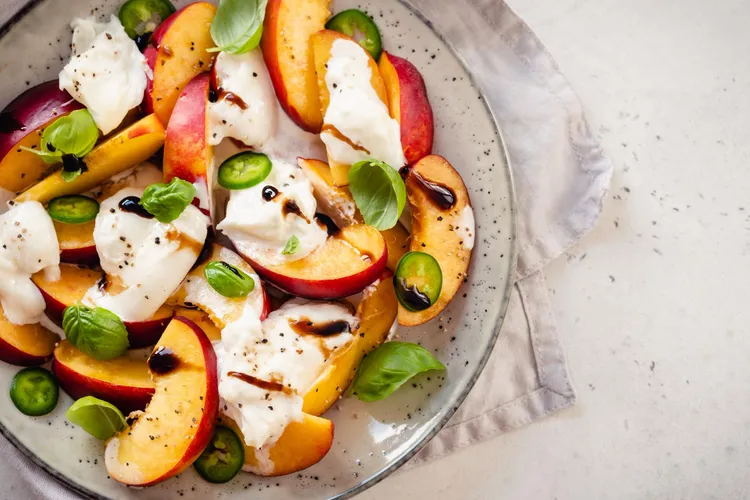
Arrange sliced ripe peaches and torn burrata on a plate, then scatter a generous handful of torn basil leaves, closer to a cup than a garnish sprinkle, across the top. Finish with olive oil, a small drizzle of honey, and flaky salt. The sweetness of the peach against basil's peppery edge is a good use for basil when tomatoes aren't the pairing of choice.
4. Basil Tabbouleh-Style Grain Salad
Take the tabbouleh formula, herbs as the main bulk, grain as the supporting ingredient, and apply it to basil instead of the usual parsley. Combine cooked and cooled bulgur or quinoa with an equal volume of finely chopped basil, diced cucumber, diced tomato, lemon juice, and olive oil. Because the herb is the main ingredient rather than a background note, this salad alone can use up a large handful of basil in a single batch.
5. Watermelon, Basil, and Feta Salad
Cube watermelon and combine with crumbled feta and a full handful of torn basil leaves, more than most recipes call for. Add a squeeze of lime juice and a light drizzle of olive oil. Basil's slight pepperiness cuts through watermelon's sweetness in a way that a small garnish amount doesn't achieve; the ratio matters here more than in most dishes.
Tips for Using Basil in Salads
- Tear leaves by hand rather than cutting with a knife; metal blades can bruise basil and cause faster browning at the cut edges
- Add basil right before serving, not while other ingredients are being prepped, since it wilts and darkens faster than most other salad components
- Larger, more mature leaves work fine torn into a salad even if they'd look less elegant left whole, which makes salads a good outlet for basil harvested lower on the plant
Pairing With a Tomato Glut
Basil and tomatoes typically peak in the same few weeks, which is either a lucky coincidence or the reason caprese exists in the first place. If both are coming in heavy, see Tomato and Basil Recipes for Peak Summer Harvest for more ways to use them together, including cooked dishes beyond the salad course. For the full plan on getting through a basil harvest overall, see the Basil Glut Guide.
Pairing Basil Salads With the Rest of a Meal
Because these salads lean fresh and bright, they work well as a counterpoint to richer main dishes, grilled meats, roasted chicken, or a heavier pasta, rather than as a light side to an already light meal. Serving one of these alongside a simple protein is often a better showcase for the basil than pairing it with another vegetable-forward dish, since the contrast makes the basil's flavor more noticeable rather than blending into an already herb-heavy plate.
Building Your Own Basil-Forward Salad
If none of the five above fit what's on hand, the general formula for a basil-forward salad is straightforward: pick a base with some sweetness or acidity (tomato, peach, watermelon, or citrus all work), a creamy or salty element (mozzarella, feta, burrata, or goat cheese), and use basil at a volume closer to a quarter of the total leafy content rather than a background note. Dress simply, olive oil, an acid, and salt, so the basil's flavor isn't competing with a heavily seasoned dressing.
Making Salads Ahead Without Losing Quality
Basil-heavy salads generally don't hold up well pre-dressed and refrigerated for more than an hour or two; the salt in the dressing draws moisture out of the basil and other leafy components, leading to a wilted, watery result. If prepping ahead for a gathering, keep the dressing separate and the basil un-torn until close to serving time, then assemble just before guests arrive.
Common Mistakes
- Chopping basil with a knife well ahead of time. Cut edges brown faster than torn edges, and pre-chopped basil sitting out loses both color and aroma quickly. Tear or chop basil as close to serving as practical.
- Under-seasoning. A basil-heavy salad with too little salt tastes flat, since basil's flavor needs a companion, not competition, from seasoning. Season in layers, salt the tomatoes or fruit separately before assembling if using them.
- Using refrigerated basil. Cold-damaged basil, even minor blackening, is more noticeable in a salad where the leaves are the visual focus than in a cooked dish. Use basil stored via the water-jar method described in The Best Way to Store Fresh Basil for the best appearance.
Frequently Asked Questions
Can I use frozen or dried basil in these salads?
No, not effectively. All five recipes rely on basil's fresh texture and bright flavor, which frozen and dried basil don't retain. These are specifically recipes for using basil before it needs preserving.
What's the best way to keep basil from bruising while tearing it?
Tear gently along the leaf's natural lines rather than crushing or twisting it, and tear just before adding to the salad rather than in advance.
Can these salads be scaled up for a large gathering?
Yes, all five scale linearly. For a large group, consider making two or three different basil salads from this list rather than one enormous batch of a single one, which also gives guests some variety.
Tips for Success
Salads are the best place to use the freshest-picked basil, ideally harvested the same day, since raw preparations show off flavor differences that cooking or preserving tend to mute. Save slightly older or wilted leaves for the cooked and preserved recipes elsewhere in this guide instead. Slotting one of these salads into a weekly meal plan on a night when basil is at its freshest is a simple way to make sure it gets used at its best rather than sitting until it's only good for cooking.
Latest