Growing Garlic: Hardneck vs. Softneck, Scapes, and Care
Spring care for garlic, why removing hardneck scapes increases bulb size, watering and fertilizing through the season, and common growing problems.
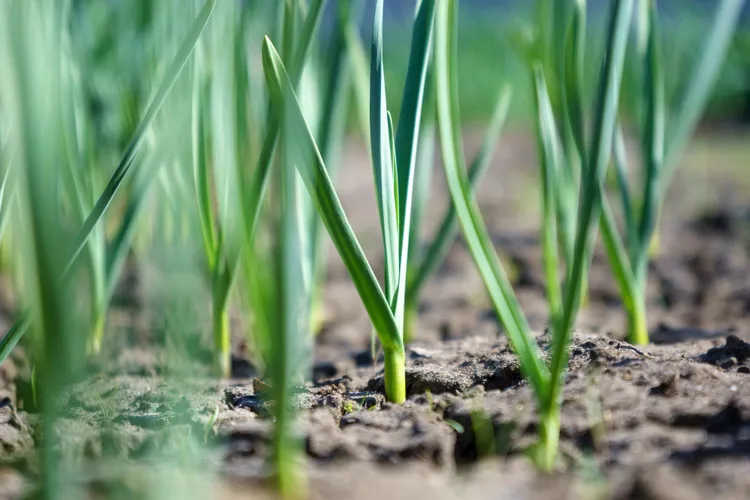
Once spring shoots emerge, garlic asks for less active management than most vegetables, but a few decisions made during the growing season, particularly around scapes, directly affect how large the final heads turn out.
Spring Growth
As soil warms, garlic resumes active growth, sending up increasingly tall, flat green shoots. Removing winter mulch gradually as new growth pushes through, rather than all at once, helps the plant transition without shocking tender new shoots exposed to a late frost. Garlic is relatively frost-tolerant at this stage compared to more tender spring vegetables, so a light frost on emerging shoots is rarely a serious concern.
Watering Through the Season
Garlic wants consistent moisture through active spring growth, roughly 1 inch (2.5cm) of water weekly, tapering off notably as harvest approaches. This taper matters more than it might seem: continuing heavy watering right up to harvest, rather than easing off 2 to 3 weeks beforehand, tends to produce bulbs with thinner, less protective skins that don't cure or store as well afterward.
Scapes: What They Are and Why Removing Them Matters
Hardneck garlic varieties send up a curling flower stalk called a scape in late spring, typically several weeks before the bulb itself is ready to harvest. Removing scapes as soon as they curl, rather than leaving them to fully mature and flower, is one of the single highest-impact growing decisions in this entire guide: research and grower experience consistently show that removing scapes redirects the plant's energy into bulb growth rather than flower and seed production, meaningfully increasing final bulb size.
Scapes themselves are a genuinely useful byproduct, not just garden waste. They carry a milder, greener garlic flavor and work well sautéed, blended into pesto, or pickled, giving an early-season garlic-adjacent ingredient weeks before the bulbs themselves are ready. Softneck varieties don't produce scapes at all, one of the defining differences between the two types covered in the planting guide.
Fertilizing Through the Season
A balanced fertilizer applied in early spring as growth resumes, followed by a nitrogen-focused feeding once or twice more before scape emergence, supports strong leaf growth, which matters directly since each leaf corresponds to a layer of protective wrapper around the eventual bulb. Fertilizing should stop once bulbs begin sizing up in early summer; continued nitrogen at that stage pushes leafy growth at the expense of bulb development, similar to the same tradeoff covered for tomatoes elsewhere in this framework.
Weed Management
Garlic competes poorly with weeds, particularly early in the season when its narrow, upright leaves don't shade out competing growth the way a bushier plant might. Mulch serves double duty here, suppressing weeds through the growing season in addition to its winter insulating role, and hand-weeding around the base of plants when weeds do appear prevents them from establishing enough to meaningfully compete for water and nutrients.
Common Growing Problems
- Yellowing leaf tips in early summer: Often a normal sign the plant is beginning to redirect energy toward bulb maturation, not necessarily a problem, particularly once several outer leaves show this pattern as harvest approaches.
- White rot or other fungal disease: Shows up as stunted, yellowing growth and, on inspection, white fungal growth on the bulb itself. This is a serious soil-borne disease with no reliable in-season treatment; affected plants should be removed and that bed avoided for garlic and other alliums for several years.
- Thin, weak-looking shoots: Usually traces back to planting depth, poor drainage, or inadequate cold exposure over winter, the factors covered in the planting guide.
Signs the Plant Is Approaching Harvest
The clearest cue is leaf browning from the bottom of the plant upward. Once roughly 40 to 60% of the plant's leaves have browned while some green remains at the top, garlic is typically approaching harvest readiness, covered in detail in our harvest and curing guide.
Frequently Asked Questions
Do I need to remove scapes from every hardneck plant? For maximum bulb size, yes. A small number of scapes can be left on a few plants if you specifically want to harvest garlic seed heads (bulbils) for future planting experiments, but for standard eating-garlic production, removing all scapes is the standard recommendation.
How tall does garlic typically grow before harvest? Most varieties reach 18 to 24 inches (45 to 60cm) at full height, though this varies by variety and growing conditions.
Can garlic be grown in partial shade? It tolerates some shade better than many vegetables but produces smaller bulbs than a full-sun planting. Six or more hours of direct sun remains the reliable recommendation for a strong harvest.
Is garlic affected by the same pests as other alliums like onions? Largely yes; onion maggot and allium leaf miner can affect garlic in regions where they're present, though garlic's pungency makes it somewhat less attractive to general garden pests than many other vegetables.
A Closer Look at the Hardneck-Softneck Divide
Beyond scapes and clove arrangement, hardneck and softneck varieties differ in flavor complexity, with many hardneck varieties prized specifically for a wider range of flavor notes, from mild to quite intense, across different sub-varieties. Softneck garlic, the type most commonly found in grocery stores, tends toward a more consistent, slightly milder flavor profile, part of why it's favored for large-scale commercial production alongside its storage advantage.
Climate adaptation is another meaningful difference: hardneck varieties generally handle harsh winters better, which is part of why they dominate in colder growing regions, while softneck varieties, needing less intense cold exposure, are more commonly grown in milder climates, including much of the commercial garlic production in warmer growing regions globally.
Timing Scape Removal Precisely
Scapes should be removed once they've formed a distinct curl but before the plant devotes substantial additional energy to flower development, typically identifiable by the scape curling through one or more full loops. Cutting or snapping the scape near its base, just above the topmost leaf, redirects the most energy back toward bulb development. Waiting too long, letting the scape straighten and begin to open into a flower, captures less of this benefit, since more energy has already gone into the developing flower structure by that point.
Using Harvested Scapes
Scapes have a genuinely useful culinary life of their own, not just as a byproduct of good bulb-growing practice. Chopped and sautéed similarly to green beans, blended into a pesto in place of or alongside basil, or pickled for a tangy, crunchy condiment, scapes offer a milder, greener garlic flavor available weeks before the main bulb harvest, effectively extending garlic's usable season earlier into the year.
Monitoring Growth Through the Season
Checking on garlic plantings every week or two through the growing season, watching for scape emergence on hardneck varieties, monitoring for the pest and disease signs covered above, and tracking leaf color and height against expectations for the specific variety, catches most problems early enough to address them, or at minimum to understand what happened well before the following season's planting decisions.
Frequently Asked Questions
Do softneck varieties need any special care since they don't produce scapes? No additional care is needed specifically due to the absence of scapes; softneck varieties otherwise follow the same general watering, fertilizing, and weeding needs as hardneck through the growing season.
Can I grow both types in the same bed? Yes, there's no compatibility issue growing hardneck and softneck garlic in the same bed or even interplanted, provided both get the same general growing conditions (sun, water, soil quality) they'd need individually.
How long after scape removal until harvest? Typically 3 to 4 weeks, though this varies by variety and growing conditions; scape emergence is a useful seasonal marker that harvest time is approaching, covered in more detail in the harvest and curing guide.
Is it true that soil type affects garlic flavor? To some extent, yes; garlic, like many crops, can show subtle flavor variation based on soil mineral content and growing conditions, similar to the concept of terroir in wine grapes, though the effect is generally more subtle than the variety-driven flavor differences between different garlic cultivars.
A Simple Growing-Season Checklist
- Remove winter mulch gradually as spring shoots emerge.
- Water consistently, roughly 1 inch weekly, tapering off 2 to 3 weeks before harvest.
- Remove hardneck scapes as soon as they curl.
- Fertilize in early spring and again before scape emergence; stop once bulbs begin sizing up.
- Watch for pest and disease signs, particularly stunted or discolored growth.
Why This Stage Rewards Patience
Growing is the stage most likely to test a new gardener's patience, since garlic's slow, steady growth doesn't offer the same dramatic weekly changes a fast-growing vegetable might. Trusting the process, consistent watering and periodic checks rather than constant intervention, tends to produce the healthiest plants by the time scapes and eventually bulbs are ready.
Patience Through the Long Middle Stretch
The months between spring shoot emergence and eventual harvest can feel uneventful compared to faster-growing garden crops, since garlic's changes are gradual rather than dramatic week to week. Resisting the urge to over-intervene, trusting the steady, moderate care covered above, tends to produce a stronger, more productive plant than constant fussing.
When to Start Watching for Harvest Signs
Once scapes have been removed from hardneck varieties, it's worth shifting attention toward the leaf-browning signal covered in the next stage of this guide. The transition from active growth to bulb maturation happens gradually, and a plant checked on periodically through this stretch rarely surprises a gardener with an unexpectedly early or late harvest.
Observing Differences Between Hardneck and Softneck Side by Side
Gardeners growing both types in the same bed have a useful opportunity to directly observe the differences covered throughout this guide, scape emergence timing, growth habit, and eventual leaf browning patterns, rather than relying purely on general descriptions. This kind of direct, side-by-side observation often teaches more about the practical differences between the two types than any written guide can fully capture.
Adjusting Expectations for a First-Time Planting
A first garlic planting, even with careful attention to every recommendation in this guide, often produces smaller bulbs than a well-established, experienced grower's harvest, since soil conditions, timing, and technique all improve somewhat with direct seasonal experience specific to a given garden. Treating a first season as a genuine learning year, rather than expecting immediate best-case results, sets realistic expectations that make the whole process more satisfying.
Growing Season
Growing garlic well is mostly a matter of consistency rather than complexity, regular watering, timely scape removal, and periodic checks for pests or disease. A gardener who shows up reliably through the season, without needing to master any particularly advanced technique, tends to end up with a solid harvest by early summer.
Over successive seasons, this steady rhythm of watering, watching, and periodic scape removal becomes second nature, freeing up mental energy for the more variable parts of gardening elsewhere in a yard or plot.
Not every growing season follows the typical pattern this guide describes; an unusually wet spring, a late cold snap, or a drought stretch during bulb sizing all call for adjusting watering and monitoring more closely than a normal season would require. Staying responsive to actual conditions, rather than following a fixed schedule regardless of what's happening outside, produces better results across the genuinely variable seasons every gardener eventually encounters.
Flexibility within a consistent overall routine is the real skill this stage rewards.
Recognizing a Season That's Going Well
Beyond the specific troubleshooting signs covered above, a season progressing normally generally just feels uneventful, steady green growth, scapes appearing and being removed on schedule for hardneck varieties, and leaves gradually beginning to brown as summer approaches. When growing garlic starts to feel routine rather than alarming, that's usually a good sign the season is on track.
That quiet, uneventful stretch of steady growth is, in its own way, exactly what a gardener wants to see through the middle of the season.
Trust the process and it tends to reward that trust by harvest time.
Latest









