When and How to Harvest Ginger (Young vs. Mature)
The real difference between young stem ginger and mature ginger, how to read harvest timing without dramatic above-ground signals, and how to dig without damaging the rhizome cluster.
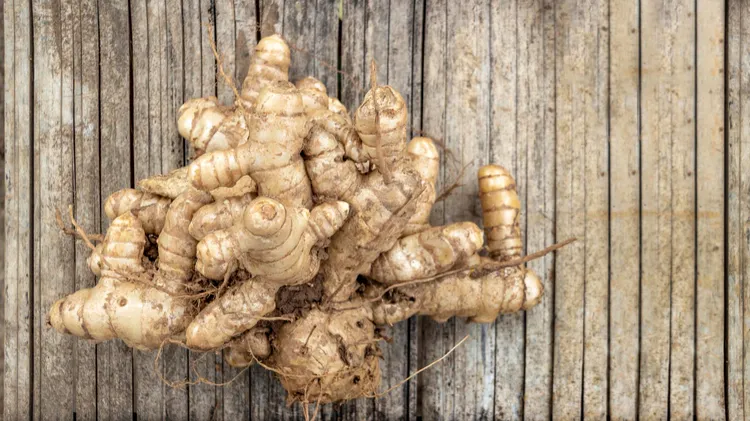
Ginger is one of the few common crops that can be harvested at two genuinely different stages, producing two distinct ingredients rather than simply an earlier or later version of the same thing. Knowing which one you want changes when to dig.
Young "Stem" Ginger
Harvested roughly 4 to 6 months after planting, young ginger, sometimes called stem ginger or spring ginger, has thin, pale, edible skin that doesn't need peeling, a milder, less fibrous bite than mature ginger, and often a faint pink blush near the stem attachment point. This is the form favored in some Asian cuisines specifically for pickling and for dishes wanting ginger's brightness without its full sharp heat, and it's rarely found in typical grocery stores, making home-grown young ginger a genuinely distinct ingredient from what most cooks have regular access to.
Mature Ginger
Left in the ground longer, typically 8 to 10 months, ginger develops the tough, papery tan skin, more fibrous texture, and sharper, more concentrated heat familiar from grocery store ginger. This is the form suited to most standard fresh-ginger cooking uses, and it's also the form that stores and dries considerably better than young ginger, whose thin skin and higher moisture content make it more perishable.
Reading Above-Ground Signals
Because ginger's harvestable product develops underground with little dramatic visible change, above-ground cues are less reliable than for many other crops in this framework. The clearest general signal for mature harvest readiness is yellowing and dying back of the above-ground foliage as the plant enters natural dormancy, similar in concept to how other underground crops signal maturity through top growth decline. For young ginger, harvest timing is based more on the calendar, roughly 4 to 6 months from planting, than on any dramatic above-ground signal, since the plant is still actively growing at that stage.
Digging Technique
Loosen soil carefully around the base of the plant with a garden fork, working outward from the stem to avoid piercing the rhizome cluster directly, then lift the entire clump by hand once loosened. Ginger rhizomes spread laterally near the soil surface more than they grow deep, so digging doesn't typically need to go especially far down, but does need to extend outward enough to capture the full spread of the cluster, which can be considerably wider than the visible above-ground stem might suggest.
Harvesting Partial vs. Full Clumps
Because ginger rhizomes form as an expanding, multiplying cluster, it's possible to harvest a portion of a clump, breaking off a few fingers of rhizome for immediate use, while leaving the rest in the ground to continue growing and multiplying further. This works particularly well for young ginger, letting a household harvest a little at a time through the growing season rather than digging the entire plant at once, provided the remaining rhizome isn't damaged in the process.
Cleaning After Harvest
Freshly dug ginger carries a fair amount of clinging soil in its many knobby crevices. A gentle rinse under running water, using a soft brush to work soil out of the deeper folds without damaging the skin, cleans rhizomes without the excess handling that a more aggressive scrubbing might cause. Mature ginger destined for storage benefits from being left slightly damp rather than scrubbed bone dry, and definitely shouldn't sit in standing water, which invites rot.
What Happens Right After Harvest
Unlike garlic, ginger doesn't go through an extended curing process before storage; freshly dug, cleaned mature ginger is essentially ready for either immediate use or the storage methods covered in our storage guide, without the multi-week drying window other crops in this framework require. Young ginger especially should move toward use or preservation promptly, given its higher moisture content and shorter natural shelf life compared to mature ginger.
Frequently Asked Questions
Can I harvest a little ginger throughout the season without digging the whole plant? Yes, provided you dig carefully at the outer edge of the cluster and avoid disturbing the central rhizome mass and root system too much; this works especially well for young ginger harvested a bit at a time.
What does an underdeveloped or immature rhizome look like compared to a properly mature one? An immature rhizome is noticeably smaller, thinner-skinned, and less firm than a fully mature one; if a test dig reveals mostly small, underdeveloped pieces, leaving the remaining plant in the ground for several more weeks before a full harvest usually improves the result.
Does ginger continue growing if left in the ground past full maturity? In frost-free climates, yes, ginger can be left in the ground well beyond the typical 8 to 10 month window and will continue slowly expanding its rhizome cluster, though in most home garden situations, cooling fall temperatures or an approaching frost make a defined harvest window more practical.
How much ginger does a single planted piece typically yield? Yields vary considerably by growing conditions and season length, but a well-grown plant from a single seed piece commonly multiplies several times over by harvest, a meaningfully larger return than many other crops in this framework relative to the size of what was originally planted.
A Simple Harvest Checklist
- Decide between young ginger (4 to 6 months) or mature ginger (8 to 10 months).
- Watch for foliage yellowing and dieback as the main mature-harvest signal.
- Loosen soil with a fork before lifting, working outward from the stem.
- Rinse gently, working soil out of crevices without excessive scrubbing.
- Move promptly toward storage or preservation, especially for young ginger.
Deciding Which Type to Harvest
For a household mainly cooking with ginger in typical savory applications, mature ginger's tougher texture and sharper heat, along with its considerably better storage life, make it the more practical default harvest target. Young ginger is worth harvesting specifically when a household wants to try pickling or a milder fresh application, or simply wants to experience an ingredient rarely available at a typical grocery store.
Harvest Timing and Fall Weather
In climates with a defined fall cool-down, harvest timing often ends up dictated as much by an approaching frost as by the plant reaching full ideal maturity; ginger has essentially no frost tolerance, so digging before a hard freeze, even if the plant hasn't fully reached its theoretical 8 to 10 month maximum, is the safer choice over risking losing the harvest to cold damage.
Frequently Asked Questions
Can I tell young from mature ginger just by looking at it before digging? Not reliably from above ground; the distinction is really about calendar timing from planting rather than a visible external cue, making a planting log or calendar reminder more useful than trying to judge readiness by eye.
What if I miss the ideal harvest window and dig later than planned? Ginger left in the ground somewhat past the typical mature window, provided frost isn't an immediate risk, generally continues developing without harm; the main downside of a late harvest is simply less growing season remaining before winter in a temperate climate.
Is it worth saving a small piece of the harvest as next year's seed rhizome immediately, or should this wait? Selecting healthy, disease-free pieces at harvest time for replanting the following season is a reasonable practice, though the piece will still need proper storage over winter and pre-sprouting the following spring, following the same process as newly sourced seed rhizome.
Does harvested ginger need to be handled differently than store-bought ginger from this point forward? No; once harvested and cleaned, home-grown ginger follows the same storage, cooking, and preservation guidance covered throughout this framework as any store-bought ginger would.
Handling a Larger Harvest
A well-grown planting can produce considerably more rhizome than the original seed piece, all needing handling and either storage or preservation attention around the same time. Planning ahead for this, having freezer space or preservation supplies ready before digging begins, avoids the scramble of a large harvest sitting out too long before it's properly handled.
Learning From Each Season's Harvest
Noting how a given season's timing, growing conditions, and eventual harvest size turned out builds useful knowledge for adjusting planting timing, shade level, or watering in future seasons, particularly valuable given how little mid-season visual feedback ginger otherwise provides.
Curing Multiple Harvest Batches Separately
When harvesting both young and mature ginger from the same season's planting, keeping them clearly separated and labeled avoids confusion later, particularly useful since the two forms move toward genuinely different storage and use paths, young ginger toward prompt use or pickling, mature ginger toward longer-term storage or freezing.
Building the Habit of Checking Plantings as Fall Approaches
As the growing season winds down, checking on ginger plantings more frequently, watching foliage condition and monitoring the local weather forecast for the first frost risk, helps catch the right harvest window before an unexpected early cold snap forces a rushed, less-than-ideal harvest.
Sharing or Using a Surplus Harvest
A productive ginger planting can produce more rhizome than a single household uses fresh within a reasonable window, even accounting for the freezer's long storage capacity. Sharing surplus with neighbors interested in trying home-grown ginger, or working through the preservation methods covered in this framework across several forms, both make good use of a harvest that exceeds immediate fresh-use needs.
What a Well-Timed Harvest Delivers
A harvest dug at the right stage for its intended use, young for pickling, mature for everyday cooking and storage, rewards all the earlier patience with an ingredient genuinely suited to its planned purpose, rather than a compromise between two different possible harvest points.
Harvest Timing: What to Remember
Of every stage in this framework, harvest timing for ginger asks for the most trust in a calendar and a bit of educated guesswork, given how little dramatic above-ground signal the plant provides compared to many other crops. A grower who tracks planting dates and checks in periodically develops a much better feel for this timing over successive seasons than one relying purely on visual cues alone.
By the time a well-timed harvest reaches the kitchen, the reward for that calendar-tracking patience becomes clear the moment a freshly dug rhizome is rinsed clean and ready for its first use.
Preparing Storage and Preservation Supplies Ahead of Harvest
Because ginger doesn't require the extended curing period some other crops in this framework need before storage, freshly dug ginger can move toward its next stage, fridge, freezer, or a preservation method, almost immediately after cleaning. Having freezer bags, storage containers, or preservation ingredients ready before digging begins avoids a bottleneck right when a harvest is at its freshest and most ready to handle.
A Note on Sharing the Experience
For many home gardeners, digging ginger for the first time, and discovering just how much a single small seed piece has multiplied underground, is a genuinely memorable moment worth sharing with anyone curious about where their food actually comes from.
It's a moment worth pausing for, even in a busy kitchen.
Keeping garden tools, a fork, a soft brush for cleaning, and containers for sorting young versus mature rhizome, ready and accessible before harvest day begins makes the entire digging and cleaning process considerably smoother than gathering supplies on the fly.
A little preparation beforehand turns harvest day into a smooth, satisfying process rather than a scramble.
Every well-timed harvest builds confidence for the next one.
The whole season's patience distills into that single satisfying moment.
Savor it, then move on to the next stage with confidence.
Well worth it.
Whatever the size of a first harvest, treat it as a genuine milestone worth noting before moving on to storage and the kitchen.
Latest









