Basil Oil: How to Make and Store an Infused Oil
The blanching technique that keeps basil oil bright green, plus food-safety guidance and realistic storage life.
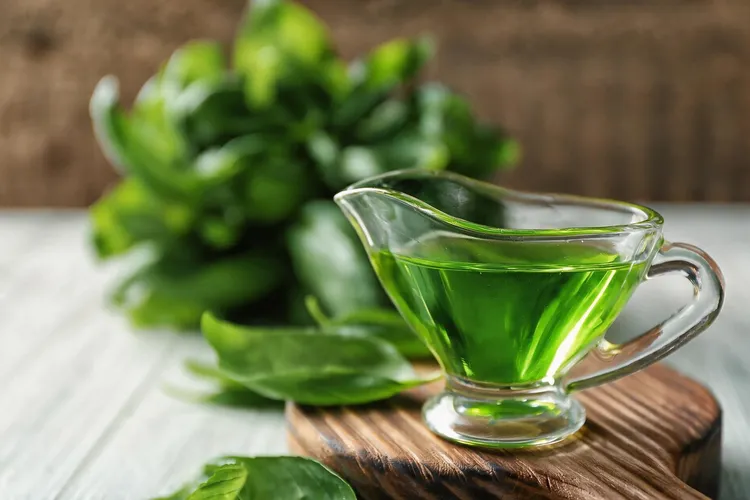
Basil oil made without blanching the leaves first usually turns a dull, brownish green within hours, even if it tasted fine going in. The blanching step most recipes skip is the difference between oil that looks and tastes vividly of fresh basil and oil that looks tired the same day it's made.
Why Blanching Matters
Raw basil contains an enzyme that continues breaking down chlorophyll after the leaf is cut, which is part of why cut basil darkens over time even outside the fridge. A very brief blanch in boiling water deactivates that enzyme before it can dull the color, while an immediate ice bath stops any actual cooking of the leaf. The result is oil that stays bright green for weeks instead of hours.
How to Make Basil Oil
- Bring a pot of water to a rolling boil and prepare a bowl of ice water alongside it
- Drop basil leaves into the boiling water for exactly 10 seconds, no longer
- Immediately transfer the leaves to the ice water using a slotted spoon or spider
- Once fully cooled, about 30 seconds, drain the leaves and squeeze out as much water as possible in a clean kitchen towel
- Blend the leaves with a neutral oil, grapeseed or a mild olive oil, at a ratio of about 1 cup packed leaves to 1 cup oil
- Blend on high for 1 to 2 minutes until fully smooth and vividly green
For a clear finishing oil, strain the mixture through a fine mesh sieve lined with cheesecloth, letting it drip without pressing for the clearest result, or press through for a slightly cloudier oil with more intense flavor. Both are fine to use; pressing just changes clarity, not safety.
Food Safety With Infused Oils
This is worth taking seriously. Garlic and herb-infused oils made at home, especially ones that skip an acidifying step, can support the growth of Clostridium botulinum, the bacteria responsible for botulism, because oil creates a low-oxygen environment the bacteria favors. This risk is real but manageable with a few straightforward practices:
- Refrigerate homemade infused oil at all times; never store it at room temperature
- Use it within 1 to 2 weeks if kept refrigerated, or freeze it for longer storage
- Discard any infused oil that smells off, looks cloudy in an unusual way, or has been left unrefrigerated for more than a couple of hours
- The blanching step above does not make the oil shelf-stable; it only preserves color and flavor, not safety, so refrigeration is still required
Commercial infused oils on store shelves have often been acidified or otherwise stabilized in ways home kitchens can't replicate, which is why homemade versions need the fridge even when a store-bought equivalent doesn't.
Freezing Basil Oil for Longer Storage
If two weeks isn't enough time to use a full batch, freeze it instead. Portion into ice cube trays, freeze solid, then transfer to a labeled freezer bag. This is essentially the same method covered in How to Freeze Basil: Ice Cubes, Oil, and Whole Leaves, and frozen basil oil holds good flavor for 3 to 6 months.
How to Use It
Drizzle over caprese salad, soups, or grilled vegetables. Swirl into pasta right before serving rather than cooking it, since heat dulls both the color and the fresh basil aroma. Use as a base for a quick vinaigrette by whisking in a little vinegar or lemon juice. It also makes a striking finishing drizzle on tomato soup, especially when tomatoes are also in glut, see Tomato and Basil Recipes for Peak Summer Harvest for pairing ideas.
Choosing the Right Oil
A neutral oil like grapeseed or a light, mild olive oil lets basil's own flavor lead without competing. A robust, peppery extra virgin olive oil can work too, but its own strong flavor will blend with rather than showcase the basil, resulting in a more complex but less distinctly "basil" flavored oil. Neither choice is wrong; it depends on whether the goal is a pure basil oil or a basil-accented olive oil.
Avoid oils with very low smoke points or strong competing flavors, like toasted sesame oil, unless a specific fusion flavor is the goal, since they'll dominate over basil's more delicate aromatics.
Troubleshooting Common Problems
- Oil turns brown within a day or two. This usually means the blanching step was skipped or the blanch time was too short. Confirm the full 10 seconds in boiling water followed by an immediate ice bath.
- Oil separates into layers over time. This is normal for unstrained or lightly strained basil oil; the solid basil particles settle. A quick shake or stir before use redistributes it. Fully strained oil separates less since there's less solid matter to settle.
- Oil tastes grassy rather than fresh. Over-blending at high speed for too long can heat the mixture slightly and push the flavor toward grassy rather than bright. Blend just until smooth, not longer than necessary.
Scaling Up for a Larger Harvest
The blanching step works the same whether processing one cup of leaves or six; just blanch in batches rather than overcrowding the pot, since too many leaves at once cools the water and extends the blanch time unevenly across the batch. Keep the water at a strong boil and work in batches of a cup or two of leaves at a time for consistent results.
Frequently Asked Questions
Do I need to blanch basil if I'm going to use the oil within a day or two?
Blanching is about color and flavor stability, not safety, so it's optional for oil that will be used almost immediately. For anything stored more than a day, blanching makes a noticeable difference in how appealing the oil looks and tastes.
Can I use basil oil the same way as basil vinegar?
They're not fully interchangeable. Oil works best as a finishing drizzle or a base for sauces and dressings, while vinegar's acidity makes it better suited to brightening a dish or forming the backbone of a vinaigrette. See Basil Vinegar for a comparison of uses.
Is it safe to can basil oil for shelf storage like other preserves?
No. Standard home canning methods aren't designed to make infused oils shelf-stable, and doing so risks botulism regardless of processing time. Refrigeration or freezing are the only safe storage methods for homemade infused oil. Because a batch typically lasts one to two weeks refrigerated, mapping out a handful of meals that would benefit from a basil oil drizzle over that window is a practical way to make sure the full jar gets used before it's time to make more.
Tips for Success
Work fast during blanching, the 10-second window is short on purpose; longer cooking starts to actually cook the basil and dulls both color and flavor. Squeeze the leaves as dry as possible before blending; leftover water dilutes the oil and can shorten its refrigerated shelf life. For the full picture of how oil fits alongside other preservation options, see the Basil Glut Guide.
Latest