How to Propagate Rosemary From Cuttings
Rosemary seed is slow and unreliable, but propagating from cuttings is easy - here's how to turn one healthy plant into several.
Rosemary is typically propagated from cuttings rather than seed, since seed germination is slow, inconsistent, and often produces weaker plants. Cuttings, on the other hand, are a reliable and genuinely easy way to turn one rosemary plant into several.
Why Cuttings Instead of Seed
Rosemary seed has notoriously low and slow germination rates - it can take several weeks to sprout even under good conditions, and a meaningful percentage of seeds simply won't germinate at all. Cuttings taken from an established plant root faster, more reliably, and produce a plant that's a genetic match to the parent, which matters if you have a particularly good-tasting or well-shaped plant you want to replicate.
Taking the Cutting
Take cuttings from new, still-flexible green growth rather than old woody stems, which root much less reliably. Late spring through summer is the best time, when the plant is actively growing.
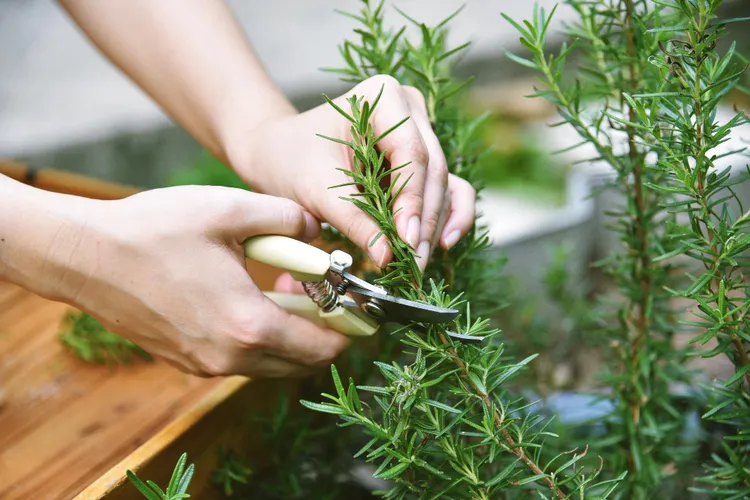
- Using clean scissors or pruning shears, cut a 4 to 6 inch length of new growth, cutting just below a leaf node.
- Strip the leaves from the bottom 2 inches of the cutting, leaving leaves only on the top portion.
- Optionally, dip the stripped end in rooting hormone to speed up root development, though rosemary roots reasonably well without it.
Rooting in Water
The simplest method: place the stripped end of the cutting in a glass of water, keeping the leaves above the waterline. Set the glass somewhere with bright, indirect light. Change the water every few days to keep it fresh. Roots typically begin to appear within 3 to 4 weeks. Once roots are an inch or so long, the cutting is ready to move to soil.
Rooting Directly in Soil
Alternatively, plant the stripped cutting directly into a small pot of well-draining, slightly moist potting mix (a mix with extra perlite works well). Keep the soil consistently moist - not soggy - for the first few weeks while roots establish, which is a temporary exception to rosemary's usual preference for drier soil. A clear plastic bag loosely placed over the pot helps retain humidity around the cutting while it roots, though it should be removed periodically to prevent mold.
This method skips the step of transferring a water-rooted cutting to soil, but rooting is sometimes less visually obvious - a gentle tug test after 3 to 4 weeks (feeling for resistance, which indicates roots have formed) is the easiest way to check progress without disturbing the roots by digging.
Caring for a New Cutting
Once a cutting has rooted and been moved to (or is already in) its own pot, treat it gently for the first several weeks - keep the soil a bit more consistently moist than you would for an established plant, and avoid full, intense afternoon sun until it's clearly established and putting out new growth. After 6 to 8 weeks of healthy new growth, a rooted cutting can be treated like any other rosemary plant, following the normal watering and sun guidelines in our growing guide.
Common Propagation Problems
- Cutting turns black or mushy: Usually rot from too much moisture, particularly in the water-rooting method if the water isn't changed often enough. Discard and start a fresh cutting with cleaner conditions.
- No roots after 6 weeks: Try a fresh cutting from newer growth - older, semi-woody stems root much less reliably than soft, new growth.
- Cutting looks fine but isn't rooting: Light matters more than people expect - move the cutting somewhere brighter (but still indirect) if progress has stalled.
Why This Is Worth Doing
A single healthy rosemary plant can realistically produce a dozen or more cuttings over a growing season, which makes propagation a genuinely cost-effective way to build up multiple plants, share with friends, or replace a plant that didn't survive winter - all without buying new nursery stock. For everything else about keeping a rosemary plant healthy long-term, see the complete rosemary guide.
Latest