How to Store Fresh Mint: Drying, Freezing, and Infusing
A productive mint plant produces more than most cooks can use fresh - here's how to dry, freeze, or infuse a surplus so none of it goes to waste.
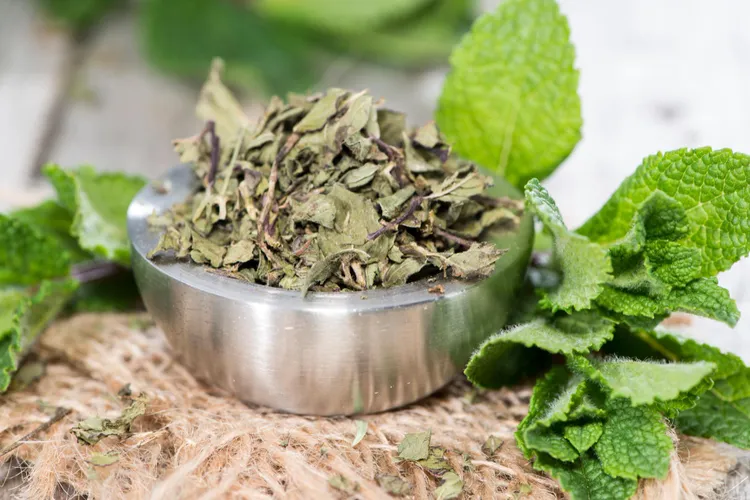
A well-established, contained mint plant is genuinely productive, and most home cooks growing it end up with more than they can use fresh, especially in the middle of summer. Mint doesn't dry quite as well as woodier herbs like rosemary, but it holds up reasonably well, and it freezes particularly well in a few different forms.
Short-Term Fresh Storage
Fresh mint keeps for about a week in the fridge when stored properly, similar to basil rather than the longer-lasting rosemary or thyme. Wrap the stems loosely in a slightly damp paper towel and store in a partially sealed bag in the crisper drawer. Alternatively, treat mint like cut flowers: trim the stem ends and stand the bunch upright in a glass with an inch of water, loosely covering the leaves with a plastic bag before refrigerating, changing the water every couple of days.
Drying Mint
Mint dries reasonably well, though it loses some of its brighter, fresher character in the process, similar to tarragon rather than a woodier herb like rosemary that holds onto more of its flavor when dried.
Air-Drying
Tie small bunches of stems together and hang them upside down in a dark, well-ventilated spot for about 1 to 2 weeks, until the leaves crumble easily. This method works well for building up a supply of dried mint for tea specifically, where the slightly muted flavor of dried mint is less of a drawback than it would be in a fresh application.
Dehydrator Drying
A dehydrator set to a low temperature (around 95°F to 100°F) dries mint faster, usually within a few hours, and tends to preserve slightly more color and flavor than air-drying.
Once dry, strip the leaves from the stems and store whole in an airtight container away from light and heat. Dried mint holds decent flavor for about 6 months.
Freezing Mint
Freezing is the better option if you want to preserve mint closer to its fresh character, and it's a particularly good match for a herb that's used so often in drinks and sauces where a small frozen portion can go straight in without thawing.
Freezing in Oil or Simple Syrup
Finely chop mint and pack it into ice cube tray compartments, topping each with a neutral oil or with a batch of simple syrup before freezing. The simple syrup version is especially convenient, since a frozen cube can go straight into a cocktail or glass of lemonade, essentially pre-portioning our mint simple syrup recipe for grab-and-use convenience.
Freezing Whole Leaves
Spread whole mint leaves in a single layer on a baking sheet and freeze until solid before transferring to a freezer bag. This keeps portions loose rather than frozen into a block, useful for pulling out just what you need for tea or a sauce.
Infusing Vinegar or Syrup
Mint infuses well into both vinegar and simple syrup, either of which turns a fresh surplus into a shelf-stable or fridge-stable pantry item. Vinegar infused with mint works well in dressings, while a mint syrup is the more versatile option for drinks - see our mint simple syrup guide for the full method.
Which Method to Choose
- Using it within a week: Fridge storage, either wrapped or in a glass of water
- Want it mainly for tea: Air-dry or dehydrate
- Want it for drinks and sauces later: Freeze in oil or simple syrup
- Want a ready-to-use pantry item: Infuse into syrup or vinegar
Because a contained mint plant tends to be so productive, it's worth building one or two of these storage methods into a regular routine rather than only reaching for them once a large harvest is already wilting. For more, see the complete mint guide.
Latest









