How to Upgrade Instant Ramen Into a Real Meal
A 25-cent packet of instant ramen can become a genuinely good meal with the right additions. Here's what to add, what to skip, and how to build a bowl worth eating in under 10 minutes.
Instant ramen is one of the most useful things in a busy kitchen - not because the packet is great as-is, but because the noodles are a blank canvas and the cooking time is under 4 minutes. The flavour sachet is where things usually go wrong. It's engineered for maximum shelf life and aggressive saltiness, not for taste. The fix is simple: use less of it, or replace it entirely.
The Flavour Sachet Problem
Most instant ramen sachets contain a large amount of sodium (often 1,500-1,800mg per serving), MSG, and a handful of dehydrated flavourings. That's not necessarily a dealbreaker, but using the whole packet tends to produce broth that's one-note and far too salty once you start adding real ingredients. Use half the sachet as a base, then build from there.
The Fat-Acid-Texture Framework
Every good ramen bowl has fat (richness), acid (brightness), and texture (something to chew). The packet gives you none of these reliably. Here's how to add all three quickly:
- Fat: A soft-boiled or fried egg is the fastest option - 6g of protein, a rich yolk, and it takes 6 minutes. Alternatively, a teaspoon of sesame oil or a spoon of peanut butter stirred into the broth adds body without any extra cooking.
- Acid: A squeeze of lime or lemon juice, or a small splash of rice vinegar. Add it at the end, not during cooking.
- Texture: Frozen edamame (cook in the boiling water alongside the noodles), toasted sesame seeds, or crumbled crackers. Even a handful of frozen spinach wilted in the hot broth counts.
Protein Add-Ins That Work
The packet gives you roughly 8–10g of protein - not enough for a proper meal. These options require minimal extra effort:
- Soft-boiled egg: Start the egg before the noodles. 6 minutes in boiling water, then straight into cold water. Peel and halve. ~6g protein.
- Canned tuna: Drain and add directly to the bowl. Works better than it sounds with a soy-sesame broth. ~25g protein per tin.
- Frozen edamame: Dump them in the boiling water for the last 2 minutes of noodle cooking. ~8g protein per 100g.
- Rotisserie chicken: If you have leftovers, shred and add. No cooking needed. ~26g protein per 100g.
Broth Upgrades That Make a Difference
If you're ditching the sachet entirely or supplementing it, these are the best broth builds:
- Miso broth: 1 tsp white miso dissolved in hot water, plus half the sachet or a splash of soy. Adds depth without the aggressive saltiness.
- Peanut broth: 1 tbsp peanut butter, 1 tsp soy sauce, 1 tsp chilli sauce, hot water to loosen. Stir into the cooked noodles rather than using as a broth - this is more of a noodle sauce than a soup.
- Tomato-miso: Sounds odd, tastes good. Half a tin of canned tomatoes blended into hot water with miso and a touch of soy. Serve the noodles in this and top with a fried egg.
A Full Bowl: 10-Minute Miso Ramen
This is the simplest version worth eating as a proper meal. Estimated macros: ~420 kcal, 24g protein.
- Bring a small pot of water to the boil. Add an egg and cook for 6 minutes. Remove and cool in cold water.
- Add the ramen noodles to the boiling water and cook per packet instructions (usually 3 minutes).
- In your bowl, dissolve 1 tsp miso and half the flavour sachet in a splash of hot water. Add soy sauce to taste.
- Drain the noodles and add to the bowl. Pour over just enough hot water to make a broth.
- Add a handful of frozen spinach directly to the hot broth - it'll wilt in 1 minute.
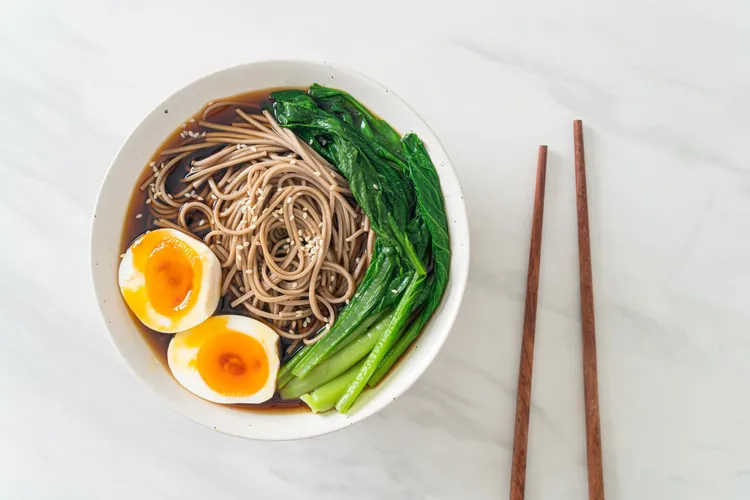
- Peel and halve the egg. Lay on top. Add sesame seeds, a drizzle of chilli oil, and a squeeze of lime.
Meal Prep Notes
Soft-boiled eggs keep in the fridge for up to 5 days - make 4–6 at once on Sunday and you have protein ready for the week. Store them unpeeled in a container. If you want a richer marinade egg, soak peeled eggs overnight in equal parts soy sauce and water.
For a full week of convenience meals built around simple upgrades like this, see the Instant Food, Elevated guide.
Latest