The Beginner's Guide to Stocking a Kitchen That Makes Cooking Easy
The wrong kitchen setup makes cooking harder than it needs to be. Here are the 10 tools and pantry staples that actually matter - and the ones you can skip.
Most beginner kitchen guides list 40 things you need to buy. Most of them are wrong. The actual minimum to cook well is much shorter - and buying the right 10 things matters more than buying 30 mediocre ones.
The 10 Tools That Actually Matter
1. A chef's knife (8-inch)
One good knife is more useful than a full block of mediocre ones. You don't need to spend a lot - a mid-range knife at $30-60 outperforms expensive sets in actual cooking. More important: keep it sharp. A dull $100 knife is worse than a sharp $30 one.
2. A large non-stick skillet (10-12 inch)
Eggs, fish, pancakes, sauteed vegetables - a non-stick skillet is the most versatile pan in the kitchen. Eggs alone justify the purchase. Scrambled eggs with bacon and mushrooms requires almost no cleanup in a good non-stick pan.
3. A heavy-bottomed stainless or cast iron skillet
For searing meat and anything that needs high heat. Pan-roasted chicken thighs need a pan that holds heat - a thin non-stick won't give you the sear.
4. A large pot (6-8 quart)
Pasta, soups, boiling vegetables. A batch of leek, potato and lentil soup needs a large pot. A pot that's too small creates spills and limits what you can make.
5. A sheet pan (half-sheet size)
Sheet pan dinners are one of the easiest, lowest-cleanup cooking formats. A half-sheet pan fits a full meal - protein and vegetables - with room to roast properly. Parchment paper on it eliminates cleanup entirely.
6. A cutting board (large, wood or plastic)
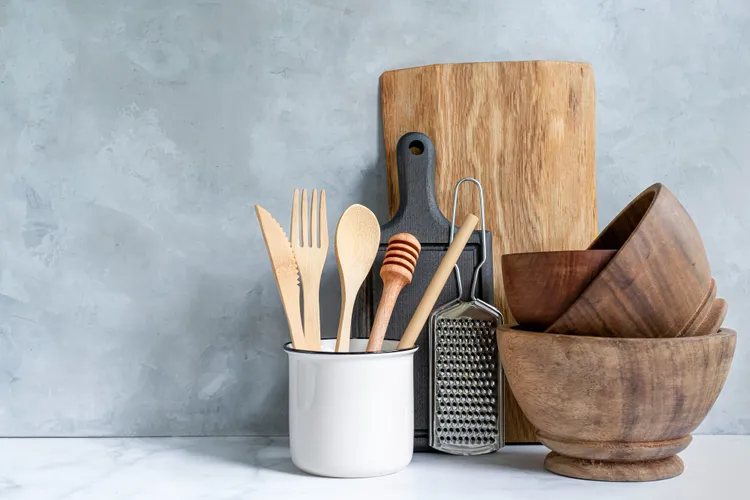
Bigger than you think you need. A small cutting board creates spillage and forces multiple trips to the bin. One large board handles everything.
7. A colander
Pasta, rinsing canned beans, washing vegetables. Simple and necessary.
8. A box grater
Cheese, zucchini, carrots. Block cheese grated fresh tastes better than pre-grated and costs less.
9. A wooden spoon and a silicone spatula
Two tools. The wooden spoon stirs; the silicone spatula scrambles eggs and flips fish without scratching non-stick surfaces.
10. An instant-read thermometer
Eliminates guessing on meat. Costs $10-15. The difference between properly cooked chicken and raw or dry chicken is about 5 degrees - you can't judge that by sight reliably.
The Pantry Core
With these in the house, you can make most meals from scratch:
- Oils: olive oil for cooking and finishing, neutral oil (vegetable or avocado) for high-heat
- Acids: white wine vinegar, soy sauce, a lemon or two
- Aromatics: onions, garlic (fresh or powder), ginger powder
- Spices: salt, black pepper, cumin, smoked paprika, coriander, chili flakes. That's enough for most cuisines.
- Grains: rice, dried pasta, dried lentils
- Canned goods: tomatoes, beans, coconut milk, fish (tuna or sardines)
- Fridge staples: eggs, butter, Parmesan (keeps weeks), a hard cheese
What to Skip
Garlic press (a knife works and is faster to clean). Apple slicer, avocado tools, single-purpose gadgets. A mandoline (razor sharp, easy to injure yourself, you can do the same thing with a knife). A full knife block (you need 2-3 knives, not 8). An expensive stand mixer before you know if you bake.
Setting Up Your Space
Friction reduction isn't only about what you own - it's about where things are. Keep the tools you use daily within arm's reach of the stove. Keep the spices next to the stove. Store cutting boards vertically so they're easy to pull out. A kitchen that requires 3 minutes of setup before you can start cooking will discourage starting.
For more on reducing cooking friction, see the complete guide to why you hate cooking and how to fix it.
Latest