Moroccan Mint Tea, The Traditional Way
How to make authentic Moroccan mint tea, including the traditional high pour that develops its signature light foam.
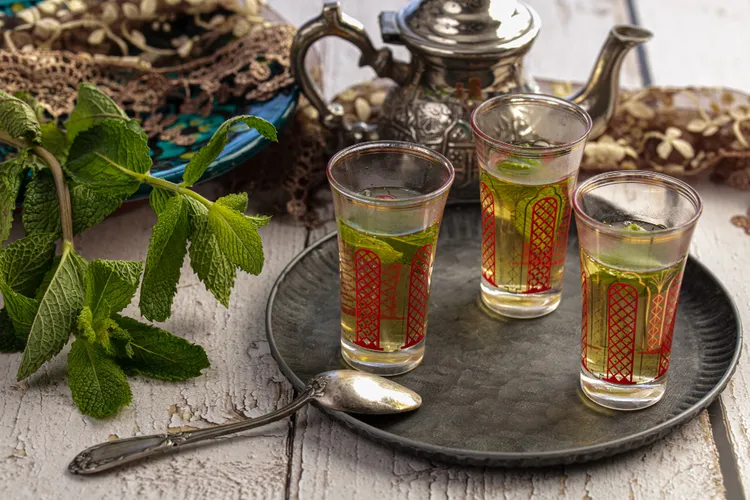
Moroccan mint tea is a specific, ritual-driven preparation, not just mint leaves steeped in hot water - the traditional method, including the distinctive high pour, is worth learning properly rather than approximating.
Traditional Moroccan Mint Tea
Prep time: 5 minutes | Cook time: 10 minutes | Serves: 4
Ingredients
- 2 tbsp Chinese gunpowder green tea
- 1 large bunch fresh mint (spearmint or Moroccan mint if available), about 1.5 cups packed leaves and stems
- 3 to 4 tbsp sugar, or to taste
- 4 cups boiling water
Instructions
- Place the green tea in a traditional Moroccan teapot or any teapot you have. Pour in about 1/2 cup of boiling water, swirl briefly, and immediately pour this water out - this rinses the tea and removes some of its bitterness without discarding the leaves.
- Add the mint and sugar to the teapot along with the tea leaves.
- Pour in the remaining boiling water and let it steep for 3 to 5 minutes.
- To serve, pour the tea from a height into small tea glasses, letting it fall in a thin stream - this aerates the tea and helps develop a light foam on top, part of the traditional presentation.
- Taste and adjust sugar in the pot if needed, then pour again to serve.
Notes
Traditional Moroccan mint tea is served quite sweet by many Western standards - adjust the sugar to your own preference, but be aware that a more modest amount will taste less authentic to the traditional version.
Why the High Pour Matters
Pouring the tea from a height, rather than simply filling the glass close to the rim, aerates the liquid and helps develop the thin foam that's part of the traditional presentation. It also cools the tea slightly as it falls, making it a bit more drinkable right away. This isn't just a flourish - it's considered an essential part of serving the tea properly.
Why Green Tea, Not Black
Traditional Moroccan mint tea is built on gunpowder green tea specifically, which has a rolled leaf structure and a flavor profile that holds up well against the strong mint and sugar. Black tea can be substituted in a pinch, but the result will taste noticeably different from the traditional version, with more tannin and a heavier overall character.
Serving Tradition
In Morocco, mint tea is often served as a gesture of hospitality, poured for guests as a matter of course rather than only on request. It's traditionally served throughout the day, not just after a meal, and multiple rounds are common, with the tea leaves and mint sometimes reused for a second, lighter pot.
Variations
- Less sweet: Reduce the sugar for a more modern, less traditionally sweet version, common in some households even within Morocco.
- Add other herbs: A few sprigs of wormwood (absinthe) leaves are a traditional winter addition in some regions, giving the tea a slightly more bitter, warming character.
This is a good example of mint used in a specific cultural context with its own established technique, rather than as a generic flavor addition. For more, see the complete mint guide.
Latest









