Phytoestrogens Explained: Do Soy and Flaxseed Actually Help with Symptoms?
Phytoestrogens - the plant compounds in soy, flaxseed, and chickpeas - bind weakly to oestrogen receptors. Whether they reduce hot flushes depends largely on your gut microbiome. Here is what the research actually shows, without the overselling or the dismissal.
Phytoestrogens have been promoted as a natural alternative to HRT and dismissed as ineffective pseudoscience. Neither position is accurate. The evidence is genuinely mixed - but mixed in ways that explain themselves once you understand the biology. Whether phytoestrogens help with menopausal symptoms depends substantially on whether a woman's gut microbiome can convert the main soy isoflavone (daidzein) into equol, a more potent oestrogenic metabolite. Approximately 30-50% of Western women are 'equol producers'. For them, the evidence is more consistent. For the rest, the effect on vasomotor symptoms is modest to absent - though other benefits remain relevant regardless.
What Phytoestrogens Are
Phytoestrogens are plant compounds that structurally resemble oestrogen and can bind to oestrogen receptors - but with roughly 1/1000th the potency of endogenous oestrogen. They are not oestrogen. They do not replace oestrogen. They act on oestrogen receptors in ways that can produce some oestrogenic effects in oestrogen-deficient environments and some anti-oestrogenic effects in oestrogen-replete environments. This context-dependence is part of why the research is complex.
The three main dietary classes:
- Isoflavones: Found primarily in soy foods - edamame, tofu, tempeh, miso, soy milk. Genistein and daidzein are the main active compounds.
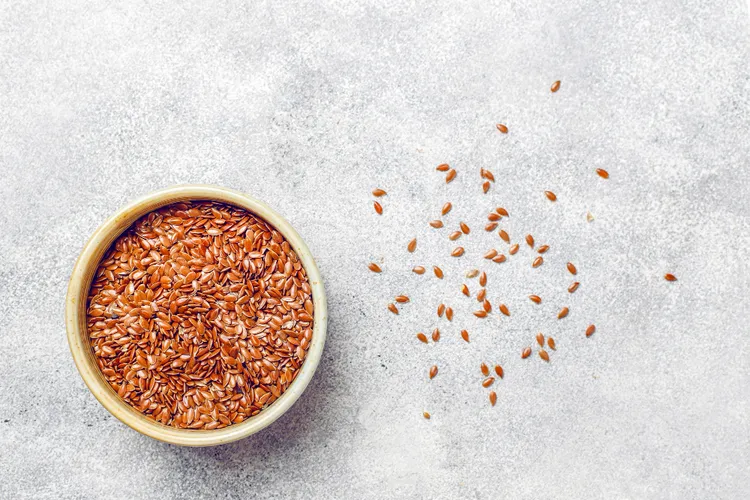
- Lignans: Found in flaxseeds (the most concentrated source), sesame seeds, whole grains, and some vegetables. Converted to enterolignans by gut bacteria.
- Coumestans: Found in sprouted legumes and clover. Less studied and lower in typical diets.
Hot Flushes: What the Evidence Shows
A 2021 Cochrane review of 43 randomised controlled trials found that isoflavone supplementation reduced hot flush frequency by approximately 20-25% compared to placebo in post-menopausal women. The effect was statistically significant but modest - and substantially below the 80-90% symptom reduction observed with HRT. There was significant heterogeneity between trials, partly explained by equol producer status.
For equol producers, the effect is stronger and more consistent. For non-producers, equol-producing probiotic supplements (Lactobacillus strains that facilitate the conversion) have shown some evidence of benefit in small trials - though this is not yet at the level of strong clinical recommendation.
The practical conclusion: including soy foods regularly is worth doing, but with realistic expectations. For women who notice a modest reduction in hot flush frequency - which takes 6-12 weeks of consistent intake to assess - the effect is real and worth maintaining. For women who notice no change, phytoestrogens still offer other benefits.
Bone Density Evidence
This is where phytoestrogen evidence is more consistently positive. Multiple studies and meta-analyses show that regular soy isoflavone intake (50-80mg/day) significantly reduces bone resorption markers and moderately improves bone mineral density in post-menopausal women. The mechanism involves oestrogen receptor beta (ERbeta), which is highly expressed in bone - soy isoflavones activate ERbeta with relative selectivity compared to ERalpha, producing bone-protective effects without the tissue-specific concerns of some pharmacological oestrogen approaches.
For women in perimenopause concerned about bone loss - which should be all women in perimenopause given the accelerated resorption that begins with hormonal fluctuation - this evidence supports making soy foods a dietary staple regardless of their effect on vasomotor symptoms. The calcium and bone density article in this series covers the full picture: calcium and perimenopause bone health.
Cardiovascular Benefits
Soy protein (distinct from isolated isoflavones) has been shown to modestly reduce LDL cholesterol. Isoflavones have been associated with improved endothelial function in some studies. The cardiovascular risk profile changes significantly at menopause - oestrogen's protective effects on the vascular endothelium are lost - and dietary strategies that support cardiovascular health take on additional importance. Regular soy intake is one such strategy, though not the primary one (that distinction belongs to Mediterranean-style dietary patterns broadly).
Safety: The Breast Cancer Question
This is the question most women have and that wellness content handles poorly. The short answer: moderate dietary soy intake is not associated with increased breast cancer risk in population studies - and in some studies is associated with reduced risk or improved outcomes in survivors. The concern originated from laboratory studies showing oestrogen-receptor-positive breast cancer cells proliferating in response to high-dose genistein. Dietary isoflavone intake from food produces serum concentrations well below those used in those laboratory experiments.
Current guidance from major cancer organisations (WCRF, American Cancer Society) does not restrict soy food intake for women with a history of breast cancer or those at elevated risk - though high-dose isolated isoflavone supplements warrant more caution. If you have a personal or family history of oestrogen-receptor-positive breast cancer, discuss this with your oncologist or GP rather than relying on general dietary guidance. The broader perimenopause dietary framework is in the complete guide.
Practical Phytoestrogen Inclusion
Targeting 50-75mg of isoflavones daily through food (roughly equivalent to one or two servings of soy foods) provides an intake level consistent with the research showing benefit:
- 100g firm tofu: approximately 20-25mg isoflavones
- 100g edamame (shelled): approximately 15-20mg isoflavones
- 200ml soy milk: approximately 15-25mg isoflavones
- 1 tbsp miso: approximately 10-15mg isoflavones
- 2 tbsp ground flaxseeds: approximately 20mg lignans (converted to enterolignans, not isoflavones - different compound, different evidence base)
Fermented soy (miso, tempeh, natto) has higher bioavailability than unfermented forms - some evidence suggests the fermentation pre-converts some isoflavones into more readily absorbed forms. Including at least one fermented soy food alongside unfermented options is a practical approach.
The Equol Producer Question in Practice
Since approximately 50% of Western women are equol producers and 50% are not, and since equol producer status substantially determines whether dietary isoflavones will meaningfully reduce hot flush frequency, this creates a practical question: is it worth eating soy regularly before knowing whether you produce equol? The answer is yes, for several reasons. First, the bone density and cardiovascular evidence for regular soy intake is consistent regardless of equol producer status. Second, fermented soy foods have higher bioavailability that partly compensates for non-producer status. Third, some evidence suggests that consistently eating soy foods can shift gut microbiome composition toward species capable of equol production over months — suggesting that producer status is not entirely fixed. Fourth, whole soy foods provide protein, fibre, and other micronutrients that are independently valuable in the perimenopause dietary framework.
If you include soy foods daily for 12 weeks and notice no change in hot flush frequency or severity, this is informative - you are likely a non-producer, or your symptoms are driven primarily by other mechanisms. Continue the soy for its non-vasomotor benefits (bone, cardiovascular), and focus dietary hot flush management on the blood glucose stability and trigger avoidance strategies described in the hot flushes and food article. The full perimenopause dietary framework is in the complete guide.
Soy and Thyroid Function
Some sources advise against soy consumption for women with hypothyroidism, citing evidence that soy isoflavones can interfere with thyroid hormone synthesis. The concern is real but context-dependent: soy's interference with thyroid function is most significant when iodine status is insufficient, and when soy is consumed in very large quantities. For women with well-managed hypothyroidism who are iodine-replete and consuming normal dietary quantities of soy (not large supplement doses), the clinical significance is low. The practical precaution: take thyroid medication at least two hours away from soy-containing meals, and ensure adequate iodine intake from dairy, seafood, or iodised salt. If you have hypothyroidism and are increasing soy intake significantly, mention this to your GP and monitor thyroid markers at the next check.
Building a Daily Phytoestrogen Habit
Consistency of intake matters more than any single high-dose serving. The research showing benefit from phytoestrogens uses daily intake over weeks to months - not occasional large doses. Building a simple daily habit is more effective than elaborate phytoestrogen-rich recipes eaten infrequently. Practical daily options: miso in a soup, dressing, or marinade (2 minutes); a serving of edamame as a snack or side dish (microwave 4 minutes); a slice of firm tofu in a stir-fry or salad (no additional preparation); a tablespoon of ground flaxseed on yoghurt or porridge (30 seconds); soy milk in coffee or cereal. Any one of these, done daily, delivers a meaningful isoflavone contribution. Rotating between them provides variety and covers both isoflavone and lignan forms of phytoestrogen, which act through different mechanisms and are additive in their effects. For the full evidence base and the context within perimenopause nutrition, the complete perimenopause kitchen guide covers every dietary priority for the transition.
Phytoestrogens Across the Food Day
Meeting the 50-75mg daily isoflavone target through food is straightforward once the key sources are familiar. A typical day covering this target without effort: miso soup or miso-based dressing at lunch (10-15mg), a serving of edamame as a snack or dinner side (15-20mg), and soy milk in morning coffee or cereal (15-25mg). That covers 40-60mg from three simple inclusions that require no special recipes. Adding tofu to one meal per week or flaxseed to daily breakfast provides the remainder and extends phytoestrogen diversity across both isoflavone and lignan categories.
The evidence for phytoestrogens in perimenopause extends to cardiovascular benefit and bone protection regardless of vasomotor symptom effect - making daily inclusion worthwhile even for women who do not notice changes in hot flush frequency after the recommended 12-week trial period. For the full perimenopause dietary framework, the complete perimenopause kitchen guide covers phytoestrogens alongside all other evidence-based nutritional priorities for the transition.
The 12-Week Commitment
The research on phytoestrogen effects consistently uses study periods of 12 weeks or longer. Changes in vasomotor symptoms take weeks to develop as gut bacteria establish consistent phytoestrogen metabolism patterns, as isoflavone metabolites accumulate in tissues, and as oestrogen receptor sensitivity adjusts. A two-week trial of soy foods tells you nothing useful. A 12-week consistent daily inclusion allows a meaningful assessment of whether dietary phytoestrogens produce symptom benefit for you specifically. Begin with a daily inclusion from the food sources described, maintain it for 12 weeks, and then assess - not before. For the complete evidence-based perimenopause dietary framework, the main guide covers phytoestrogens alongside all other nutritional priorities.
Phytoestrogens and the Long Game
Asian populations with traditionally high soy consumption have lower rates of breast cancer, hip fracture, and cardiovascular disease in post-menopause compared to Western populations - an epidemiological association frequently cited in the phytoestrogen literature. The direct attribution of these differences to phytoestrogens is complicated by many confounding lifestyle factors, but the association is consistent enough to support the broader principle that lifelong moderate soy food consumption is associated with better long-term health outcomes in women. For perimenopausal women starting or increasing soy food inclusion now, the evidence for bone, cardiovascular, and potentially cancer risk benefits justifies the habit regardless of its effect on hot flush frequency specifically. The complete perimenopause dietary framework is in the main guide.
The Fermented Soy Advantage
Fermented soy foods - miso, tempeh, natto - have specific advantages over unfermented soy that are worth understanding. The fermentation process increases isoflavone bioavailability by partially pre-converting daidzein and genistein into more readily absorbed aglycone forms. Fermented soy also provides beneficial bacteria that may support equol production and gut microbiome diversity simultaneously. Natto, a fermented soybean product common in Japan, is the single richest dietary source of vitamin K2 (MK-7) - the form with the strongest evidence for bone health - making it uniquely positioned as both a phytoestrogen and bone-supportive food. It has a strong, distinctive flavour that requires acclimatisation, but even small amounts (30-50g) provide a meaningful nutritional contribution. For the complete perimenopause dietary framework, the main guide covers phytoestrogens within all six evidence-based priorities. Including two servings of whole soy food daily - from the accessible and widely available options of edamame, tofu, miso, tempeh, or soy milk - is one of the most nutritionally efficient dietary habits a woman in perimenopause can build: it delivers simultaneous evidence-based benefit for vasomotor symptoms in equol producers, bone mineral density protection, cardiovascular health, and gut microbiome diversity through fermented forms. The complete six-priority perimenopause dietary framework is in the perimenopause kitchen guide.
Medical disclaimer: This article is for informational purposes only and does not constitute medical advice. Perimenopause affects every woman differently, and dietary changes should complement, not replace, guidance from your GP or a qualified healthcare professional. If you are experiencing significant symptoms, please seek medical support.
Latest