Salmon Meal Prep: High Protein, Omega-3 Rich, Done in 20 Minutes
Salmon gives you ~25g protein per 150g fillet plus a meaningful omega-3 dose most people chronically under-consume. Batch-baking four fillets takes 20 minutes and covers most of the week's fish protein with almost no additional effort.
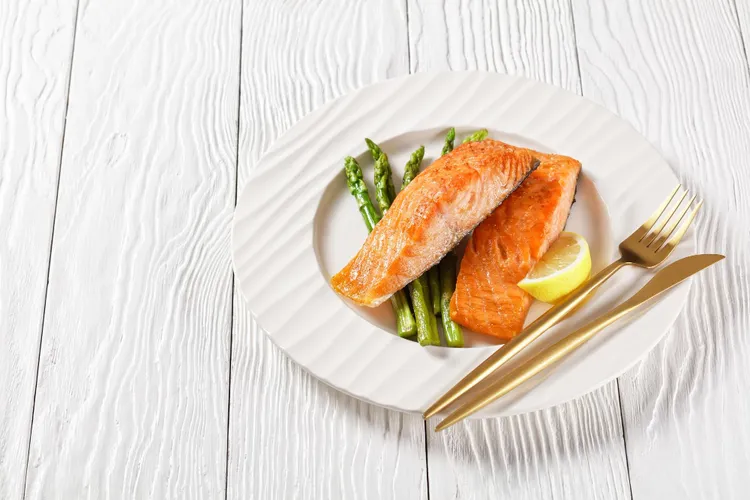
Salmon isn't the most protein-efficient fish by calorie - the fat content pushes calories up compared to cod or tuna. But the omega-3 fatty acid content (EPA and DHA specifically) makes it worth including 2-3 times per week regardless of where it sits on a protein-per-calorie ranking. Most people in Western countries consume far less omega-3 than is considered optimal, and salmon is the most practical way to correct that. The question is how to cook it efficiently so that it doesn't become a chore.
Macro Profile: What You're Getting Per Fillet
Per 150g cooked salmon fillet (approximately one standard supermarket portion):
- Protein: ~25g
- Fat: ~14g (of which approximately 3-3.5g omega-3 as EPA+DHA)
- Calories: ~230 kcal
- Notable micronutrients: Vitamin D (~16μg, over 100% of most daily targets), B12, selenium, potassium
At 230 kcal per fillet, salmon is calorie-denser than chicken breast or tuna. In a 2000 kcal day targeting 150g protein, salmon is still entirely viable - you simply need to plan the rest of the meal with the calorie cost in mind. Pair a 150g fillet with high-volume, low-calorie sides (asparagus, salad, broccoli) rather than calorie-dense additions.
The Omega-3 Case for Salmon
EPA and DHA - the long-chain omega-3 fatty acids found in fatty fish - have a stronger evidence base for cardiovascular health, inflammation reduction, and cognitive function than almost any other dietary factor. Most adults in the UK and US consume less than 200mg of combined EPA+DHA per day; health guidelines typically suggest 500mg-1g per day for general health. A 150g salmon fillet provides roughly 3g - six times the lower recommended threshold in a single serving.
Alternative sources (flaxseed, walnuts, chia) provide ALA, a short-chain omega-3 that converts to EPA and DHA at a very low rate (under 10% in most people). For practical omega-3 intake, fatty fish is the only reliable dietary source at clinically meaningful doses.
Batch Baking: 4 Fillets, 20 Minutes
The most efficient batch approach for salmon is foil baking - minimal washing up, easy scaling, and consistent results. The base technique from lemon-butter baked salmon with asparagus scales cleanly to 4 servings on one tray:
- Preheat oven to 200°C (fan) or 220°C (conventional)
- Line a large baking tray with aluminium foil
- Season 4 x 150g salmon fillets with salt, pepper, and a squeeze of fresh lemon. A small knob of butter on top of each fillet (optional but adds flavour)
- Arrange asparagus spears alongside if doing the full recipe; omit and add a vegetable side separately if you want neutral plain salmon for meal prep
- Bake 12-15 minutes - remove when the flesh just begins to flake and the centre is still slightly translucent. Carry-over heat finishes it over the next 3-4 minutes
- Cool completely (uncovered) before refrigerating
The cooling step matters. Covering hot salmon traps steam and overcooks it. Let it cool on the tray at room temperature for 20-30 minutes before transferring to containers.
Four Flavour Variations for the Week
Keep the base bake neutral (salt, pepper, lemon) and vary the flavour at serving time. This prevents meal fatigue across 3-4 servings from the same batch:
- Monday - Classic lemon-herb: Fresh dill and lemon wedge. The base recipe.
- Tuesday - Asian: Drizzle soy sauce, sesame oil, and a little grated ginger over the cold fillet before serving. Add pickled cucumber and steamed edamame on the side.
- Wednesday - Mediterranean: Sun-dried tomatoes, pitted olives, and capers scattered over the cold fillet. A drizzle of olive oil.
- Thursday - Smoked paprika: Mix smoked paprika, garlic powder, and olive oil before baking - season the fillets with this mix instead of plain salt and pepper. Changes the colour and flavour significantly.
All four use the same 20-minute Sunday bake. The flavour add-ins are cold and require no additional cooking.
Eating Cold vs Reheating: The Practical Decision
Salmon reheats poorly in most microwave setups. The smell is strong in a shared kitchen or office, and the texture - particularly the outer layer - becomes dry and less pleasant. The better meal prep approach is to eat salmon cold, directly from the fridge.
Cold salmon on a grain bowl, salad, or over quinoa is standard in many cuisines (particularly Japanese and Scandinavian). It doesn't require adjustment - you're eating a cooked protein cold, the same way you'd eat cold chicken breast. If you strongly prefer warm fish, warm the grain base and add cold salmon on top - the bowl comes to a reasonable temperature within a minute or two.
Frozen vs Fresh Salmon: The Cost Decision
Frozen salmon fillets (individually vacuum-sealed) are typically 30–40% cheaper than fresh and nutritionally equivalent. The omega-3 content is preserved by freezing. Defrost overnight in the fridge - not in cold water (which leaches flavour) and not in the microwave (which partially cooks the outer layer). Fillets defrosted overnight in the fridge bake identically to fresh.
Wild-caught vs farmed is a less significant nutritional distinction than is often marketed. Both wild and farmed Atlantic salmon contain high levels of EPA and DHA - the specific ratios differ slightly but both are meaningfully above what most people consume. The primary case for wild-caught is environmental rather than nutritional.
Building a Complete Meal Around Salmon
A 150g salmon fillet at 230 kcal and 25g protein leaves substantial room in a 500–600 kcal meal. The most useful pairings that keep total calories in range while adding protein and satiety:
- 100g cooked quinoa (~120 kcal, 4g protein) + mixed salad with light dressing (~80 kcal): total ~430 kcal, ~29g protein
- 150g asparagus roasted (~50 kcal, 2g protein) + 150g cottage cheese on the side (~130 kcal, 17g protein): total ~410 kcal, ~44g protein
- 200g roasted sweet potato (~180 kcal, 2g protein) + large green salad (~50 kcal): total ~460 kcal, ~27g protein
Adding a cottage cheese side is the best protein booster for a salmon meal - it pushes toward 44g protein at under 500 kcal without changing the character of the meal.
For a full week of batch-cook meals matched to your specific macro targets, Consillar's weekly meal prep planner generates a complete prep plan around your personalised numbers automatically.
Storage Notes
Batch-baked salmon keeps 3 days refrigerated in a sealed container. Day 3 is edible but the texture is noticeably softer than Day 1-2. For a 5-day week, bake 3 fillets on Sunday (for Monday-Wednesday) and either bake 1-2 fresh mid-week or substitute a different protein source for Thursday-Friday. For the full weekly protein framework, see the protein-first cooking method guide.
Canned Salmon: The Budget Alternative
Fresh and frozen fillets get most of the attention, but canned salmon deserves inclusion in any budget-conscious protein-first approach. Canned wild sockeye or pink salmon costs approximately $2-4 per 213g drained can, delivers ~45g protein, and contains the same omega-3 fatty acids as fresh - including the soft edible bones which add calcium. It's non-perishable, requires zero cooking, and works in salads, fish cakes, and pasta dishes exactly like canned tuna.
The texture and flavour are different from fresh - softer and stronger. For people new to it, starting in a sauce-based pasta dish where the flavour is less prominent is the best entry point. The omega-3 content per can (~2g EPA+DHA) is meaningfully high, making it a viable alternative on days when fresh salmon isn't available or in budget.
Sustainable Weekly Salmon Rotation
The practical weekly rhythm: 2-3 portions per week for meaningful omega-3 intake. Batch-bake 3 fillets on Sunday for Monday, Tuesday, Wednesday. Thursday and Friday use a different protein anchor - chicken, ground beef, eggs. Return to salmon the following Monday. This gives consistent omega-3 intake without eating salmon daily, fits naturally into a batch-cook rotation, and avoids creating storage problems. For the full week-by-week structure, see the 7-day protein-first meal plan and the protein-first cooking method guide.
When to Skip Salmon and Use a Substitute
Salmon's omega-3 value makes it worth including 2-3 times per week, but there are weeks when it's not available, out of budget, or simply not appealing. On those days, the best protein-first substitute is tuna (close in protein, fraction of the cost) plus a fish oil supplement if you want to cover omega-3s. Alternatively, 3 whole eggs provide ~0.3g of ALA omega-3 - not the EPA/DHA form found in fish, but a contribution. For 1-2 weeks without salmon, neither muscle nor cardiovascular outcomes will be meaningfully affected. The habit of returning to salmon consistently across the month matters more than perfection week to week. For the broader protein-first framework, see the protein-first cooking method guide.
A useful kitchen habit for consistent salmon intake: keep 4-6 frozen fillets in the freezer at all times and defrost the Sunday batch in the fridge overnight Saturday. When frozen salmon is permanently stocked, you never face a week without it because you forgot to buy fresh. The freezer-to-Sunday-bake pipeline removes the planning friction that causes people to skip salmon weeks and default to chicken only. Omega-3 intake benefits most from consistency over weeks and months rather than large occasional doses - the habit infrastructure matters as much as the recipe.
Salmon meal prep is one of the most nutritionally dense investments a Sunday batch cook can produce - 25g protein plus a full day's omega-3 requirement in a single fillet, ready to pull from the fridge across three days of lunches or dinners with zero additional cooking effort required.
Latest