Stone Fruit Jam: Plum, Apricot and Peach at Home
Plum, apricot, and peach jams each behave differently in the pan. Here is what to know about pectin levels, skin decisions, and tested recipes for each.
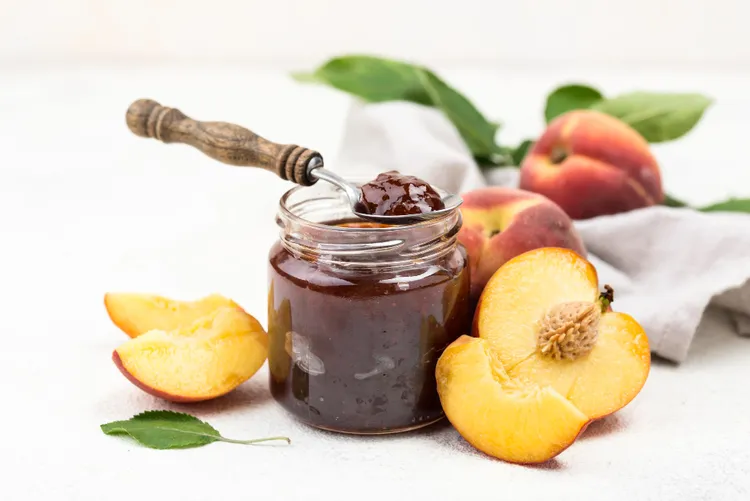
Stone fruits make some of the best jams - deep flavour, good colour, and a texture that berries cannot match. But plums, apricots, and peaches behave quite differently in the pan. Here is what you need to know before you start, plus a tested recipe for each.
Pectin and Acid Levels by Fruit
Plums are medium-to-high pectin, particularly the skin, and naturally acidic. They set reliably without commercial pectin and often without added lemon juice. Damson plums are among the highest-pectin fruit available. Victoria plums are medium - add lemon juice to be safe.
Apricots are medium pectin with good natural acid. They set well but benefit from slightly longer cooking than plums. The skin is thin enough to leave on and breaks down fully during cooking.
Peaches are low pectin. They need either commercial pectin, a high-pectin fruit mixed in such as cooking apple, or careful attention to lemon juice levels. The skin can be left on small peaches but should be removed from large, thick-skinned varieties - it does not break down and creates an unpleasant texture.
Skin On or Off
Plum skins are thin, break down fully during cooking, and contain most of the fruit's natural pectin - always leave them on. Apricot skins are similarly fine-textured and dissolve into the jam. Peach skins vary by variety. Freestone peaches with thick, fuzzy skin should be peeled using the blanching method in the recipe below. Small, thin-skinned clingstone peaches can be left unpeeled for a more rustic jam with better colour.
Recipe 1: Classic Plum Jam
Makes: 5 to 6 x 340g jars | Prep: 20 minutes | Cook: 30 to 40 minutes
Ingredients
- 1kg ripe plums (Victoria or similar)
- 800g white granulated sugar
- 2 tablespoons lemon juice
- 100ml water
Instructions
- Halve and stone the plums. Reserve 6 to 8 stones, crack them with a hammer and remove the kernels - these add an almond note and are optional but worth trying.
- Place plums, water, and lemon juice in a heavy pan. Simmer over medium heat for 15 minutes, stirring occasionally, until fruit is completely soft.
- Add sugar and stir over low heat until dissolved. If using the cracked kernels, add them now in a small muslin bag or tea strainer.
- Bring to a full rolling boil. Boil for 10 to 15 minutes until setting point is reached. Test with the wrinkle test from 10 minutes onwards.
- Remove the kernel bag. Ladle into sterilised jars and seal.
Recipe 2: Apricot Jam
Makes: 4 to 5 x 340g jars | Prep: 20 minutes | Cook: 35 to 45 minutes
Ingredients
- 1kg fresh apricots, halved and stoned
- 800g white granulated sugar
- 3 tablespoons lemon juice
- 100ml water
Instructions
- Combine apricots, water, and lemon juice in a heavy pan. Simmer for 15 to 20 minutes, stirring regularly, until fruit is very soft. Apricots hold their shape longer than expected - push them against the side of the pan to break them down.
- Add sugar, stir to dissolve over low heat.
- Bring to a rolling boil. Apricots take a little longer than plums to reach set - expect 15 to 20 minutes of boiling. Test from 12 minutes.
- Ladle into sterilised jars and seal immediately.
Recipe 3: Peach and Vanilla Jam
Makes: 4 x 340g jars | Prep: 30 minutes | Cook: 30 to 40 minutes
Ingredients
- 1kg ripe peaches, peeled, stoned, and chopped
- 800g white granulated sugar
- 3 tablespoons lemon juice
- 1 vanilla pod, split lengthways
- 75ml water
- 3g liquid pectin, or 1 small cooking apple peeled, cored, and grated
Instructions
- To peel peaches: score an X in the base of each, lower into boiling water for 30 seconds, then transfer to cold water. Skins slip off easily.
- Combine peaches, water, lemon juice, vanilla pod, and grated apple if using instead of liquid pectin in a heavy pan. Simmer for 15 minutes until soft.
- Add sugar and stir to dissolve. If using liquid pectin, add it now.
- Bring to a rolling boil and boil for 12 to 18 minutes, testing from 10 minutes. Peach jam can take longer to reach a firm set - be patient.
- Remove vanilla pod. Ladle into jars and seal.
Dealing with Surplus Stone Fruit
Stone fruits arrive in abundance in summer and ripen quickly. Jam is one of the best uses for a glut - it concentrates the flavour of even mediocre-quality plums into something excellent. Over-ripe fruit that is too soft to eat raw is ideal for jam as long as there is no mould. Remove any genuinely bad sections but do not discard soft, bruised, or split fruit - it is at its flavour peak and will make better jam than the perfect-looking fruit at the greengrocer.
Greengage Jam: The Underrated Option
Greengages are a variety of plum with a honey-like sweetness and very high natural pectin. They make exceptional jam that sets reliably without any additions. Use the plum recipe above with a 750g sugar to 1kg fruit ratio rather than 800g - they are sweet enough to need slightly less sugar. The finished jam is amber-green and has a flavour profile closer to honey and apricot than typical plum.
Stone Fruit Jams as Pantry Staples
Unlike strawberry jam, which has a relatively narrow use case, stone fruit jams are genuinely versatile kitchen ingredients. Plum jam is an excellent glaze for duck or pork. Apricot jam thinned with a little water is the standard pastry glaze in professional kitchens. Peach jam swirled into a cheesecake or used as a layer in a trifle beats commercial jam completely.
Nutrition (per tablespoon, approx. 20g)
- Calories: approximately 50 kcal
- Carbs: 12 to 13g
- Protein: 0g
- Fat: 0g
For more on pectin, setting point, and general jam technique, see the complete homemade jam guide.
Flavour Additions That Work with Stone Fruit
Plum pairs well with star anise, Chinese five spice, or a small amount of port added at the end of cooking. Apricot works with cardamom or almond extract - a few drops off the heat before jarring. Peach jam benefits from vanilla, as in the recipe above, or fresh thyme infused during the initial fruit-softening stage. All of these are added in muslin bags or stirred in at the end in small quantities. The rule is that the addition should be detectable but not identifiable - you should taste something interesting and think it is the fruit, not think it is the herb.
Stone Fruit and Jam Yield
Stone fruits give better jam yield than soft fruits because they have less water and more solid flesh. From 1kg of Victoria plums you can expect 4 to 5 standard 340g jars. Apricots give similar yield. Peaches, being juicier, give slightly less - typically 3 to 4 jars from 1kg. The yield varies with ripeness and variety. Very ripe, juicy fruit gives less concentrated flavour and lower yield; slightly underripe fruit gives better set and better yield. For all three stone fruit jams, the technique foundation is covered in the complete homemade jam guide.
Making the Most of Surplus Stone Fruit
The economics of stone fruit jam are excellent when you have access to a glut. Windfall plums, a box of slightly overripe apricots from the end of a market, or a pick-your-own visit where you went slightly too enthusiastically - all of these are ideal jam opportunities. The fruit costs very little or nothing, the sugar is cheap, and the result is something worth storing or giving away. A kilogram of plums bought at peak season costs a fraction of what four jars of good quality jam costs in a shop. The technique is straightforward once you know the ratio and the setting point test. Start with the plum recipe above - it is the most forgiving of the three stone fruits covered here - and use the same principles for apricot and peach once you are comfortable. For the underlying technique and pectin science, the complete homemade jam guide covers everything.
Stone Fruit Jam Across the Season
The stone fruit jam season starts with apricots in late June (in the UK) and runs through plums, greengages, and damsons in August and September. Each fruit is at its best for a window of 3 to 4 weeks, which means a productive summer of jam-making could yield a different stone fruit jam each month from July to October. Apricot first - it has the shortest season and the fruit deteriorates fastest. Plum in August when Victoria plums are at their peak. Greengages in late August - they are sweet enough to eat from the tree and make exceptional jam. Damsons from September - very small, very sour, very high pectin, and one of the most intensely flavoured jams you can make. Each requires slightly different technique, but all follow the same basic process. The complete homemade jam guide covers the foundations that apply to all of them.
Notes on Sugar for Stone Fruit
The recipes above use 800g sugar per 1kg fruit for plum and apricot. This is a conservative ratio that guarantees set and shelf stability. For very sweet, ripe fruit (Victoria plums at peak season, tree-ripened apricots) you can reduce to 700g per 1kg and the jam will still set due to the natural pectin in the skins. For damsons, which are very sour, the full 800g per 1kg is necessary for palatability. Taste the cooked fruit after it softens but before adding sugar - this tells you a lot about how much sweetness the batch needs. Adjust within the 700 to 850g range based on the fruit's natural sweetness. Outside that range, you risk either a very sweet jam with a compromised set (above 900g) or an under-sweet, potentially under-set jam (below 650g).
Quick Reference Summary
This article is one of 12 guides in the CookThisMuch homemade jam series. The article The Home Cook's Complete Guide to Making Jam from Scratch, covers the full framework: pectin types, sugar ratios, setting point science, sterilisation methods, water bath canning, and storage shelf life by type. Each cluster guide in the series, including this one, covers a specific fruit, technique, or problem in depth with a tested recipe. Whether you are making your first single jar or working through a summer glut of stone fruit, the technique is the same: soft fruit first, sugar second, rolling boil to setting point, hot jar, sealed lid. The details within that sequence are what this series covers, article by article, so you have a reliable reference for every variation you will encounter in a season of jam-making at home.
All recipes in this series use standard kitchen equipment. None require specialist preserving pans, pressure canners, or commercial-grade ingredients. The most useful single investment for anyone making jam regularly is a digital sugar thermometer with a clip. Beyond that, a heavy-based pan, clean glass jars, and two cold saucers in the freezer are all you need to produce consistently good results.
Stone Fruit Jam: Summary by Fruit
Plum: medium-high pectin, leave skins on, 800g sugar per 1kg fruit, 10 to 15 minutes rolling boil. Apricot: medium pectin, skins dissolve, 800g sugar per 1kg fruit, 15 to 20 minutes rolling boil. Peach: low pectin, remove thick skins, add liquid pectin or cooking apple, 800g sugar per 1kg fruit, 12 to 18 minutes rolling boil. All three follow the same base method: simmer fruit soft (15 minutes), add sugar and dissolve, rolling boil to setting point, hot jar, sealed immediately. The details specific to each fruit are in the recipes above. The underlying technique is in the complete homemade jam guide.
Storage Notes for Stone Fruit Jam
Stone fruit jams store particularly well because their natural acidity and the pectin from the skins create a stable, well-set product. Sealed jars of plum or apricot jam kept in a cool, dark cupboard are reliably good at 12 months and often still excellent at 18. Peach jam, being lower in natural acid, is better used within 12 months. All three are best refrigerated once opened and consumed within 4 to 6 weeks. The gelled set of stone fruit jams makes them very good candidates for water bath canning if you want long-term guaranteed shelf stability. A batch of plum jam processed in a water bath in September lasts reliably through the following summer. For the full storage guidance covering all jam types, see the homemade jam storage guide.
Latest