Olive and parmesan bread
This Olive and Parmesan Bread combines robust olives, nutty parmesan, and aromatic basil in a soft, homemade loaf. Perfect for soups, salads, or enjoying plain, it guides both novice and seasoned bakers through a satisfying baking experience.
Cook time 40 min
Prep time 70 min
Ingredients:
1 tbsp yeast1 tsp sugar
1 cup milk (1% fat)
2 tbsp olive oil
1 tsp salt
1 cup olives
3/4 cup grated parmesan cheese
1/2 cup basil leaves
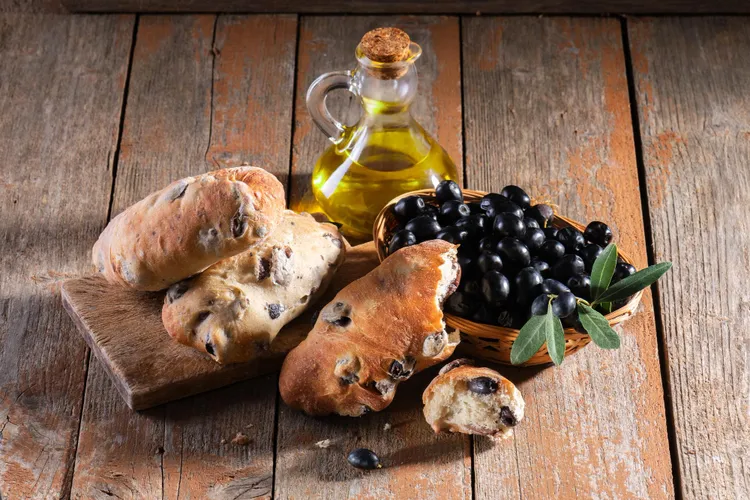
Bread-making can be an incredibly satisfying culinary project, and this Olive and Parmesan Bread offers a delightful twist on a classic loaf. With a combination of robust olives, nutty parmesan, and aromatic basil, this bread is perfect for complementing soups, salads, or enjoying on its own. Whether you're a novice baker or a seasoned pro, this recipe will guide you through creating a delicious Mediterranean-inspired bread.
Instructions:
- In a small bowl, combine the yeast and sugar.
- Warm the milk slightly (to about 100-110°F or 37-43°C) and pour it over the yeast and sugar mixture. Stir gently and let it sit for about 5-10 minutes until it becomes frothy.
- In a large mixing bowl, combine the flour and salt. Make a well in the center.
- Add the frothy yeast mixture to the dry ingredients.
- Pour in the olive oil and stir everything together until a dough begins to form.
- Gently fold in the chopped olives, grated parmesan cheese, and chopped basil leaves into the dough. Make sure they are evenly distributed.
- Transfer the dough onto a floured surface and knead it for about 8-10 minutes, until it becomes smooth and elastic. (You can also use a stand mixer with a dough hook attachment if preferred, kneading for about 5-7 minutes).
- Place the dough in a lightly oiled bowl, turning it once to coat the top. Cover the bowl with a clean kitchen towel or plastic wrap and let it rise in a warm place for about 1-2 hours, or until it has doubled in size.
- Once the dough has risen, gently punch it down to release any air bubbles. Transfer it to a floured surface and shape it into a loaf or desired shape.
- Place the shaped dough on a parchment-lined baking sheet or in a greased loaf pan. Cover it again with a kitchen towel or plastic wrap and let it rise for another 30-45 minutes, until it has doubled in size.
- While the dough is rising, preheat your oven to 375°F (190°C).
- Once the dough has finished its second rise, uncover it and place it in the preheated oven.
- Bake for about 25-30 minutes, or until the bread sounds hollow when tapped on the bottom and has a golden-brown crust.
- Remove the bread from the oven and let it cool on a wire rack before slicing.
With its savory flavor profile and satisfying texture, Olive and Parmesan Bread is sure to become a favorite in your baking repertoire. By following these tips and embracing the process, you'll create a loaf that’s perfect for any meal or occasion. This bread pairs wonderfully with a variety of dishes and can elevate an everyday meal into something truly special.
Olive and parmesan bread FAQ:
Bake the Olive and Parmesan Bread for about 25-30 minutes at 375°F (190°C) until it sounds hollow when tapped on the bottom and has a golden-brown crust.
The bread is done when it has a golden-brown crust and sounds hollow when tapped on the bottom. Additionally, you can use an instant-read thermometer; the internal temperature should be around 190°F (88°C).
Yes, you can substitute green olives for black olives or use feta cheese instead of parmesan for a different flavor profile. Just keep in mind that these substitutions may alter the texture and taste.
Store the bread at room temperature in a paper bag for up to 2 days. For longer storage, wrap it tightly in plastic wrap and place it in an airtight container in the freezer for up to 3 months.
If using a loaf pan, a standard 9x5-inch (23x13 cm) pan works well for this bread. If shaping it free-form, simply place the dough on a parchment-lined baking sheet.
Cooking Tips:
- For best results, use high-quality, fresh olives and parmesan cheese.
- Make sure your yeast is fresh and active by proofing it in warm milk before mixing with other ingredients.
- Knead the dough thoroughly to develop gluten, which helps in achieving a good texture.
- Allow the dough to rise in a warm, draft-free environment to ensure proper fermentation.
- Use a sharp knife to slash the dough before baking to allow for oven spring and a beautiful crust.
- If you prefer a stronger flavor, you can substitute some of the milk with a half cup of the liquid from the olives.
Nutrition Facts
12 ServingsCalories 60kcal
Protein 2.83g
Carbohydrates 3.75g
Fiber 0.65g
Sugar 1.41g
Fat 6g
More recipes
Garbanzo and fennel stew with basil and peas
A hearty garbanzo and fennel stew with basil and peas.
05 May 2026Smoked salmon tapenade with garlic toast
Delicious smoked salmon tapenade served on garlic toast.
05 May 2026Bbq beef with salsa verde
Grilled beef fillets topped with zesty salsa verde and fresh vegetables.
05 May 2026Chicken with roasted tomato and red onions
Easy chicken with roasted tomatoes and red onions dish.
05 May 2026