Best Ways to Use Ginger (Fresh, Ground, Candied, Pickled)
How fresh, ground, candied, and pickled ginger each serve different roles in cooking, and how to use fresh ginger's enzyme to tenderize meat.
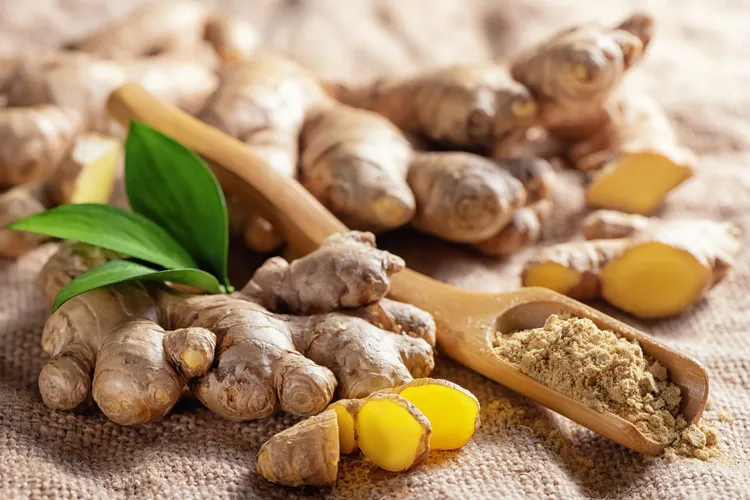
Fresh, dried, and candied ginger aren't three intensities of the same ingredient, they're genuinely different tools, as covered in more depth in our food science guide. Choosing correctly among them, and applying the right technique within each form, changes a dish more than most single ingredient decisions.
Fresh Ginger: Grating, Mincing, and Slicing
How fresh ginger is cut changes both texture and flavor intensity in a finished dish. A fine microplane or box grater produces a nearly pulpy result that disperses evenly through a marinade, dressing, or batter, releasing gingerol thoroughly. Mincing produces a coarser, more textured result common in stir-fries and sautés, where distinct small pieces of ginger are a desirable textural element rather than something to disappear invisibly. Thin slices or matchsticks, often smashed lightly first to rupture some cell structure, are common in braises, soups, and teas, where the ginger is meant to infuse flavor through cooking and then often be removed or pushed aside before serving.
Infusing Liquids With Fresh Ginger
Simmering sliced or smashed fresh ginger in water, stock, or tea produces an infusion that captures much of ginger's flavor without leaving fibrous pieces in the final dish, useful for teas, broths, and syrups. Longer simmering extracts more flavor but also pushes further toward the milder zingerone-heavy profile covered in the food science guide, meaning a quick infusion preserves more of fresh ginger's bright top notes than an extended one.
Ground (Dried) Ginger
Ground ginger's shogaol-heavy profile and concentrated, shelf-stable form make it the default choice for baking, where fresh ginger's higher moisture content would throw off a recipe's liquid balance, and where dried ginger's sharper, more one-dimensional heat actually suits the warm-spice role baking usually wants it to play. It's also a practical pantry staple for savory cooking when fresh ginger isn't on hand, though as covered in the food science guide, it isn't a precise flavor substitute, only a practical one.
Candied (Crystallized) Ginger
Ginger cooked slowly in a sugar syrup until tender, then coated in sugar and dried, produces candied ginger, a genuinely different preparation from either fresh or dried ginger, sweet with a lingering spicy warmth. It works well eaten on its own as a candy, chopped into baked goods for pockets of concentrated ginger-sweet flavor, or steeped in hot water for a naturally sweetened ginger tea. Candied ginger isn't a direct substitute for fresh or ground ginger in a savory recipe, given its substantial added sugar content, but it's a useful ingredient in its own right, covered further in our preservation guide.
Pickled Ginger
Thin-sliced young ginger, quick-pickled in a vinegar and sugar brine, produces the familiar pale pink pickled ginger served alongside sushi, a preparation that relies specifically on young ginger's thinner skin and milder heat rather than mature ginger's tougher texture. This is covered in more depth in the preservation guide, but is worth noting here as a genuinely distinct cooking-adjacent use of ginger from the fresh, dried, and candied forms above.
Using Ginger as a Marinade Tenderizer
Given the zingibain enzyme activity covered in the food science guide, fresh grated ginger left in contact with meat for 15 minutes to an hour genuinely tenderizes texture, not just flavor, a technique common in Korean and other East Asian marinades. Longer marinating with fresh ginger, beyond an hour or two, can begin to over-tenderize and produce an unpleasantly mushy texture, similar in principle to the acid-overexposure concern covered for tomato-based marinades elsewhere in this content series.
A Quick Reference by Goal
- Want ginger's sharpest, brightest presence: Fresh, finely grated, added late in cooking
- Want a warm background note through a long-cooked dish: Fresh, sliced or smashed, added early
- Baking, or no fresh ginger on hand: Ground (dried), added per the recipe's specified amount
- Want a sweet treat or naturally sweetened tea: Candied
- Want a tangy, crisp condiment: Pickled, typically from young ginger
- Want to tenderize and flavor meat simultaneously: Fresh, grated, used in a marinade for 15 minutes to an hour
Frequently Asked Questions
Can ground ginger be substituted for fresh in a savory recipe? In a pinch, roughly 1/4 to 1/2 teaspoon of ground ginger per tablespoon of fresh grated ginger called for is a reasonable substitution ratio, though as covered in the food science guide, the flavor character will be noticeably different, sharper and more one-dimensional, rather than a precise match.
Does ginger need to be peeled before grating? For a fine grate with a microplane, peeling first generally produces a smoother result, though a young, thin-skinned rhizome can often be grated skin-on without much textural issue, unlike the tougher skin on mature ginger.
Is there a best tool for grating ginger? A microplane or a traditional Japanese ceramic ginger grater (oroshigane) both produce a fine, pulpy result well-suited to most fresh ginger applications; a standard box grater's finest side works as a reasonable substitute if neither specialized tool is available.
How long does ginger's tenderizing effect on meat take to show results? Measurable tenderizing effects from the zingibain enzyme typically begin within 15 to 30 minutes of contact, with diminishing additional benefit and rising over-tenderizing risk beyond an hour or two, depending on the specific cut and thickness of meat involved.
A Quick Reference by Form
- Fresh, grated: Marinades, dressings, sharp finishing flavor.
- Fresh, sliced or smashed: Infusions, soups, braises, teas.
- Ground (dried): Baking, pantry-stable savory cooking.
- Candied: Snacking, baking mix-ins, sweetened tea.
- Pickled: Condiment, palate cleanser.
Building Comfort Across Ginger's Different Forms
A cook who only ever reaches for ground ginger from a spice jar misses fresh ginger's brighter, more citrusy character entirely, just as a cook who only uses fresh ginger misses ground ginger's role in baking, where fresh simply doesn't work as a substitute. Stocking and using multiple forms, rather than defaulting to whichever is most familiar, unlocks more of what ginger can actually do.
Adjusting Fresh Ginger Quantity for Personal Heat Tolerance
Because fresh ginger's pungency varies somewhat by rhizome age and growing conditions, starting with a slightly smaller amount than a recipe calls for and adjusting up to taste is a reasonable approach for anyone unfamiliar with how sharp a specific batch of ginger might be, since heat intensity isn't always perfectly predictable from one hand of ginger to the next.
Frequently Asked Questions
Can fresh ginger be frozen and grated later without thawing? Yes, as covered in the storage guide, this is one of fresh ginger's more convenient properties, grating directly from frozen works well and is a common practical shortcut for keeping fresh ginger always on hand.
Is there a risk of using too much fresh ginger in a dish? Yes; unlike some milder aromatics, fresh ginger's sharpness can genuinely overwhelm a dish if overused, particularly in raw or lightly cooked applications where its full intensity carries through to the finished plate.
Does the age of a ginger rhizome affect how it should be used? Older, more mature ginger tends to be more fibrous and sharper in heat than younger ginger, sometimes better suited to methods like infusing or long simmering where fibrous texture matters less than in a raw or quickly cooked application.
What's a reasonable amount of fresh ginger to keep on hand for regular cooking? A single hand, roughly a fist-sized piece, refrigerated or frozen as covered in the storage guide, is enough for regular use across several weeks for most households, with more easily portioned and frozen for longer-term convenience.
Matching Effort to Occasion
Not every dish calls for the most involved ginger preparation available. A quick stir-fry is a reasonable place for a fast grate or mince; a slow-simmered soup or braise suits sliced or smashed ginger added early, benefiting from the longer, more hands-off cooking time. Matching preparation to the dish's actual cooking style, rather than defaulting to one familiar cut regardless of context, produces more consistent results.
Combining Forms Within a Single Dish
Some dishes deliberately layer more than one form of ginger, ground ginger in a spice blend base, finished with a small amount of fresh grated ginger stirred in near the end for brightness. Understanding what each form individually contributes, covered throughout this guide, makes combining them intentional rather than accidental.
Teaching Ginger Technique to a Less Experienced Cook
For anyone teaching a beginner cook, starting with fresh grated ginger in a simple marinade or dressing is often the most forgiving entry point, since the form and quantity are usually explicit in a written recipe, before moving on to the more judgment-dependent choice of when to add sliced ginger to a long-simmered dish.
Learning Multiple Forms Rather Than Relying on One
A cook who only ever uses ground ginger misses fresh ginger's brighter, more citrusy character entirely, just as a cook who only uses fresh ginger misses ground ginger's essential role in baking. Building comfort across several forms, rather than defaulting to a single familiar one regardless of what a dish actually needs, is what unlocks ginger's full range as an ingredient.
Equipment Worth Having on Hand
A dedicated ginger grater or fine microplane makes a genuine difference in how efficiently fresh ginger's flavor gets extracted compared to a coarser tool, worth the modest investment for any household cooking with fresh ginger regularly rather than occasionally.
There's no universally best way to use ginger, only the best form and cut for a specific dish, and building comfort across the full range covered in this guide, fresh grated, fresh sliced, ground, candied, and pickled, gives far more flexibility than relying on just one familiar form ever could.
Over time, this range of technique becomes an intuitive toolkit, reached for automatically based on what a specific dish actually needs rather than habit alone.
Keeping a Well-Stocked Ginger Pantry
A household that keeps fresh ginger in the freezer, ground ginger in the spice cabinet, and perhaps a jar of candied or pickled ginger on a shelf has genuine flexibility to reach for whichever form a given recipe or craving calls for, without needing a special grocery trip every time a different preparation comes to mind.
Building a Personal Repertoire
Over enough meals, most cooks settle into a handful of go-to ginger preparations that suit their own cooking style, whether that's a quick grate into a stir-fry sauce or a slow-simmered ginger tea, and that personal repertoire is a genuine sign of comfort with the ingredient.
That comfort builds naturally with time and practice.
Keeping a small dedicated section of the freezer for portioned fresh ginger, alongside ground ginger in the spice cabinet, removes the friction of deciding which form to use, since whichever is more convenient in the moment is often perfectly suitable for the dish at hand.
Removing friction from the decision makes it far more likely the right form actually gets used.
A well-stocked kitchen makes good cooking decisions easier by default.
Small setup choices make daily cooking noticeably easier.
Small conveniences compound into real cooking confidence.
Practice pays off quickly here.
As with garlic and the other aromatics covered throughout this content series, the real skill isn't memorizing a fixed set of rules but building enough hands-on familiarity that the right choice, which form, which cut, how much, starts to feel obvious rather than effortful.
Obvious, eventually, but only through practice.
Latest









