Char Kway Teow at Home: Penang-Style Stir-Fried Noodles
Char kway teow is the great Penang hawker noodle - flat rice noodles, Chinese sausage, egg, bean sprouts, and prawns cooked at extreme heat in a seasoned wok. Getting it right at home is about technique more than ingredients.
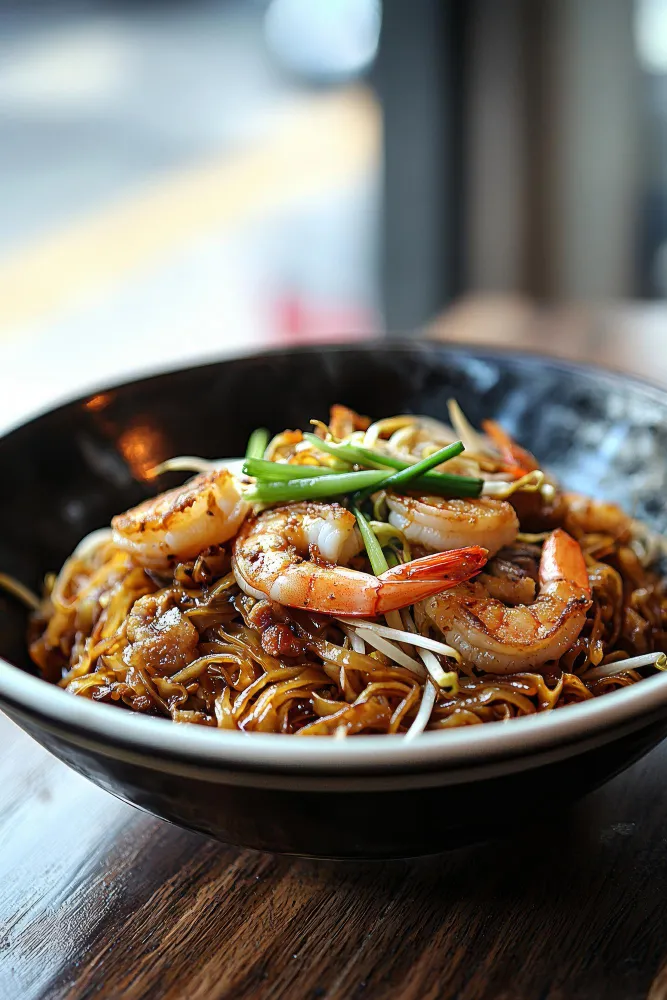
The dish translates as "stir-fried rice cake strips." At its best, the noodles carry a deep smokiness from contact with a screaming-hot wok, while staying slippery and slightly caramelised from the dark soy. The combination of sweet sausage, fresh prawn, egg, and crunchy bean sprout in the same mouthful is what makes it one of the most replicated dishes from the region. Getting close to the hawker version at home is achievable if you understand the heat constraints you're working with.
Ingredients (serves 2)
- 300g fresh flat rice noodles (kway teow), or dried rice noodles soaked per packet
- 150g medium prawns, peeled and deveined
- 80g Chinese lap cheong sausage, sliced thin on the diagonal
- 2 eggs
- 100g bean sprouts
- 3 stalks Chinese chives (garlic chives), cut into 3cm pieces - or spring onions
- 3 garlic cloves, minced
- 2 tbsp dark soy sauce
- 1 tbsp light soy sauce
- 1 tbsp fish sauce
- 1 tbsp oyster sauce
- 1 tsp chilli paste or sambal oelek
- 3 tbsp lard or neutral oil (lard gives more authentic flavour)
Instructions
- Mix the sauces together in a small bowl: dark soy, light soy, fish sauce, oyster sauce, chilli paste. Set aside.
- If using fresh rice noodles from the fridge, microwave them for 30 seconds to loosen - cold noodles stick together and tear in the wok.
- Get your wok very hot - 3 minutes on maximum heat. Add lard or oil. It should smoke immediately.
- Add garlic. Stir 10 seconds. Add sausage. Stir-fry 1 minute until edges start to caramelise.
- Add prawns. Stir-fry until just pink, about 90 seconds. Push everything to the side.
- Crack in eggs. Let them set for 15 seconds, then scramble roughly and mix through.
- Add noodles. Pour sauce over the top. Toss everything, pressing noodles against the hot wok surface in 20-second intervals. This is where wok hei develops.
- Add bean sprouts and chives. Toss for 30 seconds - they should stay slightly crunchy.
- Taste and adjust. Serve immediately.
Nutrition (per serving)
- Calories: ~580 kcal
- Protein: ~28g
- Carbs: ~62g
- Fat: ~24g
The Home Stove Problem (and the Fix)
Penang hawker woks sit over jet burners producing 50,000-100,000 BTU. A home gas burner produces 8,000-15,000 BTU. To compensate: cook one portion at a time (never two), use a carbon steel or cast iron wok, preheat the wok properly before adding anything, and don't stir constantly - let the noodles sit against the surface.
The Lap Cheong Question
Chinese lap cheong (dried pork sausage) is sweet, fatty, and has a distinctive flavour. Find it at Asian grocery stores - it keeps for weeks in the fridge unopened. Char siu (Chinese BBQ pork) is another acceptable substitute if lap cheong isn't available.
Meal Prep Notes
Char kway teow doesn't reheat - the noodles get gluey and the wok hei is gone. Cook it fresh every time. The prep work (peeling prawns, slicing sausage, mixing sauces) takes 10 minutes; the actual cooking takes 5. For a full picture of Malaysian noodle dishes and how this one fits alongside laksa and mee goreng, see the Malaysian home cooking guide.
Latest