The Complete Guide to Homemade Sauces, Dressings and Condiments
Everything you need to know about making sauces, dressings and condiments from scratch - from classic French vinaigrettes to fermented hot sauce. Once you understand the underlying techniques, you stop following recipes and start cooking.
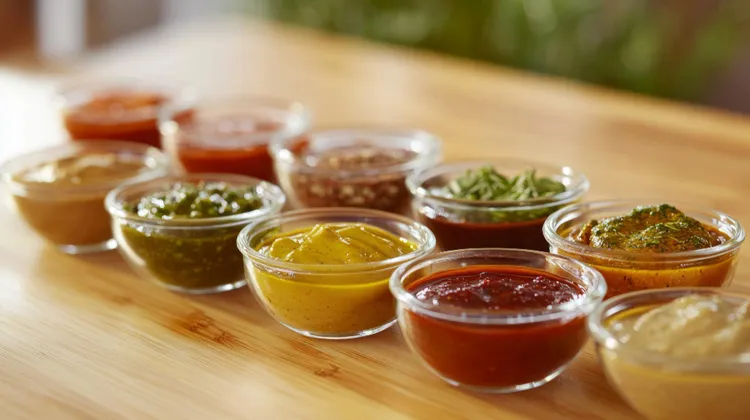
Most home cooks own at least a dozen bottles, jars and sachets of pre-made sauces. The irony is that nearly all of them are easier to make at home than they look, most taste noticeably better, and the ones you make yourself don't have the stabilisers, added sugar and industrial seed oils that crowd the ingredient lists of supermarket versions. This guide covers the techniques, ratios and logic behind the most useful sauces, dressings and condiments you can make in your own kitchen.
Why Homemade Sauces Change How You Cook
A sauce is not a finishing touch - it's a structural decision. The reason restaurant food tastes different from home cooking is usually sauce: a proper pan sauce, an emulsified dressing, a condiment with real depth. When you understand how sauces are built, you stop thinking about recipes as fixed instructions and start seeing them as frameworks. You understand why something works, which means you can adapt it, fix it when it goes wrong, and apply the same logic to new dishes.
There are five classical French mother sauces - béchamel, velouté, espagnole, sauce tomat, and hollandaise - and the majority of European-derived sauces descend from one of them. Beyond the French tradition, the same structural logic applies: most sauces are built from a fat, an acid, an aromatic base, and a thickening element. Once you see that pattern, a teriyaki glaze and a béarnaise sauce start to look like variations on the same idea.
The Anatomy of a Good Dressing
Dressings are the most practical starting point for sauce-making because they require no heat, no special equipment, and the feedback is immediate - you taste it and adjust. The backbone of almost every dressing is the oil-to-acid ratio. A classic French vinaigrette uses three parts oil to one part acid (usually wine vinegar or lemon juice). That 3:1 ratio is the baseline; from there you adjust by flavour, not by rule.
Emulsification is the technique that turns a vinaigrette from a temporary mixture that separates into a stable, creamy dressing. The emulsifier - mustard, egg yolk, miso, honey - sits between the fat and water molecules and holds them together. Mayonnaise is a fully emulsified dressing: it uses egg yolk as the emulsifier and a very slow addition of oil to create a thick, stable sauce. The foolproof homemade mayonnaise method covers both the hand-whisk and blender approaches, including how to rescue it if it splits.
Emulsified Sauces: The Techniques That Matter
Emulsified sauces fall into two camps: cold emulsions (mayonnaise, vinaigrette) and warm emulsions (hollandaise, béarnaise). Cold emulsions are forgiving - the oil goes in slowly, the emulsifier holds, and if it splits you can usually fix it by starting again with a fresh yolk and whisking the broken sauce into it. Warm emulsions are less forgiving because heat destabilises the egg proteins that hold the emulsion together. Get the temperature wrong and the sauce scrambles.
Hollandaise is the most technically demanding sauce on this list - a warm emulsion of egg yolks, clarified butter and lemon juice made over a double boiler. It needs attention, a thermometer helps, and the classic version is genuinely worth learning before you try the blender shortcut. Béarnaise follows the same method with an added reduction of white wine, vinegar, shallots and tarragon - it is richer, more complex, and one of the best sauces ever devised for grilled steak or roasted lamb.
Pan Sauces: The Most Underused Technique in Home Cooking
After you roast a chicken, fry a steak, or sear a piece of fish, the fond - the browned bits stuck to the pan - is concentrated flavour waiting to be turned into a sauce. Deglazing with wine, stock or even water lifts that fond and forms the base of a proper pan sauce. Reduce it, add a knob of butter, and you have something that makes the main dish taste like it was finished in a professional kitchen. It takes five minutes and uses what would otherwise go down the drain.
Tomato-Based Sauces
Tomato sauce is the most democratic of all sauces - cheap, versatile, easy to batch-cook and freeze, and equally at home on pasta, pizza, eggs and braised meat. The debate between a long-cooked Sunday sauce and a quick 20-minute weeknight version is one of technique and intention, not quality. A quick sauce preserves brightness and acidity; a long-cooked sauce develops sweetness and depth. The best homemade tomato pasta sauce guide covers both approaches alongside the San Marzano vs fresh tomato question and how to batch and freeze a large quantity.
International Condiments Worth Making at Home
Beyond the European tradition, some of the most useful condiments in a home kitchen come from other culinary cultures - and most of them are straightforward to make from scratch.
Chimichurri is an Argentinian herb sauce built from parsley, oregano, garlic, red wine vinegar and olive oil. It takes ten minutes, keeps in the fridge for a week, and improves almost any grilled or roasted meat. Teriyaki sauce is a four-ingredient Japanese glaze - soy sauce, mirin, sake and sugar - that doubles as a marinade, a dipping sauce and a finishing glaze. Make a jar and use it across the week. Romesco, the Catalan roasted pepper and almond sauce, is the kind of condiment that makes everything it touches taste more interesting - roasted vegetables, grilled fish, fried eggs, toast.
Fermented and Preserved Condiments
Fermentation is the slowest sauce-making technique, but the payoff is flavour complexity that no quick-cook method can replicate. Homemade fermented hot sauce requires nothing more than chillies, non-iodised salt, water and time. The lactobacillus bacteria that live on the surface of the chillies do the work. What you get after one to two weeks is a hot sauce with funk, depth and a rounded heat that vinegar-based sauces can't match - plus the option to blend it with vinegar at the end if you want more shelf stability.
Storage, Shelf Life and Batch Cooking
Most homemade sauces keep for at least a week in the fridge, and several freeze well. The general rules: oil-based sauces (vinaigrette, chimichurri, pesto) keep two weeks refrigerated; egg-based emulsions (mayo, hollandaise) keep up to five days and should not be frozen; tomato sauces keep five days refrigerated and freeze well for three months; fermented condiments keep for months once active fermentation is complete and the jar is sealed.
Batch cooking sauces and condiments on a Sunday is one of the highest-return kitchen habits there is. A jar of vinaigrette, a batch of tomato sauce and a bowl of chimichurri in the fridge means every meal during the week is already halfway finished.
Where to Start
If you are new to making sauces from scratch, start with a vinaigrette. It requires no heat, teaches you about emulsification, and the result is immediately useful. From there, move to mayonnaise, then a pan sauce, then - when you are ready - hollandaise. The techniques build on each other. By the time you get to béarnaise, it will not seem difficult at all.