High-Fiber Foods List: 40 Ingredients Ranked by Fiber Content
A ranked reference list of 40 high-fiber ingredients grouped by category, with fiber per 100g and practical notes on how to use each one in everyday cooking.
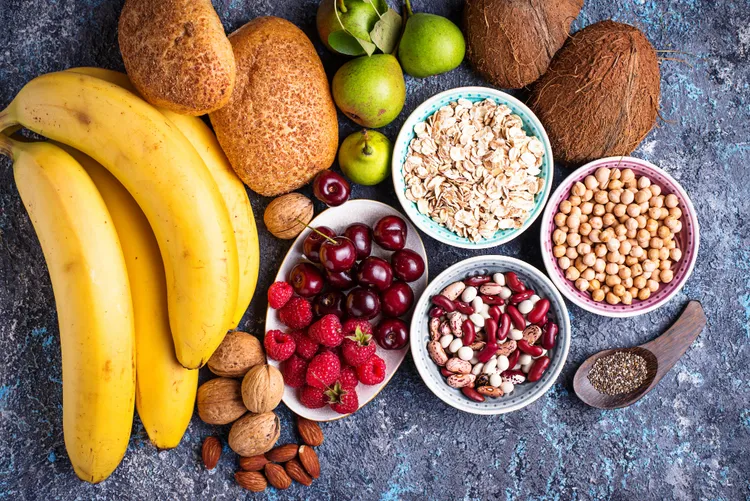
Knowing which foods are genuinely high in fiber is the starting point for any practical fiber strategy. The list below covers 40 of the most accessible and useful sources, grouped by category, with fiber content per 100g cooked weight (or raw where noted). Values are approximate and vary by variety and preparation method.
Legumes
The best fiber sources in the food supply, full stop. Legumes also provide substantial protein, making them the most nutritionally efficient food category for a fiber-focused diet.
- Split peas (cooked): 8.3g per 100g
- Lentils, green or brown (cooked): 7.9g per 100g
- Black beans (cooked): 8.7g per 100g
- Kidney beans (cooked): 6.4g per 100g
- Chickpeas (cooked): 7.6g per 100g
- Cannellini beans (cooked): 6.3g per 100g
- Edamame (cooked): 5.2g per 100g
- Pinto beans (cooked): 9.0g per 100g
The chickpea and lentil patties combine two of the top legume sources in a single dish. The black bean soup with lime is one of the fastest ways to hit 15g+ of fiber at lunch.
Whole Grains
- Wheat bran (raw): 42.8g per 100g - the most concentrated grain fiber source; typically used as a topping or in baking
- Bulgur wheat (cooked): 4.5g per 100g
- Pearled barley (cooked): 3.8g per 100g
- Oats, rolled (dry): 10.1g per 100g
- Farro (cooked): 3.4g per 100g
- Quinoa (cooked): 2.8g per 100g
- Whole-wheat pasta (cooked): 3.9g per 100g
- Brown rice (cooked): 1.8g per 100g
- Rye bread (per 100g): 5.8g
For a deeper look at the best whole grain options and how to cook them, see the guide on high-fiber grains.
Vegetables
- Artichoke hearts (cooked): 5.4g per 100g - one of the highest-fiber vegetables
- Green peas (cooked): 5.5g per 100g
- Parsnip (cooked): 4.4g per 100g
- Broccoli (cooked): 3.3g per 100g
- Kale (cooked): 2.6g per 100g
- Carrots (raw): 2.8g per 100g
- Sweet potato (baked, with skin): 3.3g per 100g
- Cabbage (raw): 2.5g per 100g
The lemon-infused cabbage salad and baked zucchini fritters with goat cheese are both simple ways to bring vegetables into a fiber-focused week.
Fruit
- Avocado: 6.7g per 100g - the highest-fiber common fruit
- Raspberries: 6.5g per 100g
- Pear (with skin): 3.1g per 100g
- Apple (with skin): 2.4g per 100g
- Mango: 1.6g per 100g
- Banana: 2.6g per 100g
- Dried figs (2 pieces): 5.0g
- Dried apricots (5 pieces): 3.5g
Seeds and Nuts
- Chia seeds (raw): 34.4g per 100g - exceptional fiber density
- Flaxseed (ground): 27.3g per 100g
- Hemp seeds: 4.0g per 100g
- Almonds: 12.5g per 100g
- Walnuts: 6.7g per 100g
- Pumpkin seeds: 6.0g per 100g
- Sunflower seeds: 8.6g per 100g
Seeds are the easiest fiber upgrade you can add to any meal. A tablespoon of chia seeds (about 12g) sprinkled onto oatmeal or stirred into a smoothie adds around 4g of fiber with essentially no change to the recipe.
How to Use This List
The most efficient approach is to anchor each day around one or two legume-based meals (which collectively provide 15-30g of fiber), then use vegetables, fruit, and seeds to fill the remaining gap. You do not need every category at every meal. For a full day-by-day eating plan built around these ingredients, see the complete guide to high-fiber meal planning.
What Is a 'Good' Source of Fiber?
Nutritional labeling guidelines consider a food a 'source of fiber' if it provides at least 3g per serving, and a 'high source' at 6g or more per serving. By that standard, almost every legume on this list qualifies as a high source, most whole grains as a source, and most vegetables and fruit as a source (depending on serving size).
The serving size caveat matters. Chia seeds have 34g of fiber per 100g - extraordinary density - but a typical tablespoon serving (around 12g) provides only 4g. It is still a useful amount, but the headline number can mislead if you assume you are eating 100g in a sitting.
Fiber Density vs. Fiber Per Serving
The most useful frame for meal planning is fiber per realistic serving, not fiber per 100g. Here is the list converted to typical portions:
- 1 cup cooked lentils: ~15.6g fiber
- 1 cup cooked black beans: ~15g fiber
- 1 cup cooked chickpeas: ~12.5g fiber
- 2 tablespoons chia seeds: ~10g fiber
- Half cup frozen raspberries: ~4g fiber
- 1 medium apple with skin: ~4.4g fiber
- Half an avocado: ~5g fiber
- 1 cup cooked oats: ~4g fiber
- 1 cup cooked barley: ~6g fiber
- 1 cup cooked green peas: ~9g fiber
For a practical meal plan that incorporates the top sources from this list into a full week, see the complete guide to high-fiber meal planning.
Latest