Galangal: The Root That Looks Like Ginger and Tastes Like Nothing Else
The piney, citrusy rhizome that defines Thai curry paste, Tom Kha Gai, and rendang - and cannot be substituted with ginger
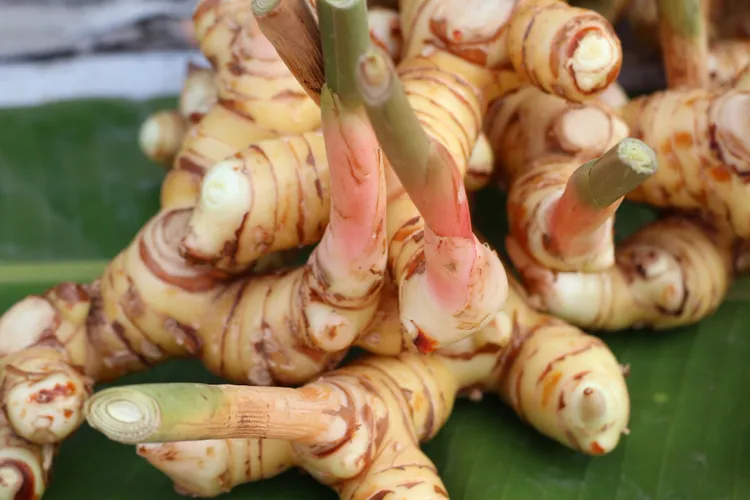
Galangal is one of the most frequently misidentified ingredients in global cooking. It looks remarkably like ginger - same knobbly rhizome shape, same pale flesh, same papery skin. It appears in the same culinary tradition (Southeast Asian cooking). It is even sometimes sold alongside ginger in the same section of the Asian grocery store. And it is completely, fundamentally different.
Ginger tastes warm, sharp, slightly sweet, with a clean heat that arrives quickly and fades. Galangal tastes piney, citrusy, slightly medicinal in a pleasant way, with a sharper, more astringent bite and almost no sweetness. The difference is not subtle - taste both raw and they are clearly different plants with different flavour compounds. Using ginger as a substitute for galangal in a Thai green curry paste, a Tom Kha Gai, or an Indonesian rendang produces a dish that is noticeably, specifically wrong - the characteristic piney-citrus depth that defines these preparations is simply absent.
Galangal is worth seeking out. This post explains what it is, the forms it takes, and ten specific applications across Thai, Indonesian, Malaysian, and fusion cooking.
What Galangal Is: Botany and Forms
Galangal belongs to the same family as ginger (Zingiberaceae) but is a different genus. The type most commonly used in Southeast Asian cooking is greater galangal (Alpinia galanga) - also called Siamese ginger, blue ginger, or laos. There is also lesser galangal (Alpinia officinarum), smaller and more intensely flavoured, used primarily in Chinese medicine and some regional preparations.
The flavour compounds: Galangal's distinctive character comes primarily from 1'S-1'-acetoxychavicol acetate (ACA) - a compound with no equivalent in ginger or any other common cooking ingredient. This compound produces the piney, slightly camphoraceous note that defines galangal.
The Three Forms
Fresh galangal: The correct form for most applications. Firmer than ginger, with a harder texture that requires more effort to slice or grate. The skin is thinner and paler. Available at South and Southeast Asian grocery stores, some Chinese supermarkets. Buy when found and freeze immediately - it freezes excellently.
Frozen galangal: The most practical form for most home cooks. Grate or slice directly from frozen. Flavour is essentially identical to fresh. Many Asian grocery stores sell it pre-frozen.
Galangal paste (in jars): Convenience paste available at Asian supermarkets and online. The flavour is decent but slightly more muted than fresh or frozen. Acceptable for sauces where galangal is a background element; less good for preparations where it is prominent.
Dried galangal (slices or powder): The least desirable form - much of the volatile aromatic character is lost during drying. Used in some spice blends but not recommended as a substitute for fresh in applications where galangal is a primary flavour.
The Flavour: Precisely Described
Galangal's flavour is often described inadequately as "peppery ginger" or "spicy ginger." This undersells it and misleads. The specific character is:
Piney: The closest comparison is the aromatic quality of fresh pine needles or juniper berries - a specific, clean, slightly resinous note.
Citrusy: A brightness related to but different from lemongrass's direct lemon character. More muted, more integrated with the piney note.
Sharp and astringent: A dry, slightly tightening sensation on the tongue, more pronounced than ginger's heat and less sweet.
Medicinal (in a pleasant way): A slight herbal, almost antiseptic quality that is specifically Southeast Asian in character - the same quality present in kaffir lime leaves and lemongrass that makes Thai curry paste smell the way it does.
Together, these qualities produce a flavour that is unmistakably and irreplaceably galangal. In a Thai green curry paste, it is the note underneath the lemongrass's brightness. In Tom Kha Gai, it is the dominant flavour that makes the soup taste specifically of itself.
10 Applications
1. Thai Green and Red Curry Paste
The most important application. Authentic Thai curry paste - green, red, or yellow - contains galangal as one of its essential aromatics alongside lemongrass, kaffir lime leaves, chilies, and garlic. The galangal provides the piney depth that lemongrass and lime leaves don't have.
For homemade curry paste: In a mortar and pestle or food processor, combine: 3-4 fresh green chilies (green paste) or dried red chilies (red paste, soaked) + 2 stalks lemongrass (inner part only, thinly sliced) + 3cm piece galangal (peeled and chopped) + 4 kaffir lime leaves (central vein removed) + 4 garlic cloves + 4 shallots + 1 tsp coriander seeds (toasted) + 1 tsp cumin seeds (toasted) + shrimp paste (or nori for vegan) + salt. Pound to a smooth paste.
The galangal takes longer to break down than the other ingredients - persist until no fibrous pieces remain.
2. Tom Kha Gai (Coconut Galangal Soup)
The signature galangal preparation - the dish most people encounter first and the one that demonstrates most clearly what galangal does. Tom Kha Gai is literally "galangal chicken soup" (kha = galangal in Thai). The galangal is the star.
Tom Kha Gai: Simmer 400ml coconut cream + 200ml chicken stock. Add 4 slices of galangal (each approximately 3mm thick), 2 stalks lemongrass (bruised), 4 kaffir lime leaves (torn), 1 fresh chili (sliced). Simmer 10 minutes to infuse. Add chicken pieces and mushrooms. Cook until chicken is done. Finish with fish sauce, lime juice, and palm sugar. Garnish with fresh coriander.
The galangal slices are not eaten - they are infusion vessels, used to perfume the broth and then left in the bowl where they serve as visual indicators of the broth's aromatic foundation.
3. Indonesian Rendang
One of the most complex and most celebrated dishes in Indonesian cooking - beef (or lamb, or jackfruit for a plant-based version) slow-cooked in coconut milk and a spice paste until the liquid has completely evaporated and the meat caramelises in its own coconut fat. Galangal is a primary ingredient in the rendang paste alongside lemongrass, turmeric, garlic, shallots, and kaffir lime leaves.
The galangal's piney character holds up through the long cooking of rendang - unlike some aromatic ingredients that fade, galangal's non-volatile compounds provide depth throughout the cooking process.
4. Malaysian Laksa
Laksa - the spicy coconut noodle soup of Malaysian and Singaporean cooking - uses galangal as part of its rempah (spice paste). The galangal is ground with shallots, garlic, lemongrass, dried chilies, and shrimp paste into the paste that forms the base of the soup.
5. Balinese Base Genep (Complete Spice Paste)
Base genep is the Balinese "complete" spice paste - a blend of fifteen or more ingredients including galangal, lesser galangal (kencur), turmeric, lemongrass, shallots, garlic, candlenuts, and various dried spices. It is the foundation of Balinese cooking and galangal is essential to its specific character.
6. Galangal-Lemongrass Broth
For soups and broths that need Southeast Asian aromatic depth without the full complexity of a curry paste - simmer 3-4 slices of galangal + 2 stalks lemongrass (bruised) + 4 kaffir lime leaves + 2 shallots (halved) in 1 litre of light chicken or vegetable stock for 20 minutes. Strain. This aromatic broth is the foundation for:
- Noodle soups (add rice noodles, spring onion, and coriander)
- Steamed fish (steam over the aromatic broth)
- Sauce bases for any Southeast Asian-inspired dish
7. Thai-Influenced Marinades
Galangal grated into a marinade for grilled chicken, seafood, or tofu produces a specifically Thai aromatic character. Combine: 1 tbsp grated galangal + 1 tbsp grated lemongrass (inner stalk) + 2 kaffir lime leaves (very finely sliced) + 2 tbsp fish sauce + 1 tbsp palm or brown sugar + 2 tbsp coconut milk. Marinate for 2-4 hours.
8. Galangal in Spiced Rice (Nasi Kuning)
Indonesian yellow rice (nasi kuning) is made by cooking rice in coconut milk with turmeric, galangal, lemongrass, and kaffir lime leaves. The galangal infuses into the rice during cooking, providing depth that makes nasi kuning specifically aromatic.
9. Galangal Tea (Jamu Tradition)
In Javanese jamu (traditional herbal medicine), galangal tea is one of the classic preparations - fresh galangal simmered in water with palm sugar and sometimes tamarind. The result is a warming, aromatic drink with the piney, slightly sharp character of galangal. Used in Indonesian tradition as a digestive and a warming preparation.
Simple galangal tea: Simmer 5 slices of fresh galangal in 500ml of water for 15 minutes. Strain. Sweeten with honey or palm sugar. Add a squeeze of lime.
10. Cross-Cultural Applications: Southeast Asian Depth in Non-Traditional Dishes
A slice or two of galangal simmered in any broth, sauce, or stew that benefits from piney, aromatic depth - removed before serving - adds a Southeast Asian character without making the dish specifically Thai or Indonesian. Works in:
- Butternut squash soup (adds a Southeast Asian register to complement the coconut cream)
- Coconut-based sauces
- Any preparation where an aromatic infusion is appropriate
Preparation Techniques
Peeling: The skin of galangal is thinner and less fibrous than ginger skin. Peel with a spoon (the same technique as ginger) or a vegetable peeler. Some cooks don't peel at all for preparations where the galangal is strained out.
Slicing for infusion: Cut into 3-4mm rounds for broths and soups where it will be removed. The surface area of thin slices extracts flavour efficiently during simmering.
Grating for pastes and marinades: Grate on the finest side of a box grater or with a microplane. Fresh galangal is firmer than ginger - apply firm pressure. Frozen galangal grates more easily than fresh.
For curry paste: Chop finely before adding to a mortar - galangal's fibrous texture takes the most pounding of all curry paste ingredients. Be patient.
The Galangal-Lemongrass-Kaffir Lime Trio
These three aromatics appear together in virtually every Thai and Indonesian preparation that uses galangal. They form a coherent flavour group:
- Lemongrass provides citrusy brightness (forward, fresh)
- Galangal provides piney depth (background, earthy)
- Kaffir lime leaves provide floral citrus (the middle note)
Together they produce the specific aromatic profile that makes Thai curry paste smell like Thai curry paste. Any one of the three can be adjusted or emphasised; all three together produce the characteristic balance. See the Lemongrass post for the complementary ingredient.
Pro Tips
- Buy and freeze immediately. Fresh galangal is not always available. When you find it, buy enough for several months, slice or leave whole, and freeze. Use directly from frozen - grate while still frozen for best results.
- Use galangal paste as a backup. Jarred galangal paste is widely available and adequate for most applications. It is notably less aromatic than fresh or frozen but produces acceptable results in complex preparations where galangal is one of many ingredients.
- The infusion approach is the most accessible entry point. Simmering slices in a broth requires no preparation beyond slicing - the galangal does its work and is removed before serving. Start here before attempting ground paste applications.
Common Mistake: Substituting Ginger Ginger and galangal are different plants with different flavour compounds. In a Tom Kha Gai made with ginger instead of galangal, the characteristic piney depth is absent - the soup tastes of ginger-coconut rather than the specific galangal-coconut character that defines the dish. The same applies to curry paste and rendang. Galangal is not a premium version of ginger - it is a different ingredient that cannot be replicated.
FAQ
Q: Can galangal be eaten raw?
Technically yes, but the raw flavour is intense, piney, and astringent. In most applications, galangal is either cooked (in broths and curries) or ground into a paste (in curry paste, where the cell walls are broken down and the flavour integrates). Eating whole slices of raw galangal is not standard practice.
Q: What is the difference between greater and lesser galangal?
Greater galangal (Alpinia galanga) is the standard cooking galangal - what this post describes. Lesser galangal (Alpinia officinarum) is smaller, more pungent, more medicinal in character, and used primarily in Chinese medicine and some specific preparations. Lesser galangal is sometimes sold as "kencur" in Indonesian cooking - a different spice with an even more distinctive, slightly camphorous character.
Q: Is galangal related to cardamom?
Yes - both are in the Zingiberaceae (ginger) family. Cardamom, galangal, turmeric, and ginger are all members of this family, which explains some shared aromatic characteristics (warmth, slight citrus notes) while being completely different ingredients.
🔗 Related Ingredient Deep Dives
- Lemongrass: The Stalk That Perfumes an Entire Cuisine
- Fish Sauce: The Fermented Condiment That Makes Everything Savourier
- Tamarind: The Sour Backbone of Indian and Southeast Asian Cooking
- Sesame Oil: The Finishing Oil That Transforms Asian Cooking
- From the Plant-Based collection: Butternut Squash and Coconut Soup
- World Cuisines in Your Pantry: The Ingredient Deep Dives
Latest