Growing Tomatoes: From Seedling to Ripe Fruit
Transplanting, staking, watering consistency, and the real cause of blossom end rot, plus pruning and pollination guidance for a healthy, productive plant.
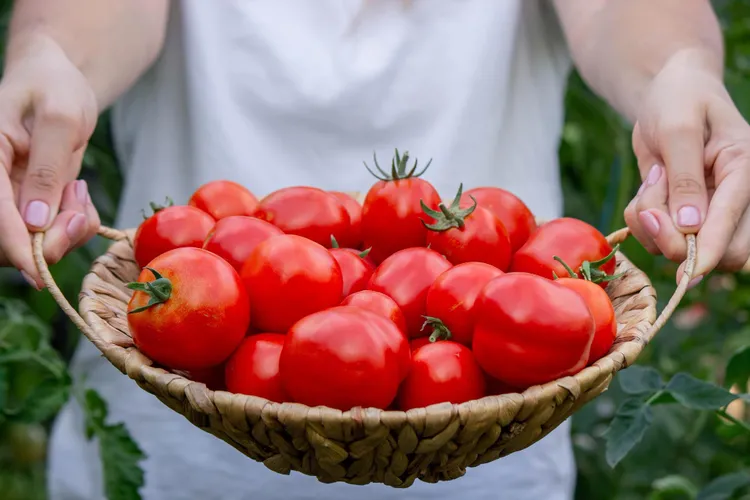
The gap between a healthy transplant and a plant loaded with ripe fruit is about ten to twelve weeks, and most of the decisions that determine yield happen in the first two of those weeks, before the plant has even started flowering.
Transplanting Into the Garden
Tomatoes are unusual among vegetable transplants in that you want to bury them deeper than they were growing in their pot, up to the first set of true leaves. The buried stem grows additional roots along its length, producing a stronger, more stable root system than a shallow-planted transplant. Space plants 24 to 36 inches (60 to 90cm) apart depending on variety size; crowding restricts airflow and increases disease risk later in the season.
Staking and Support Systems
Every tomato plant needs support of some kind, and the choice matters more for indeterminate varieties, which can reach six feet or taller. Three common approaches:
- Stakes: A single sturdy stake per plant, with stems tied loosely as they grow. Simple and cheap, but requires ongoing pruning to keep the plant to a single or double stem.
- Cages: Store-bought wire cages work for smaller determinate varieties but are often too flimsy for a loaded indeterminate plant, which can topple the cage entirely once fruit weight sets in.
- Trellising: A string or wire trellis system, common in greenhouse growing, gives the best support for tall indeterminate plants and makes pruning and harvesting easier.
Set up support at transplanting time, not after the plant is already sprawling. Retrofitting support onto an established plant risks damaging roots and stems.
Watering Consistency
Inconsistent watering is the direct cause of two of the most common tomato problems: blossom end rot and fruit cracking. Tomatoes want deep, consistent moisture, roughly 1 to 1.5 inches (2.5 to 4cm) of water per week, delivered at the base of the plant rather than overhead, which also reduces fungal disease risk on the leaves.
A period of drought followed by heavy watering (or heavy rain) is worse than consistent moderate watering, because the sudden water intake causes fruit to expand faster than the skin can stretch, leading to cracked or split tomatoes. Mulching around the base of the plant with straw or shredded leaves helps even out soil moisture between waterings.
Blossom End Rot: What It Actually Is
Blossom end rot shows up as a dark, sunken, leathery patch on the bottom of the fruit, and it's frequently misdiagnosed as a disease when it's actually a calcium transport problem, usually triggered by inconsistent watering rather than an actual calcium deficiency in the soil. Because calcium moves through the plant along with water, irregular watering interrupts calcium delivery to developing fruit even when there's plenty of calcium in the soil itself.
The fix is watering consistency, not calcium supplements, in the large majority of cases. Consistent watering, mulching, and avoiding drought stress resolve blossom end rot far more reliably than adding calcium to the soil.
Pruning: When It Helps and When It Doesn't
Indeterminate varieties benefit from removing "suckers," the small shoots that grow in the joint between the main stem and a branch. Left unpruned, suckers turn into additional stems that increase leaf cover (which can help protect fruit from sunscald) but reduce airflow and can delay ripening by spreading the plant's energy across more growth.
Determinate varieties should generally not be pruned, since they set a fixed amount of fruit and removing growth reduces yield without the airflow benefit that matters for indeterminate types.
Flowering and Pollination
Tomato flowers are self-pollinating, meaning each flower contains both male and female parts, but they still benefit from movement, wind or a light shake of the plant, to release pollen effectively. In greenhouse growing where wind is absent, growers often shake plants by hand or use a small electric pollinator for this reason. Outdoor plants usually pollinate fine without intervention.
Extreme heat (consistently above 90°F/32°C) or cold (below 55°F/13°C) can cause flowers to drop without setting fruit, a temporary condition that resolves once temperatures moderate.
Common Growing Problems, Beyond Blossom End Rot
- Leggy, weak growth: Usually a light or spacing issue, not a soil problem.
- Yellowing lower leaves: Often normal as the plant redirects energy upward, but can also signal nitrogen deficiency if it spreads.
- Cracked fruit: Inconsistent watering, same root cause as blossom end rot.
- Sunscald: Pale, blistered patches on fruit exposed to direct hot sun, more common after aggressive pruning removes too much leaf cover.
Feeding Tomatoes Through the Season
Tomatoes are heavy feeders, particularly for phosphorus and potassium once flowering begins. A balanced all-purpose fertilizer works at transplanting time, but many gardeners switch to a lower-nitrogen, higher-phosphorus formula once flowering starts, since excess nitrogen at that stage tends to push leafy growth at the expense of fruit set. Over-fertilizing, particularly with nitrogen-heavy products, is a common cause of a lush, healthy-looking plant that produces disappointingly little fruit.
Compost worked into the soil at planting time, combined with a modest, consistent fertilizing schedule through the season rather than one large application, tends to produce more even results than sporadic heavy feeding.
Companion Planting
Basil is the most commonly cited tomato companion, and while the often-repeated claim that it improves tomato flavor doesn't have strong scientific backing, the two do share growing conditions (similar sun, water, and temperature needs) that make them practical to plant near each other regardless. Marigolds are frequently planted alongside tomatoes for their reputed ability to deter certain soil nematodes, a claim with more research support than the basil-flavor idea, though the effect size varies by nematode species and soil conditions.
What's more clearly established is what to avoid: planting tomatoes near other nightshade family members (potatoes, in particular) in the same soil year after year increases shared disease and pest pressure, since the same pathogens and pests tend to affect the whole plant family.
Managing Pests
Tomato hornworms are the most visually dramatic pest, large green caterpillars that can strip a plant of leaves remarkably quickly, but they're also large enough to spot and hand-pick off in the evening when they're most active. Aphids cluster on new growth and are usually manageable with a strong water spray or insecticidal soap before populations get large. Whiteflies, tiny white insects that scatter when a plant is disturbed, tend to be more persistent and benefit from consistent monitoring rather than a single treatment.
For most home gardens, regular visual inspection, checking the undersides of leaves specifically, catches pest problems early enough that aggressive intervention isn't necessary. Waiting until damage is obvious usually means the population has already grown large enough that control takes longer.
Disease Prevention Through Airflow and Watering
Most common tomato diseases, early blight, late blight, and septoria leaf spot among them, are fungal and spread more readily in wet, humid, poorly ventilated conditions. Watering at the base of the plant rather than overhead, spacing plants adequately, and pruning lower leaves that touch the soil (where fungal spores often originate) all reduce disease pressure without requiring any fungicide application.
Mulching also plays a role here: a layer of straw or mulch between the soil and the lowest leaves reduces how much soil (and the pathogens it may carry) splashes onto the plant during watering or rain, one of the most common transmission routes for early blight specifically.
Signs a Plant Is Ready to Start Setting Fruit
Yellow flower clusters appearing at leaf joints signal the plant has shifted from purely vegetative growth into reproductive growth. Small green fruit typically follows within a week or two of successful pollination. From that point, fruit development to full ripeness takes anywhere from 4 to 8 weeks depending on variety and growing conditions, which is when the guidance in our harvest guide becomes directly relevant.
For the broader lifecycle context, see the complete Tomatoes: Seed to Plate guide. Once fruit starts to color up, timing the harvest correctly matters as much as everything that came before it, covered in our harvest guide.
Weather Stress Beyond Heat and Cold
Wind stress, less commonly discussed than heat or cold, can also affect tomato plants, particularly newly transplanted seedlings that haven't yet developed a strong root system. A temporary windbreak, even something as simple as a row cover or a few stakes with fabric during the first week after transplanting, reduces transplant shock in consistently windy locations. Once plants are established and staked, this concern largely resolves on its own.
Recognizing a Healthy, On-Track Plant
A tomato plant progressing normally shows steady vertical growth, dark green foliage without significant yellowing, and flower clusters appearing at a reasonably consistent pace once the plant reaches a foot or two in height. Wide variation from this pattern, stalled growth, pale leaves, or flowers that appear and drop without setting fruit, usually points back to one of the factors covered above: watering consistency, nutrient balance, or temperature stress, rather than requiring a more exotic diagnosis.
Frequently Asked Questions
How much sun do tomato plants actually need? A minimum of 6 hours of direct sun daily, with 8 or more hours generally producing stronger growth and higher yield. Less than 6 hours tends to produce a leggy, underproductive plant even with otherwise good care.
Should I remove lower leaves as the plant grows? Removing lower leaves that touch or come close to the soil, particularly once the plant is established, reduces disease risk without meaningfully affecting yield, since those older, lower leaves are the least productive photosynthetically anyway.
Why are my tomato leaves curling? Leaf curl has several possible causes, heat stress, inconsistent watering, or in some cases viral disease. Heat and watering-related curl usually resolves as conditions moderate; viral causes, less common, are typically accompanied by other symptoms like discoloration or stunted growth and generally require removing the affected plant.
Do I need to remove flowers early in the season to encourage stronger growth? Some gardeners remove the first flower cluster on a young plant to redirect early energy toward root and stem development rather than fruit, though the evidence for this meaningfully improving overall yield is mixed. It's a reasonable optional practice rather than an essential one.
Patience Through the Middle Stretch
The period between transplanting and the first visible flower cluster can feel uneventful, since most of the plant's early energy goes into root and stem development that isn't very visible above ground. Resisting the urge to over-fertilize or over-water during this stretch, trusting the consistent, moderate approach covered above, tends to produce a stronger plant by the time flowering and fruiting begin than an anxious, overcorrected one.
When to Start Watching for Ripening Signs
Once fruit is visibly sizing up on the plant, roughly 3 to 4 weeks after successful pollination for most varieties, it's worth shifting attention toward the ripening cues covered in the next stage of this guide. Growth and ripening aren't sharply separated phases; a healthy plant continues setting new flowers and small fruit even as earlier fruit matures, so growing-stage care and harvest-stage attention overlap for most of a productive plant's life.
Growing is the longest single stage in this framework, and also the one where small, consistent habits (regular watering, occasional pruning, watching for early signs of trouble) matter more than any single dramatic intervention. A plant checked on a few times a week rarely develops a problem serious enough to threaten the season's harvest.
Keeping Records Across Seasons
Jotting down a few quick notes each season, planting dates, which fertilizer schedule was used, when the first flowers and first ripe fruit appeared, when any disease or pest issues showed up, builds a useful reference for adjusting the following year. Tomato growing rewards this kind of small, cumulative attention more than almost any other common garden crop, since so many of the variables (weather, soil, variety choice) change year to year and a written record beats memory for spotting real patterns over time.
None of these growing-stage habits require special skill, mostly just steady attention over a period of weeks, which is well within reach for a first-time tomato grower willing to check in regularly.
Latest









