Tomatoes: Seed to Plate
A complete lifecycle guide to tomatoes, from starting seeds indoors through growing, harvesting, storage, nutrition, food science, cooking methods, pairings, preservation, and recipes.
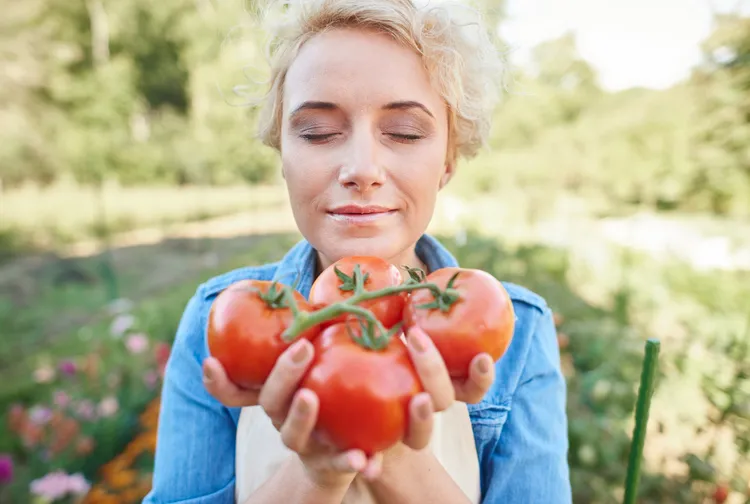
A tomato seed costs about two cents. What happens to it between a seed packet and a dinner plate touches botany, chemistry, storage physics, and a good forty minutes of simmering, and most guides only ever cover one piece of that chain. This one covers all ten stages in order, with a dedicated deep-dive for each.
Starting From Seed
Tomatoes grown from seed give you access to thousands of varieties that never show up as nursery starts, and the process is more forgiving than most first-time gardeners expect. Timing matters more than technique here: start too early and plants get leggy waiting for warm soil, start too late and you lose weeks of the growing season. Our seed-starting guide covers germination windows, heirloom versus hybrid tradeoffs, and how to count backward from your last frost date.
Growing: Seedling to Fruit
Once seedlings go into the ground, the plant's needs shift roughly every two to three weeks, from hardening off through flowering to fruit set. Staking decisions made in week one affect how much fruit you lose to rot in week twelve. Our growing guide walks through transplanting, support systems, watering consistency, and the two or three problems (blossom end rot, cracked skins, leggy growth) that account for most first-season disappointment.
Harvesting at the Right Moment
Tomatoes are one of the few common vegetables where "ripe on the vine" and "ripe for eating" aren't quite the same claim, and waiting for full vine-ripening isn't always the better choice. Our harvest guide covers the visual and tactile cues that actually predict flavor, plus what to do with the inevitable end-of-season green tomatoes still on the vine when frost is coming.
Storage: Why the Fridge Is the Wrong Answer
Refrigeration is the single most common tomato-storage mistake, and it's one that actively damages flavor and texture rather than just failing to help. Cold temperatures rupture the membranes responsible for a tomato's aroma compounds, which is why a fridge-stored tomato tastes flat even when it looks fine. Our storage guide covers counter storage by ripeness stage and how long you actually have before quality drops.
Nutrition: What's Actually in a Tomato
A tomato is mostly water by weight, but the remaining fraction carries a nutritional profile that shifts depending on how you cook it, which is unusual among vegetables. Lycopene, the carotenoid responsible for a tomato's red color, becomes more bioavailable after cooking rather than less, the opposite of what happens to most heat-sensitive nutrients. Our nutrition breakdown covers the full micronutrient profile and what changes between raw and cooked.
The Food Science Behind the Flavor
Tomatoes carry naturally high levels of glutamate, the same amino acid responsible for savoriness in aged cheese and cured meat, which is part of why tomato-based dishes taste satisfying without needing much added fat or salt. Understanding the acid-sugar balance and how heat concentrates flavor explains why a simmered sauce tastes nothing like a raw tomato, even using the same fruit. Our food science guide covers the chemistry in plain terms.
Matching Cooking Method to the Tomato You Have
A watery supermarket tomato and a dense paste tomato behave completely differently in the same recipe, and most cooking failures with tomatoes trace back to using the wrong variety for the method rather than a mistake in execution. Our cooking methods guide breaks down raw preparations, roasting, sautéing, and slow simmering, with notes on which tomato types suit each.
What Pairs With Tomatoes, and Why
Basil and tomato is the most famous pairing in this guide, but the reasoning behind why it works, shared aromatic compounds rather than just tradition, explains a lot of other combinations that aren't as obvious. Garlic, olive oil, basil, and mozzarella show up together across three different cuisines because the chemistry genuinely lines up. Our pairings guide covers both the classics and a few less predictable combinations worth trying.
Preserving a Harvest You Can't Eat Fast Enough
A productive tomato plant produces far more fruit in August than any household eats in real time, which makes preservation less optional than it is for most vegetables. Canning, freezing, and drying each preserve a different aspect of the tomato and suit different downstream uses. Our preservation guide covers all three methods, including the acidity safety notes that matter specifically for canning tomatoes.
Recipes That Use What You've Grown
All of the above only matters if it leads somewhere, so the final stage is a curated set of dishes organized by what you're working with, whether that's a glut of cherry tomatoes, a batch of paste tomatoes headed for sauce, or a single perfect slicing tomato that deserves to be eaten raw. Our recipe roundup links out to tested recipes for each scenario.
Why This Framework Works Better Than a Single Recipe
Most tomato content online answers one question in isolation: how to grow them, or how to cook them, or whether canning is safe. Treating the tomato as a single object that moves through ten connected stages means a decision made at planting (which variety, how much sun) shows up again at harvest, again in storage, and again on the plate. If you're planning meals around a real harvest rather than a grocery run, our meal prep planning tool can help you build a week of dishes around whatever's actually ripe, and our nutrition calculators can adjust for how much a given cooking method changes the numbers.
Where to Start
If you're beginning from a seed packet, start with the seed-starting guide and work forward chronologically. If you've already got a full countertop of ripe tomatoes and a growing sense of urgency, skip straight to storage, preservation, or the recipe roundup. The ten guides below are written to stand alone or work as a full sequence, whichever matches where you actually are.
A Realistic Timeline
Laid end to end, the full cycle covered in this guide runs longer than most gardeners expect the first time through. Seed starting begins roughly 6 to 8 weeks before your last frost date. Transplanting happens at or shortly after that frost date. From transplant to first ripe fruit typically takes another 8 to 12 weeks depending on variety, with indeterminate types continuing to produce until the first fall frost kills the plant. In practical terms, a seed started in early March in a temperate climate might not deliver its first ripe tomato until late June or early July, and could keep producing into October.
This timeline matters for planning, both in the garden and in the kitchen. If preservation is part of your plan, knowing roughly when peak volume will hit lets you set aside canning jars, freezer space, or a weekend for drying before the harvest actually arrives, rather than scrambling once the counter is already full.
Regional Considerations
Almost everything in this guide holds true across climates, but a few specifics shift by region. Gardeners in short-season northern climates often lean toward determinate or early-maturing varieties specifically because they need to set and ripen fruit before an early fall frost cuts the season short. Gardeners in hot southern climates sometimes see flower drop and reduced fruit set during the hottest weeks of midsummer, a temporary heat-stress response covered in the growing guide, and often get a second wave of production once temperatures moderate in early fall.
Humid climates increase disease pressure, particularly fungal issues like early blight and septoria leaf spot, making airflow (proper spacing, staking, and pruning) more important than in drier regions where the same diseases are less of a concern.
Container Growing
Not every gardener has ground space, and tomatoes grow reasonably well in containers provided the container is large enough. A minimum of 5 gallons (about 19 liters) per plant is a reasonable floor for smaller determinate varieties; larger indeterminate varieties do better with 10 gallons (38 liters) or more. Container-grown tomatoes dry out faster than in-ground plants and need more frequent watering, sometimes daily during hot weather, since the limited soil volume holds less reserve moisture.
Everything else in this guide, from seed starting through preservation, applies identically whether the plant grew in a raised bed, a plot, or a large pot on a balcony.
A Framework, Not a Recipe
Nothing in this guide is meant to be followed rigidly from the first paragraph to the last. A gardener who's grown tomatoes for years might skip straight to the food science and preservation sections; someone who just bought a flat of seedlings from a nursery might start with growing and skip seed starting entirely. The ten linked guides work as a reference set as much as a sequence, each one written to stand on its own while still connecting back to the others where the topics naturally overlap.
What Makes This Different From a Single Recipe Post
A typical tomato recipe answers one question well and stops there. This framework exists because the questions that actually come up over a tomato's life, when to pick it, how to store it, why it tastes different cooked versus raw, are connected in ways that a single recipe never addresses. Treating the tomato as one continuous system, from seed to plate, surfaces those connections directly rather than leaving a gardener or cook to piece them together from a dozen unrelated sources.
Frequently Asked Questions
Do I need to grow my own tomatoes to use this framework? No. The nutrition, food science, cooking methods, pairings, and recipe stages apply equally to store-bought tomatoes. The seed-starting, growing, and harvesting stages are simply less relevant if you're buying rather than growing.
How many tomato plants does a household actually need? For fresh eating alone, 2 to 4 plants typically covers a household of two to four people through peak season. If preservation, sauce-making, or canning is part of the plan, doubling that estimate is reasonable, since a meaningful batch of sauce or canned tomatoes requires considerably more volume than fresh eating alone.
Is it worth growing tomatoes if I only have a small balcony or patio? Yes, provided there's at least 6 hours of direct sun and room for at least one adequately sized container. A single well-cared-for plant in a good-sized pot can still produce a genuinely useful harvest over a season.
What's the single most common mistake across the whole tomato lifecycle? Inconsistency, in watering during growth, in storage temperature after harvest, and in cooking time relative to the specific tomato variety being used. Most of the guidance across all ten stages in this framework comes back to managing that inconsistency deliberately.
Getting Started This Season
If you're reading this ahead of a new growing season, the most useful first step is simply picking your last frost date and marking a seed-starting date on a calendar 6 to 8 weeks earlier. Everything else in this framework follows naturally from that single starting point, one stage flowing into the next as the season progresses from a packet of seeds toward a table full of dishes built around whatever the plant ultimately produces.
Keeping the Whole Picture in View
It's easy to get absorbed in any single stage of this framework, obsessing over the perfect seed-starting setup, or the ideal canning ratio, and lose sight of how the stages connect. A tomato that's grown well but harvested at the wrong moment loses much of that early effort. One harvested correctly but stored in the fridge loses flavor a grower worked all season to develop. Keeping the full chain in mind, not just the stage directly in front of you, is what actually delivers on the promise of a seed-to-plate approach rather than just a collection of separately useful tips.
Latest









