Comfort Food That Actually Comforts: Lighter Takes on Classic Dishes
The problem with most comfort food is not that it is comforting - it is that the blood sugar crash and heaviness that follow undo the emotional benefit within an hour. Here is how to keep the satisfaction and lose the aftermath.
Comfort food works. The warmth, the familiar flavours, the association with care and safety - these are real psychological effects, not placebo. The issue is that classic comfort dishes are often built on refined carbohydrates and saturated fat in combinations that spike blood sugar and then drop it again, leaving you worse off emotionally than when you started. The goal is not to eliminate comfort food but to engineer it better.
Why Comfort Food Comforts (The Actual Science)
Comfort foods tend to share specific characteristics: warmth, softness, high palatability, and strong sensory associations with positive memories or caregiving. They trigger dopamine release and, in some cases, endorphin release. They also typically involve fat-carbohydrate combinations that the brain finds particularly rewarding.
These effects are genuine. The problem is duration. The dopamine hit from a bowl of white pasta in cream sauce is real; the blood sugar crash two hours later is also real, and it often lands harder than the original emotional state that prompted the craving.
What to Change and What to Keep
The sensory qualities that make comfort food comforting - warmth, softness, richness of flavour, familiar smell - are entirely preservable. What can often be adjusted without loss is the glycaemic load (how fast the food raises blood sugar) and the protein content (which determines how long the satisfaction lasts).
Practical substitutions that work:
- Replace refined pasta with legume-based pasta or add protein to the dish to slow glucose absorption.
- Use lentils or beans as the base of stew-type dishes rather than white potatoes alone - same warmth, significantly more fibre and protein. The leek, potato and lentil soup keeps the potato for comfort but adds lentils for staying power.
- Swap white rice for a half-rice, half-cauliflower mix, or use smaller portions of rice alongside a protein-forward main.
- Add leafy greens to dishes where they disappear - spinach into soups, kale into stews. The comfort is unchanged; the nutrient profile improves considerably.
Comfort Dishes That Work as Written
Warming soups and stews
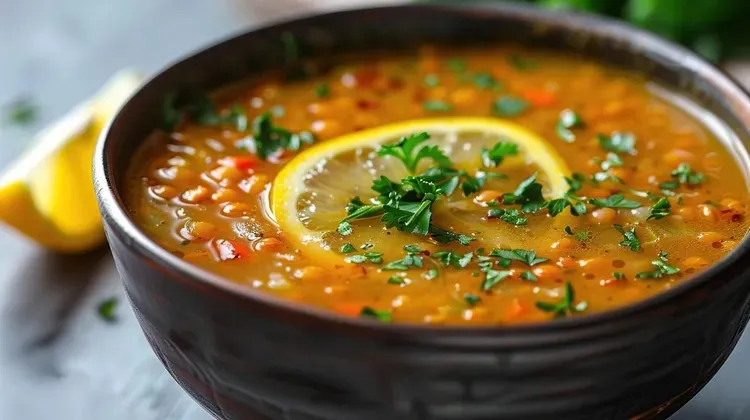
Soups are the most naturally comfort-forward food category. They are warm, require no cutlery skill, and are associated with being looked after. A good lentil soup delivers carbohydrate comfort with prebiotic fibre, plant protein, and a flavour profile that deepens over time. The slow-cooker red lentil soup - with cumin, coriander, and ginger - is a legitimate comfort meal with strong nutritional credentials.
Egg-based dishes
Eggs are psychologically satisfying in a way their nutritional profile entirely justifies. High protein, rapid to prepare, infinitely variable. A tofu and egg scramble is a genuinely comforting meal that takes eight minutes and produces steady energy for hours. Egg, spinach and bacon muffins batch-cook beautifully and feel like a treat even though they are nutritionally straightforward.
Roasted proteins
There is something deeply satisfying about properly cooked meat - the smell, the texture, the sense of a real meal. Pan-roasted chicken thighs deliver all of this without the caloric overload of most takeout equivalents. A side of lemon-infused cabbage salad adds freshness without undermining the comfort register of the meal.
The Emotional Eating Question
There is a meaningful difference between eating food that is emotionally satisfying and using food to avoid emotions. The first is normal human behaviour with real psychological benefits. The second can become a pattern that reinforces the emotional difficulty rather than resolving it.
The practical question is: are you eating because the food brings genuine pleasure, or because eating is the only tool available in the moment? If it is consistently the latter, the issue is not the food - it is the absence of other coping strategies, which is worth addressing directly rather than through dietary restriction.
For the broader context on cooking and emotional wellbeing, see the guide to cooking as a mental health practice.
Latest