How Much Protein Do You Really Need? A Breakdown by Goal and Body Weight
Protein needs aren't a flat number or a percentage of calories, they're bodyweight-based and shift with your goal, activity level, and age. Here's the exact range for cutting, bulking, and maintenance.
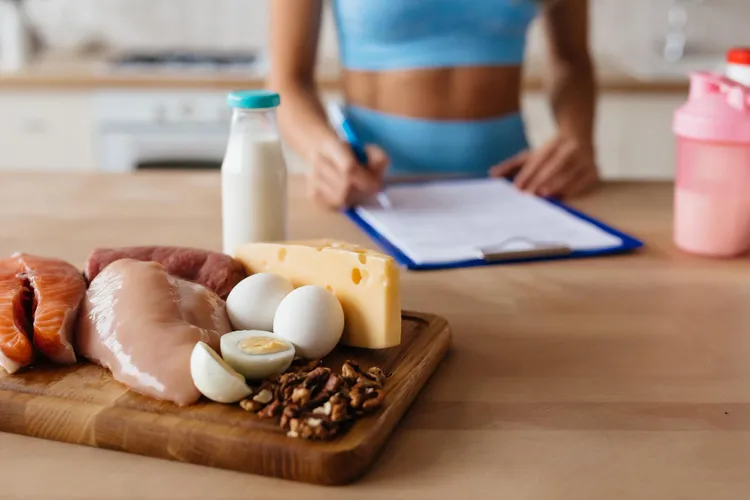
"How much protein do I need" doesn't have one answer. It depends on your bodyweight, obviously, but also on whether you're cutting, bulking, or holding steady, how active you are, and even your age. Run your numbers through the protein calculator and you'll get a single gram target, but here's what's actually driving that number.
Why Bodyweight Beats Percentages
Generic advice like "get 30% of your calories from protein" sounds precise but breaks down the moment your calorie intake changes. Someone eating 1,600 kcal on a cut and someone eating 3,000 kcal on a bulk would get wildly different gram totals at the same 30%, even though the person in the deficit is the one who needs protein most to protect muscle. That's why sports nutrition guidelines (the ISSN position stands, specifically) anchor protein to bodyweight instead: grams per pound or kilogram, independent of however many total calories you're eating. Bodyweight is a reasonable proxy for how much muscle tissue you're maintaining or trying to build, and that's what protein needs actually track.
Protein Targets by Goal
The research-backed range most active adults fall into is 0.7-1.0 g per pound of bodyweight (1.6-2.2 g/kg) per day, with the exact number depending on your goal:
- Aggressive fat loss: 1.0-1.1 g/lb (2.2-2.4 g/kg). This is the highest range, for maximum muscle preservation while eating in a large deficit.
- Fat loss: 0.9-1.0 g/lb (2.0-2.2 g/kg). Still elevated, protecting muscle and boosting satiety while calories are moderately reduced.
- Maintenance: 0.7-0.8 g/lb (1.6-1.8 g/kg). Enough to cover daily protein turnover without a deficit to defend against.
- Lean gain: 0.8-0.9 g/lb (1.8-2.0 g/kg). Supports muscle synthesis during a modest surplus.
- Muscle gain: 0.9-1.0 g/lb (2.0-2.2 g/kg). Maximizes the rate of muscle protein synthesis during a larger surplus.
Notice fat loss and muscle gain sit at nearly the same range, both around 0.9-1.1 g/lb, while maintenance is the outlier on the low end. This surprises people who assume "bulking" automatically means "more protein than cutting." It doesn't. Both extremes need elevated protein, cutting to prevent muscle breakdown, bulking to support new tissue growth. It's maintenance, the calorie-neutral middle ground, that needs the least.
How Activity Level Shifts the Number Within Your Goal
Your goal sets the range, activity level narrows down where in that range you land. More training means more muscle protein breakdown during exercise, and more protein needed to repair and rebuild afterward. As a quick reference:
- Sedentary, general health: around 0.36 g/lb, the RDA minimum. This is a floor, not a target for anyone training regularly.
- Lightly active: 0.6-0.7 g/lb
- Active, fat loss: 0.9-1.0 g/lb
- Active, maintenance: 0.7-0.8 g/lb
- Active, muscle gain: 0.9-1.0 g/lb
- Athletes / twice-daily training: 1.0-1.2 g/lb, sometimes up to 1.3 g/lb in heavy training blocks
The RDA of 0.36 g/lb gets cited constantly, but it was set as the minimum to prevent deficiency in a sedentary population, not an optimal target for anyone lifting weights, running, or trying to change their body composition. If you're active at all, treat it as a floor you're well above, not a number to aim for.
Is 1 Gram Per Pound Too Much?
No. A gram per pound sits comfortably inside the range supported by the research, and it's an easy number to remember and hit. Studies have found intakes up to 1.5-2.0 g/lb show no adverse effects in healthy adults without kidney disease. The practical ceiling on protein intake tends to be financial and culinary (very high intakes get expensive and filling) rather than a safety concern. If you don't have a pre-existing kidney condition, there's no evidence-based reason to undershoot 1 g/lb out of caution.
Does Protein Need Change as You Age?
Yes, and this is one of the more commonly missed adjustments. Adults over 55 experience "anabolic resistance," meaning the same dose of protein triggers a smaller muscle-building response than it would in a younger adult. Research suggests adults over 65 may need 40-50g of protein in a single meal to get the same muscle protein synthesis response that 25-30g produces at a younger age. Practically, this means the RDA (already too low for active younger adults) is even less appropriate for older adults. A baseline of 0.6-0.8 g/lb is more realistic for adults over 55, with active older adults reasonably aiming for 0.9-1.0 g/lb, similar to an active younger adult's fat-loss or muscle-gain range.
Why Spreading Protein Across the Day Matters
Total daily protein is the main lever, but how you distribute it across meals is a real secondary factor. Each meal containing enough protein triggers a period of elevated muscle protein synthesis (MPS) that lasts roughly 3-5 hours, then returns to baseline whether or not more protein is available. This means a single 120g protein dinner doesn't work as well as the same 120g spread across three meals of 40g each, because you only get one MPS pulse from the big meal instead of three.
Practical target: aim for at least 30-40g of protein at each main meal, spread across 3-5 meals. A single large protein bolus above 100g isn't meaningfully better than distributing that same total intake throughout the day.
Where to Get It: Protein Density by Food
Hitting a daily gram target is far easier once you know which foods carry the most protein per calorie. Here's protein per 100g cooked weight for common sources:
- Chicken breast (grilled): 31g protein, 165 kcal
- Turkey breast: 29g protein, 135 kcal
- Canned tuna (in water): 26g protein, 110 kcal
- Salmon (cooked): 25g protein, 208 kcal
- Shrimp (cooked): 24g protein, 99 kcal
- Lean beef, 95%: 22g protein, 152 kcal
- Tempeh: 19g protein, 193 kcal
- Tofu (firm): 17g protein, 144 kcal
- Eggs (whole, 2 large): 13g protein, 148 kcal
- Cottage cheese (low fat): 11g protein, 82 kcal
- Edamame (cooked): 11g protein, 122 kcal
- Greek yogurt (0%): 10g protein, 59 kcal
- Lentils (cooked): 9g protein, 116 kcal
- Black beans (cooked): 9g protein, 132 kcal
- Whey protein (1 scoop, ~30g): 24g protein, 120 kcal
Lean animal sources like chicken, turkey, and white fish carry the highest protein-to-calorie ratio, which is why they show up constantly in cutting-phase meal plans. Recipes like pan-roasted chicken thighs or a batch of egg and spinach muffins make it simple to build a meal around one of these sources without extra thought.
Plant-Based Protein: The One Extra Step
Animal proteins are "complete," meaning they carry all nine essential amino acids in the ratios the body needs. Most plant proteins are "incomplete," typically running low in one of lysine, methionine, or leucine. This doesn't mean plant-based eaters fall short on protein, it means variety across the day matters more. Pairing legumes with grains (rice and lentils, for example) creates a complete amino acid profile from two incomplete sources eaten together. Soy-based proteins (tofu, tempeh, edamame) are the exception among plant foods, they're already complete on their own.
Can You Eat Too Much Protein?
In healthy adults without pre-existing kidney disease, no adverse effects have been shown from high protein intakes within the ranges discussed here. The practical limit is usually cost and appetite, very high intakes get expensive and genuinely hard to eat once you're full. There's no evidence-based reason to deliberately cap protein below your target out of a general safety concern, assuming no diagnosed kidney condition.
Worked Examples: Same Bodyweight, Different Targets
Take a 150 lb woman across three goals to see how the range actually plays out in grams:
Cutting: at 0.9-1.0 g/lb, her target lands between 135-150g of protein daily. That's roughly four meals of 35-38g each, achievable with something like Greek yogurt and eggs at breakfast, chicken or tuna at lunch, and salmon or lean beef at dinner, with a protein-forward snack filling the gap.
Maintenance: her target drops to 0.7-0.8 g/lb, or 105-120g daily. The same meal structure works, just with slightly smaller portions or one meal built around a lower-protein choice like lentils or cottage cheese instead of a second high-protein animal source.
Muscle gain: her target rises to 0.9-1.0 g/lb again, 135-150g, nearly identical to her cutting number despite eating in a surplus rather than a deficit. The calories around that protein target look very different (more carbs and fat filling out a bulking-level calorie total), but the protein anchor itself barely moves between the two extremes.
Now take a 220 lb man in an aggressive fat loss phase: 1.0-1.1 g/lb puts him at 220-242g daily, a meaningfully larger number simply because of his bodyweight, not because his goal is more extreme than the woman's cut in the example above. This is the core reason percentage-based advice fails across different body sizes: two people cutting hard need very different gram totals even though they're following the identical g/lb rule.
Common Mistakes That Undermine Protein Targets
- Using the RDA as a target instead of a floor. 0.36 g/lb was set to prevent deficiency in sedentary people, not to support training or body composition goals. Anyone active should be well above it.
- Recalculating off an outdated bodyweight. Since the whole target is bodyweight-based, a number calculated before a 15 lb weight change is no longer accurate. Recalculate whenever bodyweight shifts meaningfully.
- Front-loading protein into one meal. A 150g dinner with two low-protein meals earlier in the day produces fewer total MPS pulses than the same 150g spread across three meals of 50g each.
- Ignoring the age adjustment. An active 60-year-old following a target calculated for a 30-year-old at the same activity level is likely undershooting what their body actually needs to maintain muscle.
- Treating all plant protein sources as interchangeable with animal sources gram-for-gram. A single incomplete plant protein source eaten alone doesn't deliver the same amino acid profile as a complete source. Pairing sources across the day closes that gap, but it requires a small amount of intentional variety that animal-based eating doesn't need.
Putting Your Number to Work
Once you have a gram target, the easiest way to hit it consistently is dividing it across however many meals you eat and building each one around a protein source first. A 160g daily target across four meals is 40g per meal, roughly 150g of chicken breast, a can of tuna plus two eggs, or a scoop of whey blended into a smoothie. Everything else on the plate, vegetables, starches, fat, fills in around that anchor. The Consillar meal planner can build a full week of recipes matched to your protein target automatically if you'd rather not calculate each meal by hand.
Your protein need isn't a single universal number, it's your bodyweight run through a range that shifts with your goal, your activity level, and your age. Cutting and bulking both call for elevated protein (0.9-1.1 g/lb), maintenance calls for less (0.7-0.8 g/lb), and older adults need to push toward the higher end of whichever range they're in to overcome anabolic resistance. Once you know your number, hitting it consistently is a matter of building meals around protein first and spreading it across the day rather than loading it all into one sitting.
This article is for informational purposes only and isn't a substitute for professional medical or nutritional advice. Consult a healthcare provider before making significant changes to your diet, especially if you have a pre-existing health condition.
Latest