5 Herbs Any Home Cook Should Grow on a Windowsill
Five herbs that thrive indoors with minimal care and enough light on a kitchen windowsill, each one picked for how often you'll actually reach for it while cooking.
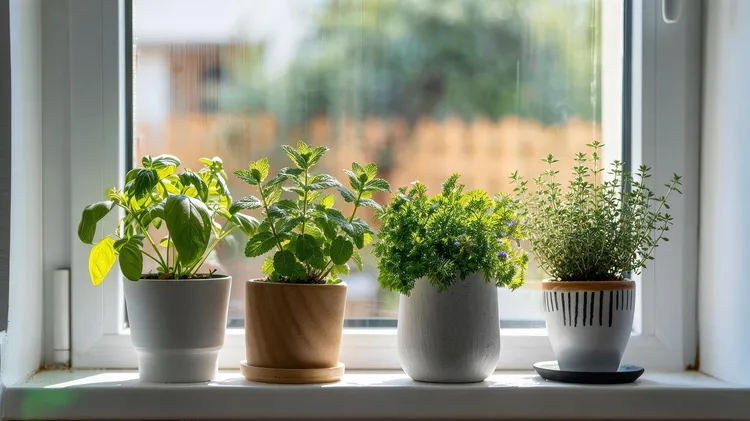
A windowsill herb garden pays for itself fast. A $3 packet of basil seeds or a $4 nursery pot outlasts a dozen store-bought clamshells, and having live herbs within arm's reach changes how often you actually use them, garnish becomes an ingredient when it's growing three feet from the stove. These five hold up especially well indoors: they don't need a huge footprint, they tolerate the lower light of a typical kitchen window better than most herbs, and they're the ones you'll reach for constantly once they're there.
1. Basil
Basil is the reason most people start a windowsill herb garden in the first place, and it earns the spot. It's fast-growing, forgiving of a beginner's mistakes, and useful in more dishes than almost any other herb you could grow.
- Light: needs the most of any herb on this list, at least 6 hours of direct sun. A south-facing window is ideal; if your kitchen doesn't get that, a small grow light will make a real difference.
- Water: keep soil consistently moist but not soggy. Basil wilts dramatically when thirsty, which is actually useful, it tells you exactly when to water.
- Temperature: basil hates cold. Keep it away from drafty windows in winter and don't let it sit below 50°F, it will sulk and drop leaves.
- Harvesting: pinch from the top, just above a leaf pair, rather than plucking individual leaves. This encourages the plant to branch out and produce more instead of just growing taller and leggier.
Basil pulls its weight everywhere from a quick creamy basil dip for a last-minute appetizer to lemon and basil spaghetti when you want something bright on a weeknight. It also finishes a simple side beautifully, stirred into mixed tomatoes with basil oil, or tossed fresh over a bowl of whole-wheat tomato basil pasta right before serving for a flavor boost dried basil in the sauce can't match.
2. Parsley
Parsley gets dismissed as a garnish, but it's one of the most useful herbs to have on hand precisely because it works in almost everything without dominating the dish. Flat-leaf (Italian) parsley has more flavor for cooking; curly parsley holds its shape better as a garnish. Either grows well indoors.
- Light: 4-6 hours of sun, tolerates partial shade better than basil does. An east or west-facing window works fine.
- Water: likes consistent moisture, water when the top inch of soil feels dry. It's more forgiving of inconsistent watering than basil.
- Temperature: notably cold-hardy for an indoor herb, it's comfortable in a cooler room or near a slightly drafty window that would kill basil.
- Harvesting: cut outer, older stems near the base first, letting the inner new growth continue. Parsley is biennial and grows slowly from seed, so starting from a nursery plant gets you usable parsley much faster.
A big handful turns into parsley and walnut pesto, a sharper, brighter alternative to basil pesto that's just as fast to make. In smaller amounts, it's what takes a simple radish salad with lemon and parsley from plain to genuinely craveable.
3. Chives
Chives are close to the lowest-maintenance herb you can grow indoors. They're a perennial member of the onion family, tolerant of neglect, and they keep producing usable growth for months without needing to be replanted.
- Light: 4-6 hours of sun is ideal, but chives tolerate lower light better than basil or thyme, they'll grow more slowly but won't sulk the way sun-hungry herbs do.
- Water: keep soil moderately moist. Chives are more drought-tolerant than most herbs on this list and will forgive an occasional missed watering.
- Temperature: comfortable across a wide range, including cooler rooms. This is one of the easier herbs to keep alive through a cold winter windowsill.
- Harvesting: snip from the outside with scissors, about an inch above the soil, rather than pulling. Regular light harvesting actually encourages fuller growth.
Chives are the finishing touch, not the base, of most dishes they appear in. A generous handful snipped over roasted garlic mashed potatoes with chives is the clearest example: the potatoes are the dish, but the chives are what make the plate look and taste finished.
4. Mint
Mint is famous for taking over an outdoor garden bed, which is exactly why a container, and a windowsill pot specifically, is the right place for it indoors. Contained, it's one of the most productive and forgiving herbs you can grow, and it covers more ground than people expect: savory dishes, drinks, yogurt-based sauces, and desserts all use it.
- Light: tolerates partial shade better than most herbs here, 4 hours of indirect light is often enough, though it'll be bushier with more.
- Water: mint likes consistently moist soil and is more forgiving of overwatering than underwatering, unusual for an herb.
- Temperature: adaptable, comfortable in average room temperature without much fuss.
- Harvesting: pinch stem tips regularly, this is one herb where frequent harvesting genuinely improves the plant, keeping it bushy instead of leggy and preventing it from flowering and turning bitter.
Mint's savory side shows up in something like minted yogurt, a five-minute sauce that works as a dip or a cooling side to anything spiced, or folded into a dish like mushroom, feta, and mint tart, where a small amount of fresh mint cuts through the richness of the cheese and pastry.
5. Thyme
Thyme is the herb that rewards patience: it grows more slowly than the others on this list, but a single small plant lasts a very long time and holds its flavor well even after light cooking, which basil and mint can't claim.
- Light: needs full sun, 6+ hours, closer to basil's requirements than parsley's. It's Mediterranean in origin and genuinely wants a bright, sunny window.
- Water: the opposite of basil here, thyme prefers to dry out between waterings and is much more likely to suffer from overwatering than under. Let the soil dry out noticeably before watering again.
- Temperature: tolerant of a wide range and doesn't mind a cooler windowsill in winter, as long as it's still getting sun.
- Harvesting: snip whole sprigs rather than stripping individual leaves off the plant. Strip the leaves off the stem after cutting, right before you use them, they hold flavor better attached to the stem until then.
Thyme's earthy, slightly floral flavor holds up through longer cooking, which is why it works so well in something like thyme and white bean pot pies, where it needs to infuse a filling that simmers and then bakes without disappearing.
Setting Them Up to Actually Survive
A few shared basics matter more than which specific herb you're growing:
- Drainage first. Every pot needs a drainage hole. An herb sitting in waterlogged soil, even one like mint that likes consistent moisture, will develop root rot faster than almost anything else kills it.
- Don't overcrowd one pot. It's tempting to plant all five in one long windowsill planter, but basil and thyme want more sun and less water than mint and chives. If you're short on space, group plants with similar light and water needs together rather than mixing everything into one container.
- South-facing wins, but isn't mandatory. If your kitchen window faces east, north, or is otherwise lower-light, lean toward parsley, chives, and mint, they tolerate it far better than basil and thyme. A small clip-on grow light is a reasonable fix if you want to grow all five regardless of exposure.
- Harvest regularly, even when you don't need it for a recipe yet. Every herb on this list produces more, fuller growth in response to being cut. A windowsill herb that's never harvested gets leggy, sparse, and eventually stops producing much worth using.
Starting From Seed vs. a Nursery Plant
How you start each herb makes a real difference in how soon you're actually cooking with it, and it varies more than people expect from herb to herb.
- Basil: grows fast from seed, usable leaves in as little as 3-4 weeks. Seed is the cheaper, easy route here.
- Parsley: slow and notoriously stubborn to germinate from seed, it can take 3-4 weeks just to sprout. A nursery starter plant is worth the extra cost for parsley specifically.
- Chives: grows reasonably well from seed but is faster from a small divided clump if you or a neighbor already has an established plant. A nursery pot is a fine shortcut either way.
- Mint: almost always better started from a nursery plant or a cutting rooted in water, both are fast and reliable, while seed-grown mint is slow and inconsistent.
- Thyme: slow from seed, similar to parsley. A small nursery plant will give you usable sprigs far sooner, often within a couple of weeks of settling in.
If you want something to cook with soon rather than in a month or more, basil is the one worth starting from seed. For the rest, a $4-6 nursery starter plant saves real time.
Storing What You Cut
A windowsill garden means you're usually cutting only what you need, but when a recipe calls for more than a sprig or two, how you store the extra matters.
- Basil: doesn't like the fridge, cold temperatures turn the leaves black. Trim the stems and stand cut basil in a glass of water on the counter, like cut flowers, and it'll keep for several days.
- Parsley, mint, thyme: wrap loosely in a damp paper towel and store in the fridge's crisper drawer. This keeps them usable for a week or more.
- Chives: also fridge-friendly wrapped in a damp towel, but they lose flavor and go limp faster than the others, use them within a few days for the best result.
For any herb producing more than you can use fresh, freezing chopped leaves in a little water or olive oil in an ice cube tray is a reliable way to bank extra for later without drying it out.
Common Questions
Can I keep these outdoors part of the year and bring them inside for winter? Yes, and it often produces a stronger plant than starting indoors from scratch. Bring pots in before the first frost, and expect a short adjustment period where growth slows as the plant adapts to lower indoor light.
Why does my basil keep getting leggy and thin no matter what I do? Almost always insufficient light. Even a bright-looking window can fall well short of the 6 hours of direct sun basil actually needs, especially in winter. If pinching back regularly doesn't fix it, a grow light is the more reliable solution.
Is it worth buying a self-watering pot for these? For chives, mint, and parsley, which prefer consistent moisture, a self-watering pot can genuinely help, especially if you tend to forget waterings. For thyme, which wants to dry out between waterings, a self-watering pot can work against you unless you can control how much water it delivers.
Do these herbs need fertilizer? Light, occasional feeding (a diluted liquid fertilizer every few weeks during active growth) helps, but it's not strictly necessary for a windowsill setup you're harvesting from regularly. Overfeeding is more often the problem than underfeeding, especially for herbs like thyme that actually produce better flavor under a bit of stress.
The real payoff of a windowsill herb garden isn't the money saved on plastic clamshells, it's that fresh herbs stop being a special-occasion ingredient and start being something you reach for automatically. Once basil, parsley, chives, mint, and thyme are a few steps from the stove instead of a separate trip to the store, they show up in more dishes, more often, without any extra planning required.
Latest