How to Store Tomatoes (Counter vs. Fridge)
Why refrigeration damages tomato flavor and texture, how to store ripe and ripening tomatoes on the counter, and the rare cases where the fridge is the right call.
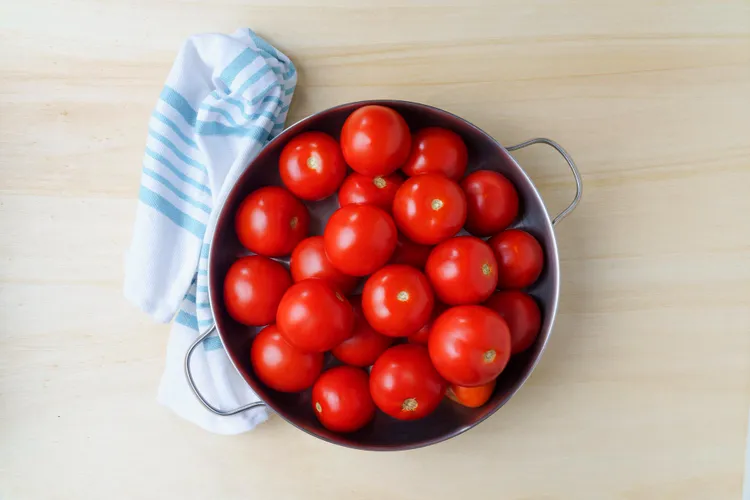
Cold temperature is the single fastest way to ruin a good tomato, and it's also the default instinct for most people bringing fruit inside. Understanding why refrigeration backfires here, unlike with most produce, changes how you should actually be storing tomatoes at every stage.
Why Refrigeration Damages Tomato Flavor
Tomatoes are chilling-sensitive fruit, meaning temperatures below about 55°F (13°C) trigger membrane damage inside the cell walls, disrupting the enzymes responsible for producing the aroma compounds that define tomato flavor. This isn't a minor effect; research on tomato flavor chemistry has found refrigerated tomatoes lose a meaningful share of their characteristic volatile aroma compounds within just a few days below that threshold, and the loss doesn't reverse once the tomato warms back up.
The texture damage is separate but compounds the problem: cold temperatures also make the flesh mealy by disrupting the cell structure, which is why a refrigerated tomato often feels grainy or soft in a way that has nothing to do with how ripe it is.
Counter Storage: The Default for Ripe and Ripening Tomatoes
Ripe tomatoes and tomatoes still finishing their ripening process both belong on the counter, stem-side down, out of direct sunlight, at room temperature. Stem-side down reduces moisture loss through the scar where the stem attached and slightly extends how long the tomato holds quality. Keep tomatoes in a single layer rather than stacked; the weight of tomatoes on top accelerates bruising and softening in the ones below.
At normal room temperature (65 to 75°F / 18 to 24°C), fully ripe tomatoes hold good quality for about 2 to 4 days before texture starts to soften noticeably. Warmer conditions speed this up; cooler room temperatures slow it down slightly.
Ripening Green or Underripe Tomatoes
Tomatoes picked before full ripeness, whether intentionally at breaker stage or as part of an end-of-season harvest, ripen at room temperature over roughly 1 to 3 weeks depending on how far along they were when picked. A few practical notes:
- Direct sunlight doesn't meaningfully speed ripening and can cause uneven softening on the sun-exposed side; a spot with ambient light, not direct sun, works better.
- Placing a ripe banana or apple nearby speeds ripening slightly, since both release ethylene gas, the same compound tomatoes themselves produce as they ripen.
- Check daily and remove any tomatoes showing mold or excessive softness before they affect neighboring fruit.
When Refrigeration Actually Makes Sense
There's one real exception to the no-fridge rule: tomatoes that are already fully ripe, cut, or at genuine risk of spoiling before you can use them. In that case, a day or two in the fridge to buy time is a reasonable tradeoff against losing the tomato entirely to mold or rot. If you do refrigerate a whole tomato out of necessity, let it sit at room temperature for 20 to 30 minutes before eating; this partially restores some of the lost flavor and texture, though not completely.
Cut tomatoes, tomato salads, and any dish already containing raw tomato should go in the fridge like any other perishable food; the flavor-loss concern applies specifically to storing whole, uncut fresh tomatoes long-term, not food safety for prepared dishes.
How Long Storage Actually Buys You
- Fully ripe, counter storage: 2 to 4 days at peak quality
- Slightly underripe, counter storage: Continues ripening; peak quality window shifts later
- Cut tomatoes, refrigerated: 1 to 2 days before texture degrades noticeably
- Whole ripe tomato, refrigerated out of necessity: 2 to 3 days, with noticeable flavor loss
What to Do With a Surplus You Can't Store Fresh
Counter storage only buys a few days, which is rarely enough during peak harvest season when a productive plant can outpace what any household eats fresh. Once you're past what counter storage can reasonably handle, the next move is preservation rather than trying to extend fresh storage further. See our preservation guide for canning, freezing, and drying methods that each suit different downstream uses.
If you're trying to plan meals around a surplus before it turns, our meal prep planning tool can help build out a week's worth of dishes designed to use ripe tomatoes quickly rather than letting them sit past peak quality.
The Research Behind the Chilling Injury Claim
The chilling sensitivity of tomatoes has been studied extensively in postharvest food science literature, largely because it has real commercial implications for the produce industry, not just home kitchens. Studies tracking volatile aroma compounds in tomatoes stored at refrigerator temperatures (typically around 39°F/4°C) versus room temperature have consistently found measurably reduced levels of several key flavor compounds after even a few days of cold storage, with the loss becoming more pronounced the longer the cold exposure continues. This is why commercial tomato supply chains, when quality is a priority, generally avoid refrigerating tomatoes below about 55°F (13°C) until the point of sale, despite refrigeration being the default assumption for most produce.
Storage for Different Tomato Types
Cherry and grape tomatoes, thanks to their thinner skins and higher surface-area-to-volume ratio, tend to lose quality slightly faster at room temperature than larger slicing tomatoes, typically holding peak quality for 2 to 3 days rather than the 3 to 4 days a beefsteak might manage. Paste tomatoes, being denser and lower in water content, often hold up marginally longer than juicier slicing varieties under the same storage conditions.
None of these differences change the underlying rule; all fresh, ripe tomato types benefit from counter storage over refrigeration. The variation is mainly in how quickly you should plan to use each type once picked or purchased.
Storing Store-Bought Tomatoes
Everything in this guide applies to purchased tomatoes as much as home-grown ones, with one added wrinkle: many commercially sold tomatoes have already spent time in refrigerated distribution and retail display before reaching a shopping cart, meaning some flavor loss may have already occurred before you ever get them home. This isn't something you can reverse, but it does mean store-bought tomatoes benefit even more from careful room-temperature handling afterward, since further chilling compounds damage that's already partly done. Look for tomatoes sold on the vine or displayed at room temperature in-store as a rough (though not foolproof) signal of better handling upstream.
Signs a Tomato Has Gone Past Its Window
- Wrinkled or shriveled skin: Water loss has outpaced ripening; still usually fine for cooking, less ideal raw.
- Soft, mushy give across the whole fruit rather than a gentle yield: Past peak; check for off odors before using.
- Visible mold, particularly at the stem scar: Discard; mold on tomatoes can extend into the flesh further than visible on the surface.
- Leaking juice or a fermented smell: Past safe use; discard.
A tomato that's simply softened without any of these warning signs is often still perfectly good for cooking, even if it's no longer ideal for a raw salad. Softened tomatoes headed into a sauce or stew lose nothing meaningful in the transition, since they were going to break down under heat anyway.
Storage as Part of a Bigger Plan
Understanding realistic storage windows matters most when you're managing more than a tomato or two at a time, which is the normal state of affairs during peak garden season. Knowing you have roughly 3 to 4 days of peak-quality counter time helps decide, in real time, which tomatoes go into tonight's dinner, which get set aside for a recipe planned later this week, and which need to move into preservation before that window closes. See our preservation guide for what to do once fresh storage time is running out.
For the full lifecycle context, see the complete Tomatoes: Seed to Plate guide.
A Simple Storage Decision Tree
- Ripe, plan to eat within 2 to 4 days: Counter, stem-side down, out of direct sun.
- Underripe or picked at breaker stage: Counter, ambient light, check daily for ripening progress.
- Fully ripe but can't use for several days: Move to preservation rather than extended fridge storage.
- Already cut or part of a prepared dish: Refrigerate like any other perishable food.
Why This Guidance Sometimes Surprises People
Refrigerating produce by default is such a deeply ingrained habit that the tomato exception tends to surprise people the first time they hear it, even after understanding the chilling-injury mechanism behind it. The easiest way to make the habit stick is a small, deliberate reminder: a designated tomato bowl on the counter, separate from other produce, signals at a glance that these particular items don't belong in the fridge.
Frequently Asked Questions
Does the flavor loss from refrigeration apply to all tomato varieties equally? The underlying chilling-injury mechanism affects all tomato varieties, since it's tied to basic cell membrane chemistry rather than anything variety-specific. Some heirloom varieties, prized specifically for aromatic complexity, may show the loss more noticeably simply because they had more delicate aroma compounds to lose in the first place.
Can I revive a tomato that's already been refrigerated? Bringing it back to room temperature for 20 to 30 minutes before eating restores some, though not all, of the lost flavor and texture. There's no way to fully reverse chilling injury once it's occurred.
Is it safe to leave tomatoes on the counter for a week or more? Food safety and quality are separate questions here. A tomato left out for a week likely won't be dangerous to eat, but it will have declined significantly in texture and flavor well before that point, generally becoming unappealing for fresh eating within 4 to 5 days at most.
Does washing tomatoes before storage affect shelf life? Washing right before use, rather than before storage, is generally preferable. Excess surface moisture from washing can accelerate mold growth during storage, so if you do wash ahead of time, dry tomatoes thoroughly before setting them out.
Making the New Default Stick
For anyone used to refrigerating all produce automatically, the tomato exception takes a little deliberate effort to remember at first. A dedicated bowl or basket on the counter, visually separate from the fridge, works better than trying to remember a rule case by case every time you unpack groceries or bring in a harvest.
Storage Habits That Compound Over a Season
A single mis-stored tomato barely matters, but the habit compounds across dozens of tomatoes over a full season. Consistently applying counter storage rather than defaulting to the fridge, even when it feels like the less obvious choice, adds up to a noticeably better-tasting harvest across the whole summer rather than just an occasional good tomato here and there.
Of every stage in this guide, storage is the one where a simple rule change, counter instead of fridge, delivers an outsized improvement in eating quality relative to the effort involved. It costs nothing extra and requires no new equipment, just a different default habit.
Storage Space Planning for a Big Harvest
During peak season, counter space itself can become the limiting factor, since a single-layer storage rule means a heavy harvest needs real surface area, not just a small bowl. Designating a wider tray, a section of counter, or even a spare table specifically for tomato storage during the heaviest weeks of the season prevents the temptation to stack fruit or resort to fridge storage simply out of space constraints rather than any actual storage logic.
Getting storage right is a small, repeatable habit rather than a one-time decision, and it pays off every single day a ripe tomato sits on the counter waiting to be used.
Over a full season, this single habit shift, counter over fridge, does more for eating quality than almost any other single piece of advice in this guide.
It costs nothing, takes no extra time, and the difference in flavor is noticeable enough that most people who try it don't go back to refrigerating tomatoes afterward.
A small change in habit, applied consistently across an entire season, ends up mattering more than any single elaborate storage trick ever could.
Once it becomes automatic, it stops feeling like a rule to remember and simply becomes how tomatoes are handled in that kitchen from then on, which is really the point of building any good habit in the first place.
Latest









