Keto Macros for Beginners: How Much Fat, Protein, and Carbs to Eat
Getting your keto macros right is the difference between entering ketosis and spinning your wheels. This guide breaks down the standard 70/25/5 split, shows you how to calculate your personal targets, and covers the most common beginner mistakes that stall results.
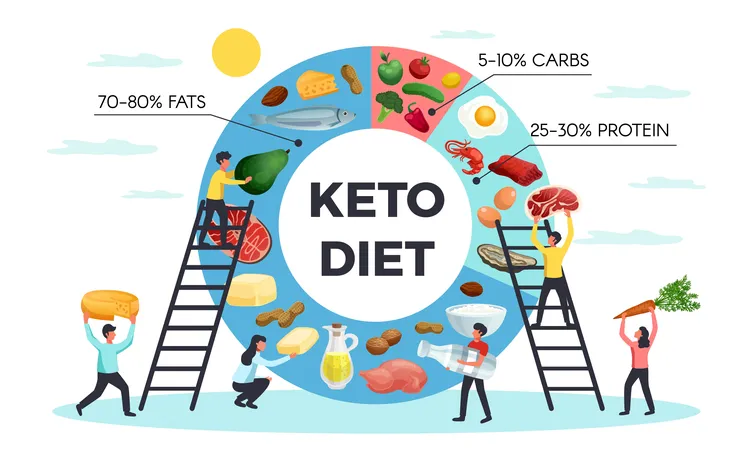
The macro numbers matter more on keto than on most diets. Too many carbs and you don't enter ketosis. Too much protein and you slow fat burning. Too little fat and you feel hungry and low-energy. Getting the ratios right in the first two weeks is worth the extra effort - after that, most people develop a feel for it and stop tracking obsessively.
The Standard Keto Macro Split
- Fat: 65-75% of daily calories
- Protein: 20-25% of daily calories
- Carbohydrates: 5-10% of daily calories
In grams, the carb target is usually 20-50g net carbs per day. For beginners, start at 20g. It's more restrictive but reliably produces ketosis within 2-4 days.
Rather than doing the math manually, plug your stats into the Consillar macro and TDEE calculators to get your personal keto targets in under a minute.
Net Carbs vs. Total Carbs
Net carbs = Total carbs - Fiber - Sugar alcohols (some, not all). Fiber passes through without being absorbed as glucose, so it doesn't count toward your carb limit. A cup of broccoli has about 6g total carbs but only 4g net carbs. This distinction matters - without it, you'd barely be able to eat vegetables.
Sugar alcohols vary: erythritol has essentially zero glycemic impact. Maltitol is nearly as bad as regular sugar. Read labels carefully on keto-marketed products.
How to Calculate Your Personal Keto Macros
Step 1: Find Your Calorie Target
Use a TDEE calculator to find your maintenance calories. For weight loss, subtract 10-20%. A 500-calorie daily deficit produces about 1 lb of fat loss per week in theory, though results vary.
Step 2: Set Protein First
Target 0.7-1.0g per pound of lean body mass. If you don't know your body fat percentage, 0.7g per pound of total body weight is a safe estimate. At 4 kcal per gram, 120g protein = 480 calories.
Step 3: Set Carbs
20g net carbs for beginners. At 4 kcal per gram, that's 80 calories from carbs.
Step 4: Fill Remaining Calories With Fat
Remaining calories divided by 9 kcal per gram = fat grams. Example: 1,600 total - 480 protein - 80 carbs = 1,040 fat calories / 9 = ~116g fat per day.
Sample Macro Targets by Calorie Level
- 1,400 kcal: ~108g fat / ~98g protein / ~20g net carbs
- 1,600 kcal: ~116g fat / ~110g protein / ~20g net carbs
- 1,800 kcal: ~130g fat / ~125g protein / ~20g net carbs
- 2,000 kcal: ~145g fat / ~138g protein / ~20g net carbs
Hitting Fat Macros in Practice
The easiest way to hit fat targets without obsessing: build meals around naturally fatty proteins. Keto meatballs with creamy sour cream sauce use 80/20 ground beef and a full-fat gravy, landing around 45g fat per serving without any extra butter added. Pan-roasted chicken thighs with the skin on add roughly 20g fat per thigh, making them a reliable fat source that needs no extra oil to hit macro targets.
Common Beginner Macro Mistakes
Not Enough Fat
Fat fear is real even on keto. If you're cutting carbs but also restricting fat, you'll be calorie-deficient, hungry, and low-energy. Don't shy away from butter, olive oil, fatty cuts of meat, and full-fat dairy.
Too Much Protein
Consistently eating very high protein (above 1.5g per lb of body weight) can inhibit ketosis for some people. More practically, it leaves almost no room for fat in a calorie-controlled diet.
Forgetting Hidden Carbs
Sauces, dressings, onions, tomatoes, and dairy all have carbs that add up fast. Use Cronometer or Carb Manager for the first 2-3 weeks.
Ignoring Electrolytes
Keto causes your kidneys to excrete more sodium, potassium, and magnesium. Salt your food heavily, drink broth, and consider magnesium glycinate before bed.
Do You Need to Track Forever?
No. Most people track strictly for 2-4 weeks until they understand what 20g of net carbs looks like on a plate. After that, tracking shifts to periodic check-ins rather than daily logging.
For a full picture of how keto works and what to eat, the beginner's guide to the keto diet is the best place to start.
Medical Disclaimer: The information in this article is for educational purposes only and is not medical advice. Always consult a qualified healthcare provider before starting any new diet, especially if you have diabetes, kidney disease, heart conditions, or are pregnant or breastfeeding. Individual results vary.
Latest