Pickling at Home: Which Vinegar to Use for Which Vegetable
Quick refrigerator pickling takes 30 minutes and no special equipment. The vinegar you choose changes the flavor dramatically. This guide organizes the decision by vegetable and shows you exactly which acid to reach for.
Refrigerator pickles don't require a canning setup, a water bath, or any specialized equipment. A clean glass jar, a simple brine, and 30 minutes produces pickles that are better than most commercial options and can be customized completely to your taste. The single most impactful decision is the vinegar - it's not a generic background note but the dominant flavor of the brine. The wrong choice can produce a pickle that's too harsh, too sweet, or that fights the vegetable rather than complementing it.
The Rules First
Quick refrigerator pickles need a brine acidity of at least 5% to be safe and effective. Most commercial wine vinegars (red wine, white wine, ACV, malt) are 5% to 7% - they all work. Rice vinegar is often 4% - fine for flavor, but for anything going beyond 2 to 3 days, consider adding a small amount of white wine vinegar to bring the overall acidity up to 5%. Do not use balsamic as your primary pickling vinegar - the sugar content means it won't preserve effectively and the flavor is far too sweet for most vegetables.
The Universal Brine Formula
For every 250g of vegetables: 120ml vinegar, 120ml water, 1 tsp salt (kosher or pickling salt), 1 tsp sugar. Bring to a gentle simmer to dissolve the salt and sugar. Pour over the prepared vegetables in a clean jar while still hot. Let cool, then seal and refrigerate. Thinly sliced vegetables are good at 1 hour, better at 24 hours, excellent at 48 hours. Whole or thick-cut vegetables need 2 to 5 days minimum.
Adjustments: for a sweeter pickle, increase sugar to 2 to 3 tsp. For a sharper, more traditional pickle, increase the vinegar-to-water ratio to 2:1. For lower sodium, reduce salt to 1/2 tsp.
Vegetable by Vegetable
Cucumbers
White wine vinegar for clean, classic dill pickles. ACV for a fruitier, slightly sweeter result. The quick cucumber chili pickle uses a standard vinegar brine - swap for white wine vinegar to sharpen the result, or ACV for a milder, fruitier character. Add fresh dill, a clove of garlic, and 1/4 tsp whole yellow mustard seed per 500g cucumber. Slice thin for quick pickles (ready in 1 hour), leave in thicker chunks for crunchier pickles that need 24 to 48 hours. Key to crunchiness: use very fresh cucumbers, pack tightly in the jar, and refrigerate immediately after pouring the brine.
Red Onion
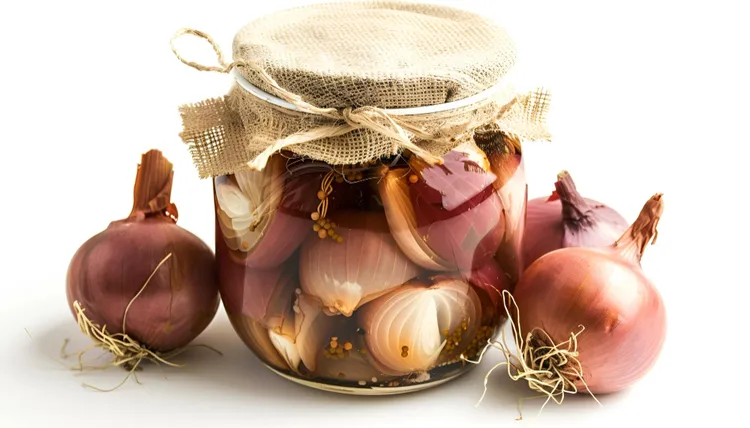
Red wine vinegar produces the most vivid magenta color and sharpest, most classic pickled onion flavor. ACV gives a slightly sweeter, less intensely colored result. Slice thin, pour hot brine over (the heat softens the raw sharpness immediately), cool, and refrigerate. Ready in 30 minutes for thin slices. Standard ratio: full-strength brine (equal parts vinegar and water) for a bold pickle, diluted to 1 part vinegar and 1.5 parts water for a milder version used on tacos, grain bowls, or sandwiches.
Red Cabbage
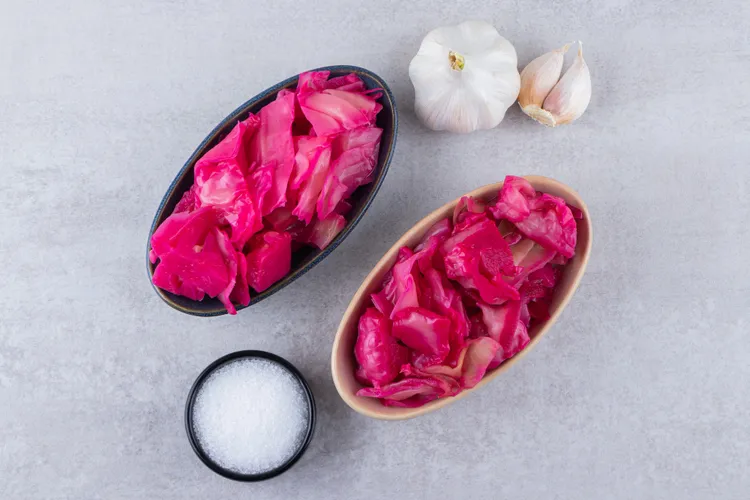
Red wine vinegar. The color holds better with red wine vinegar than white, and the bolder acid is necessary to penetrate the density of the cabbage. Quick-pickled red cabbage stays crisp and bright - completely different in character from the slow-cooked sweet and sour Danish red cabbage, which is soft and jammy. The quick pickle is good on sandwiches, tacos, and grain bowls; the cooked version works as a side dish for fatty meats and game.
Carrots
Rice vinegar for Asian-style applications (daikon and carrot, banh mi-style). White wine vinegar for Western-style. The rice vinegar version: 1 part rice vinegar, 1 part water, 1 tsp each salt and sugar, fresh ginger, a small chili. A mild, sweet carrot pickle ready in 1 hour. The white wine vinegar version: same brine plus whole coriander seed and a small amount of honey - a more complex, Mediterranean character that works well on cheese boards.
Jalapeños and Chilis
White distilled vinegar or white wine vinegar. The heat and flavor of the pepper is the point - the vinegar should be neutral enough not to compete. Use full-strength brine (3:1 vinegar to water) for maximum preservation and sharpness. Add 2 cloves of garlic, a pinch of dried oregano, and 1/4 tsp salt per jar. Ready in 24 hours. These keep for 4 to 6 weeks refrigerated - a constantly restocked supply for tacos, eggs, pizza, and sandwiches.
Green Beans (Dilly Beans)
White wine vinegar or ACV. Trim the beans to fit the jar, pack tightly in a vertical arrangement, pour hot brine with fresh dill, garlic, mustard seed, and a pinch of chili flake. Beans need more time than sliced vegetables - at minimum 48 hours, better at 4 to 5 days before the brine penetrates the full bean. The result is one of the most satisfying refrigerator pickles: intensely garlicky, sharply acidic, with proper crunch.
Beets
Red wine vinegar as the base, with a small amount of balsamic added (about 1 tbsp balsamic per 100ml of red wine vinegar brine). Roast or boil the beets first, then peel and slice before pickling - raw beets take too long to absorb brine. Add whole cloves, a piece of cinnamon stick, and a few allspice berries to the brine for a classic sweet-spiced pickle. Approximately 45 kcal per 100g serving, 9g carbs. Ready in 24 hours, excellent at 48.
Radishes
Rice vinegar for Japanese-style daikon pickles (tsukemono). The mild acid preserves the peppery, slightly sweet radish character without overwhelming it. Slice thin or julienne, cover with brine (rice vinegar, water, sugar, salt, a small amount of turmeric for color). Ready in 30 minutes.
Fennel
White wine vinegar with a pinch of sugar and whole fennel seeds. Slice as thin as possible - a mandoline helps here - and pack into a jar. The anise character stays present because the mild acid doesn't overwhelm the vegetable's natural flavor. Ready in 2 hours. Works as a garnish for grilled fish and as a component in grain salads.
Hard-Boiled Eggs
White distilled vinegar or white wine vinegar, full-strength or slightly diluted. The classic British pickled egg uses malt vinegar for a bold, traditional flavor. Peel freshly boiled eggs while still warm - the easy-peel hard-boiled eggs technique (adding vinegar to the boiling water) also helps here. Pack into jars with whole peppercorns and a bay leaf. Eggs need at least 1 week to pickle through to the yolk. Keep for up to 2 months refrigerated.
Essential Spices and Aromatics
- Mustard seed: With cucumbers, green beans, cauliflower, carrots
- Coriander seed: With carrots, beets, fennel, mixed vegetables
- Dill (fresh or dried): With cucumbers, green beans, radishes
- Garlic: Almost universal - 1 to 2 cloves per jar minimum
- Chili (fresh or dried): Cucumbers, carrots, radishes, jalapeños
- Black peppercorns: Red onion, beets, fennel, eggs
- Bay leaf: Cucumbers, eggs, cauliflower
- Turmeric: Daikon, cauliflower (adds color and earthiness)
- Whole cloves and allspice: Beets, onions in classic preparations
For the full overview of vinegar types and how each one performs across different cooking applications, see the vinegar renaissance guide.
Long-Term Canning vs. Refrigerator Pickling
This guide covers refrigerator pickling only - a method that requires no special equipment and produces ready-to-eat pickles within hours to a few days. Long-term shelf-stable canning (water bath processing) uses the same vinegar principles but adds acidity and heat processing requirements that ensure the brine is safely acidic after sealing. For water bath canning, the USDA recommends a minimum of 5% acidity in the brine, and the vinegar must be 5% acetic acid or labeled specifically for canning. Rice vinegar at 4% is not safe for long-term canning without blending with a higher-acidity vinegar. For everything that lives in your refrigerator and is consumed within 4 weeks, the refrigerator pickling method described here is faster, more flexible, and produces pickles with better texture.
Salt Selection for Pickling
Not all salt behaves the same in pickling. Kosher salt and pickling salt (pure sodium chloride without iodine or anti-caking agents) are the correct choices. Iodized table salt can discolor pickles (the iodine reacts with certain vegetables and produces a faint grey or dark tint) and can make the brine slightly cloudy. Sea salt works if it's fine-grained and pure. The difference in flavor between salt types at the quantities used in pickling (1 to 2 tsp per 250g of vegetables) is minimal - the purity is what matters, not the source.
Texture Preservation Tips
Crunch is the critical quality in quick pickles. Vegetables that go in firm should come out firm. Several techniques help maintain crunch: first, always use the freshest, firmest vegetables you can find - a soft cucumber will never become a crisp pickle, regardless of the brine. Second, for cucumbers specifically, cut off both ends (the blossom end contains enzymes that soften the flesh from the inside out). Third, for crunchier pickles across all vegetables, add a grape leaf, oak leaf, or a small amount of food-grade tannin (1/4 tsp per liter) to the brine - the tannin inhibits the softening enzymes. Fourth, cool the brine to about 70°C before pouring (still hot enough to sterilize the jar, cool enough to prevent cooking the vegetables).
Flavor Building: Beyond Salt, Sugar, Vinegar
The baseline brine (vinegar, water, salt, sugar) is the foundation. The flavor comes from the aromatics and spices added to it. A few combinations that work consistently: for a Japanese-inspired cucumber pickle, add 1 tsp toasted sesame seeds, 1 tsp grated ginger, and a few drops of sesame oil to the cooled brine. For a Middle Eastern-inflected carrot pickle, add 1/2 tsp ground cumin, 1/4 tsp ground coriander, and a small dried chili. For a Scandinavian-style cucumber pickle, add fresh dill, a few allspice berries, and a pinch of white pepper. The vinegar should always be chosen to suit the flavoring direction - rice vinegar for Asian profiles, white wine vinegar for European, ACV for anything in between.
Troubleshooting Common Pickling Problems
The most common pickle problems and their solutions: soft pickles are almost always caused by old or damaged produce, incorrect salt (iodized table salt), or brine that was too hot when poured (it cooked the vegetables). Use fresh produce, kosher or pickling salt, and let the brine cool to about 70°C before pouring. Cloudy brine in a new pickle (within the first 24 hours) is normal - sugar and dissolved minerals cause initial cloudiness. Brine that turns cloudy after a week of refrigeration and develops an off smell indicates fermentation or bacterial growth - discard and start again. Pickles that taste too sharp: were made with a higher vinegar ratio than intended, or the vinegar was more acidic than expected (always check the label). Next batch, dilute the brine to 1 part vinegar to 1.5 parts water. Pickles that taste too flat: not enough salt, or not enough time in the brine. Taste at 24, 48, and 72 hours - the flavor develops significantly over the first 3 days.
Pickles as Cooking Ingredients
The brine from a finished refrigerator pickle is a flavor resource in its own right. Pickle brine from dill cucumbers makes an excellent deglazing liquid for pan-fried chicken - the salt, vinegar, and dill combine to produce a quick sauce with built-in complexity. A spoonful of dill pickle brine stirred into a potato salad dressing gives it the characteristic tangy-salty note that makes some potato salads taste distinctly better than others. Red onion pickle brine, which turns vivid pink as it ages, can be used to make a natural food dye for cocktails or as a quick flavoring acid in dressings. Jalapeño pickle brine is excellent in a Bloody Mary base, in a vinaigrette for an avocado salad, or splashed into guacamole as part of the acid component. None of this brine should be poured down the drain until you've considered what it might do in a dish.
Pickling at Scale: Making Larger Batches
Refrigerator pickling scales linearly - double the recipe, double the jar capacity, same ratios. For batch pickling at the end of growing season (when cucumbers, peppers, and green tomatoes are abundant and cheap), a few large jars of refrigerator pickles made over a weekend will provide condiments for months. The practical limits: refrigerator space, jar availability, and the 4-week consumption timeline before quality starts to decline. For truly long-term preservation (6 months to a year), you need water bath canning with the proper processing steps - the refrigerator method can't safely achieve that timeline without heat processing. If you're scaling up to the point of wanting year-round shelf-stable pickles, the next step is learning water bath canning, which uses the same vinegar principles but adds heat processing to create a vacuum seal and destroy any pathogens the acid alone doesn't neutralize.
The Flavor Development Curve
Understanding how pickle flavor develops over time helps you use them at their best. Hours 1 to 4: the brine has penetrated the surface but not the interior. The pickle tastes bright and sharp, with the vinegar character prominent. Hours 24 to 48: the brine has penetrated to the center of sliced vegetables. The vinegar and spice flavors have integrated with the vegetable flavor. This is often the optimal window for thin-cut cucumbers, onions, and radishes. Days 3 to 7: the flavors mellow and deepen. The sharp vinegar note fades slightly and the spice and salt characters come forward more. Green beans and denser vegetables reach their best at this point. After 7 to 14 days: depending on the vegetable, the texture may begin to soften slightly as the acid continues to act on the cell walls. Still excellent for most applications but no longer at peak crunch. For softer preparations like pickled beets or caramelized pickled onions, longer aging in the brine is fine and sometimes preferred.
Latest