How Long Cold Brew Concentrate Actually Keeps
Realistic storage timelines for cold brew concentrate, how to tell when a batch has actually gone off, and how storage differs from diluted cold brew.
One of concentrate's real practical advantages over regular brewed coffee is how long it keeps in the fridge. A well-made, properly filtered batch lasts considerably longer than most people expect, which is exactly why batching ahead makes so much sense for cold brew specifically, in a way it doesn't for hot-brewed coffee.
How Long Concentrate Keeps
Properly filtered cold brew concentrate, stored in an airtight container in the refrigerator, generally keeps well for 1 to 2 weeks. This is considerably longer than brewed hot coffee, which starts tasting noticeably stale within hours, or even standard diluted cold brew at drinking strength, which has a shorter useful window than the concentrate it came from.
Why Concentrate Lasts Longer Than You'd Expect
A few factors contribute to this longer shelf life. Concentrate's higher coffee-to-water ratio means it's less hospitable to the kind of flavor degradation that happens through oxidation and dilution over time - there's simply more coffee flavor to fade before it becomes noticeable. Refrigeration slows oxidation and any microbial activity considerably compared to room temperature storage. And an airtight container limits the concentrate's exposure to oxygen, which is one of the main drivers of coffee's flavor breaking down over time, whether brewed or as concentrate.
Signs a Batch Has Actually Gone Off
- A sour or noticeably off smell: Fresh concentrate smells rich and roasty; a batch that's turned will smell distinctly sour or fermented, similar to spoiled milk in how clearly wrong it registers.
- Visible mold: Rare with proper refrigeration and an airtight container, but a clear sign to discard the batch immediately if it appears.
- A slimy or unusually thick texture: Fresh concentrate should pour cleanly; any noticeable sliminess is a sign of bacterial activity and the batch should be discarded.
Simply tasting flatter or less vibrant than a fresh batch isn't the same as having gone bad - that's a normal, gradual flavor fade rather than spoilage, and it's still perfectly fine to drink, just less exciting than day one.
Diluted Cold Brew Keeps for Less Time
Once you've diluted concentrate to drinking strength, whether with water, milk, or a milk alternative, the resulting drink has a shorter useful shelf life than the concentrate itself, generally 2 to 4 days if refrigerated, and considerably less if milk is involved, since milk's own shelf life becomes the limiting factor rather than the coffee. This is part of why it's worth storing your batch as undiluted concentrate and diluting individual servings as you go, rather than pre-mixing a large diluted batch that then has a shorter window to get through. See our dilution guide for ratios.
Storage Container Matters
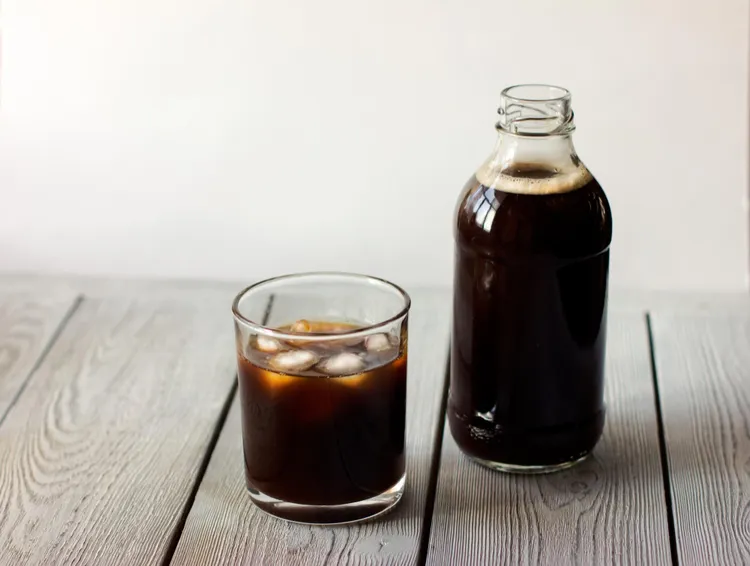
An airtight glass container (a Mason jar with a proper lid, or a dedicated glass bottle with a tight seal) is the best choice for storing concentrate. Avoid loosely covered containers or ones with a lot of empty headspace, since more air exposure speeds up flavor degradation. If you're using a large container but only have a small amount of concentrate left, transferring it to a smaller, more fully-filled container reduces the air space and helps it keep a bit longer.
Can You Freeze Cold Brew Concentrate
Yes, concentrate freezes well, and it's a genuinely useful option if you've made more than you'll get through in the 1 to 2 week fridge window. Freeze it in ice cube trays for portioned single servings, or in a freezer-safe container for larger amounts, and expect it to keep well for a couple of months frozen. Thaw in the refrigerator rather than at room temperature, and give it a stir once thawed, since some separation can occur.
Batching With Shelf Life in Mind
Because concentrate keeps for 1 to 2 weeks, it makes sense to brew a batch sized for that window rather than starting a fresh steep every couple of days. See our batch scaling guide for how to safely size a batch to last a full week without pushing past what your storage and freshness window can reasonably support.
A Simple Storage Routine
- Filter thoroughly before storing (see our filtering guide) - unfiltered sediment can accelerate off-flavors developing.
- Store in an airtight glass container, filled close to the top to minimize air exposure.
- Label the container with the date it was made, so you're not guessing at freshness a week or two later.
- Dilute individual servings as you go rather than pre-mixing a large diluted batch.
Why Concentrate's Shelf Life Beats Regular Brewed Coffee By So Much
It's worth appreciating just how different this is from standard brewed coffee, which most coffee enthusiasts agree starts losing meaningful quality within an hour or two of brewing and tastes distinctly stale by the next day. Cold brew concentrate's 1 to 2 week window exists because the extraction and storage conditions are fundamentally different - cold, minimally oxidized, and concentrated rather than hot, quickly oxidized, and already at drinking strength. This difference is a big part of why cold brew concentrate is genuinely suited to batch cooking in a way that hot coffee simply isn't.
Tracking Freshness Without Guessing
A simple system - labeling each container with the date you filtered it, either with tape and a marker or a piece of masking tape - removes the guesswork of trying to remember whether a given jar is three days or ten days old. This is a small habit, but it matters more than it might seem once you're managing a rotation of concentrate, dilution, and shrinking supply over the course of a week or two.
What Happens Right at the Edge of the Shelf Life Window
Concentrate nearing the end of its 1 to 2 week window doesn't usually go from perfectly fine to spoiled overnight - it's more common to notice a gradual flattening of flavor first, a sense that it tastes a bit less vibrant or rounded than it did on day one or two, well before any actual spoilage signs appear. This gradual fade is completely normal and doesn't mean the batch needs to be thrown out, just that it's reasonable to expect slightly less impressive flavor toward the end of its life than at the start, which is worth factoring in if you're deciding whether to finish an older batch or start fresh.
Should You Store Concentrate in Plastic or Glass
Glass is generally the better choice for storing cold brew concentrate over an extended period, since it doesn't absorb odors or flavors the way some plastics can over time, and it won't leach anything into the coffee even after a week or two of contact. If plastic containers are what you have on hand, choose ones specifically labeled food-safe and avoid ones that have previously stored strongly flavored foods, since lingering odors can transfer into the concentrate.
What Happens If You Forget a Batch in the Back of the Fridge
It happens to almost everyone eventually - a jar of concentrate gets pushed to the back of the fridge and forgotten for a few weeks. If you rediscover a batch that's meaningfully past its expected 1 to 2 week window, check it carefully using the spoilage signs described above before deciding whether it's still usable. A batch that smells and looks normal, just a bit flatter in flavor, is likely still fine to use, particularly diluted more heavily to compensate for the fade; a batch showing any of the clearer spoilage signs should be discarded without a second thought, since the small cost of the wasted coffee isn't worth the risk.
Comparing Shelf Life Across Different Storage Choices
To put the numbers in this guide into perspective: a batch stored in an airtight glass jar in the coldest part of the fridge (rather than the door, which experiences more temperature fluctuation) will generally hold up toward the longer end of the 1 to 2 week range. A batch stored more loosely, in a container that isn't fully sealed or in a fridge that sees frequent temperature swings from being opened often, is more likely to fall toward the shorter end. These aren't dramatic differences, but they add up over the full storage window, and small improvements in storage practice genuinely extend how long a batch stays at its best.
A Quick Reference for Storage Timelines
- Undiluted concentrate, properly filtered and sealed: 1 to 2 weeks refrigerated
- Diluted cold brew (water-based): 2 to 4 days refrigerated
- Diluted cold brew (milk-based): Limited by the milk's own shelf life, generally shorter than a water-based dilution
- Frozen concentrate: Up to a couple of months
Rethinking "Fresh Is Always Best" for This Specific Method
With hot-brewed coffee, freshness has an almost immediate cutoff, and most enthusiasts agree it's best within the first hour or so. Cold brew concentrate genuinely doesn't follow that same rule, and treating it with the same urgency isn't necessary or useful. A batch that's four or five days old is still well within its prime, and even one nearing the two-week mark is often still perfectly enjoyable, just slightly less vibrant than it was at its peak. Letting go of the instinct to treat all coffee as needing to be consumed immediately is part of what makes the batch-ahead approach to cold brew genuinely practical rather than something you feel obligated to rush through.
How Shelf Life Guidance Compares Across Different Sources
You may see some sources claim cold brew concentrate keeps for up to a month, and while this isn't necessarily impossible under ideal, very carefully controlled conditions, it's a more optimistic figure than most home setups reliably achieve. The 1 to 2 week window given throughout this guide reflects realistic home refrigeration, typical container quality, and normal handling (opening the container periodically to pour servings, which introduces some air each time), and it's a genuinely safer, more dependable figure to plan around than a best-case number that assumes near-perfect storage conditions you may not actually have.
One More Practical Reminder
The single habit that does the most to maximize shelf life, more than any specific number in this guide, is simply keeping the concentrate in a genuinely airtight container and returning it to the fridge promptly after each pour, rather than leaving it out on the counter while you finish preparing your drink.
Putting the Whole Timeline in Perspective
Zooming out, cold brew concentrate's realistic lifecycle looks something like this: a fresh, vibrant peak in the first few days, a gentle, gradual flavor fade over the following week or so, and a genuine end point somewhere around the two-week mark where it's worth moving on to a new batch rather than pushing further. Understanding this arc, rather than treating every day of storage as identical, helps set realistic expectations for how a batch should taste at different points and makes it easier to plan brewing around your actual weekly rhythm rather than guessing.
Store undiluted concentrate in an airtight glass container in the fridge, label it with the date, and expect a reliable 1 to 2 weeks of good quality before it's time to brew a fresh batch. This single habit, more than any other detail in this guide, is what makes the batch-ahead approach to cold brew genuinely practical for a real weekly routine rather than something that only works in theory.
A Concluding Thought on Trusting the Process
It's natural to feel a bit of hesitation about drinking coffee that's a week or more old, given how differently most other beverages and foods behave over that timeframe, but cold brew concentrate genuinely earns that trust through its own particular chemistry and storage conditions. Once you've made a few batches and seen firsthand how well a properly stored jar holds up, this hesitation tends to fade, replaced by real confidence in the batch-ahead approach this whole guide is built around.
Getting storage right is what makes the whole batch-ahead approach to cold brew concentrate actually pay off, and it's genuinely one of the easiest parts of the entire process to get right consistently, requiring nothing more than a clean airtight container, a cold fridge, and a bit of attention to how long a given batch has actually been sitting since it was first filtered. None of this demands special equipment or elaborate technique, just the same basic food-storage common sense you'd apply to any other perishable item in your kitchen. For the full process, see the complete cold brew concentrate guide.
Latest