Thyme: The Complete Guide to Growing and Cooking With It
A complete guide to thyme for home cooks - growing it as both a culinary herb and groundcover, storing a surplus, and the recipes that make the most of its versatility.
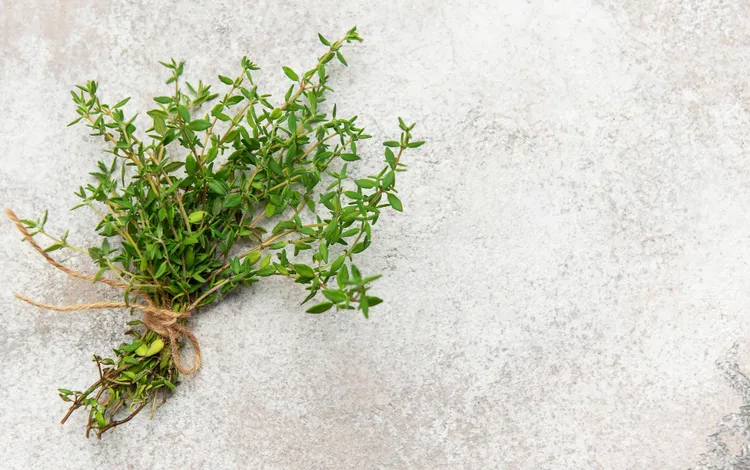
Thyme is probably the most quietly versatile herb in a home kitchen. It's not as showy as basil, not as polarizing as cilantro, and not as intense as rosemary - but it works in more dishes than almost any other herb, from a five-minute pan sauce to a braise that simmers for three hours, without ever really failing.
What Thyme Actually Tastes Like
Thyme has an earthy, slightly minty, slightly peppery flavor with a woody undertone - subtler than rosemary, less anise-forward than tarragon, and more savory than basil. That subtlety is exactly what makes it so flexible: it rarely dominates a dish the way a stronger herb can, which means it's hard to add too much of it by accident. It blends into the background of a dish more than it announces itself, which is also why it's such a common base note in spice blends and long-cooked dishes.
Thyme's small leaves are also its main practical quirk - they're tedious to strip from the woody stem individually, so most recipes either add whole sprigs and remove them before serving, or specify a rougher chop for smaller amounts.
Thyme Varieties
Common or French thyme is the default culinary variety and what most recipes mean by "thyme" without further specification. But there's real variety within the thyme family worth knowing about - lemon thyme brings a genuine citrus note useful in fish and lighter dishes, and creeping thyme is grown more as a groundcover than a culinary herb, though it's still technically edible. Our guide to thyme varieties breaks down which type to reach for depending on what you're cooking or growing.
Growing Thyme at Home
Thyme is a low, woody Mediterranean perennial that, like rosemary, wants full sun, lean soil, and minimal water once established. It's one of the more drought-tolerant herbs available, and it actually performs better in slightly poor, rocky soil than in rich garden beds - a rare case where less attentive gardening produces a better result.
Because thyme grows low and spreads outward rather than up, it also works well as a groundcover along a garden path or the edge of a raised bed, where stepping on it occasionally releases its fragrance rather than damaging the plant. Our full growing guide covers soil, sun, watering, and how to use thyme as both a culinary herb and a practical groundcover plant.
Unlike tarragon, thyme grows reasonably well from seed, though cuttings or nursery starts establish faster if you want to be cooking with it sooner rather than later.
Storing a Thyme Harvest
Thyme dries exceptionally well, similar to rosemary, holding onto most of its flavor through the drying process thanks to its low moisture, woody structure. That makes it one of the more forgiving herbs to have a surplus of. Our storage guide covers drying, freezing, and infusing thyme into honey or oil, along with how long each method holds up.
Cooking With Thyme
Thyme's biggest advantage over more delicate herbs is that it holds up to long cooking times without turning bitter or losing all its flavor - which is exactly why it shows up in braises, stews, and stocks as often as it does in quick preparations. A thyme and garlic braised short rib recipe is one of the best demonstrations of this: thyme sprigs go in at the start and simmer for hours, contributing a steady, earthy backbone to the whole dish rather than disappearing the way tarragon or basil would over the same cooking time.
On the other end of the spectrum, thyme also works fast. A classic thyme roast chicken uses the same compound-butter-under-the-skin technique as our tarragon and rosemary versions, but with thyme's more subtle, earthy character carrying the dish instead. And a lemon thyme roasted salmon shows how well the herb pairs with delicate fish when you lean on the citrusy lemon thyme variety specifically.
Thyme is also a natural match for mushrooms and rice-based dishes - a creamy thyme mushroom risotto leans into that earthy pairing, letting the thyme sit quietly in the background while the mushrooms and cheese do more of the obvious work. For something simpler, thyme honey roasted carrots pairs the herb's savory earthiness against a bit of sweetness, a combination that works especially well with root vegetables.
Thyme is also the backbone of one of the most useful DIY spice blends a home cook can make. Our homemade herbes de Provence recipe uses thyme as the anchor flavor alongside rosemary, savory, and lavender, and having a jar on hand saves a trip to the store any time a French-leaning recipe calls for it.
Beyond savory cooking, thyme has a genuine functional history worth knowing about - thyme-infused honey is both a useful cooking ingredient and a folk remedy for sore throats, since thyme has long-documented antibacterial properties. For baking, a no-knead thyme bread takes a nearly effort-free bread technique and gives it a savory, herby edge. And for something snackable, thyme roasted chickpeas turn a can of chickpeas into a genuinely good crunchy snack in about half an hour.
Thyme also does well cold - a creamy thyme vinaigrette rounds out the vinaigrette options across our herb guides, offering a milder, earthier alternative to the sharper tarragon version.
What to Pair With Thyme
Thyme's subtlety means it pairs with an unusually wide range of ingredients without clashing - chicken, beef, mushrooms, root vegetables, beans, tomatoes, and citrus (especially with lemon thyme) all work. It also blends easily with other herbs, including rosemary, parsley, and bay leaf, more so than a stronger herb like tarragon or rosemary can on their own. It even extends into sweeter territory in a way that surprises some cooks - honey and thyme is a genuinely good pairing, not just a novelty. Our pairing guide covers this in more depth, including a few combinations that don't work as well as you'd expect.
A Brief History
Thyme has a long history across Mediterranean and European cooking, with documented use going back to ancient Egypt, where it was used in embalming, and ancient Greece, where it was burned as incense and associated with courage - soldiers were said to bathe in thyme-infused water before battle. Its practical culinary role solidified over centuries of use in French, Italian, and broader European cooking, where its ability to survive long cooking times made it a natural fit for the slow-simmered stews and stocks that define a lot of traditional home cooking in those regions.
That same durability under heat is really the throughline of thyme's entire culinary identity - it's one of the few fresh herbs that behaves almost like a spice in terms of how well it holds up over time and heat, which is part of why it appears in so many long-cooked, slow-built dishes rather than only as a fresh garnish.
Common Mistakes to Avoid
The most common mistake with thyme is trying to strip every single leaf off the stem for a recipe that doesn't need it - for long-cooked dishes like soups, stews, and braises, it's much easier to add whole sprigs and fish them out (or let them dissolve into a puree) at the end than to spend five frustrating minutes stripping tiny leaves. Save the leaf-stripping for recipes where you actually need finely chopped thyme, like a roast chicken butter or a dressing, where the texture of whole stems or leaves would be out of place.
The second common mistake is assuming all thyme is interchangeable. Lemon thyme has a real citrus character that changes a dish in a specific way, and swapping it for common thyme (or vice versa) in a recipe built around that citrus note leaves the dish missing something. See the varieties guide for which type to reach for and why the distinction matters more than it might seem.
A third, more subtle mistake is underestimating how much dried thyme can carry a dish compared to fresh. Because thyme dries so well and its flavor actually concentrates somewhat in the drying process, a straight one-to-one swap of fresh for dried can leave a dish tasting slightly muted, while the reverse swap (dried for fresh) can occasionally overshoot if you're not careful. The general rule of using roughly a third of the amount when substituting dried for fresh holds fairly well with thyme, though it's worth tasting and adjusting rather than following the ratio blindly.
Thyme's Role Across Different Types of Cooking
It's worth noting just how broadly thyme shows up compared to a more specialized herb. In French cooking, it's a core component of a bouquet garni, the bundle of herbs tied together and added to stocks, soups, and braises. In Mediterranean cooking more broadly, it appears in marinades, roasted meats, and vegetable dishes. Even outside its traditional range, thyme turns up in some Middle Eastern spice blends like za'atar, where it's combined with sumac, sesame seeds, and other herbs into a completely different but equally central role. This breadth is a large part of why it's worth having on hand even if you don't cook French or Mediterranean food specifically - there's a reasonable chance it fits into whatever you're already making.
A Note on Buying Thyme
Fresh thyme is one of the most widely available fresh herbs at grocery stores, and like rosemary, it keeps well - a bunch wrapped loosely in the fridge can last two to three weeks. Because it dries so well, it's also one of the more forgiving herbs to buy in bulk if you find a good deal at a farmers market, since any surplus can go straight into a drying setup without much loss of quality. Look for sprigs with firm, vibrant leaves - thyme that's starting to yellow or has gone dry and brittle on the stem while still supposedly "fresh" has usually been sitting too long to be worth buying.
Thyme rarely gets singled out as a star ingredient the way tarragon or basil sometimes do, but it's arguably the most consistently useful herb in a home cook's rotation - reliable across roasting, braising, baking, and dressing, and hard to get wrong even for a beginner. Once you've cooked with it enough to notice how rarely it lets a dish down, it tends to become one of the herbs you keep on hand more or less permanently, fresh or dried.
Latest