Cooking for One: Fighting Loneliness in the Kitchen
Solo cooking can quietly reinforce loneliness - or it can become one of the most reliable acts of self-care in your week. The difference is mostly in how you approach it.
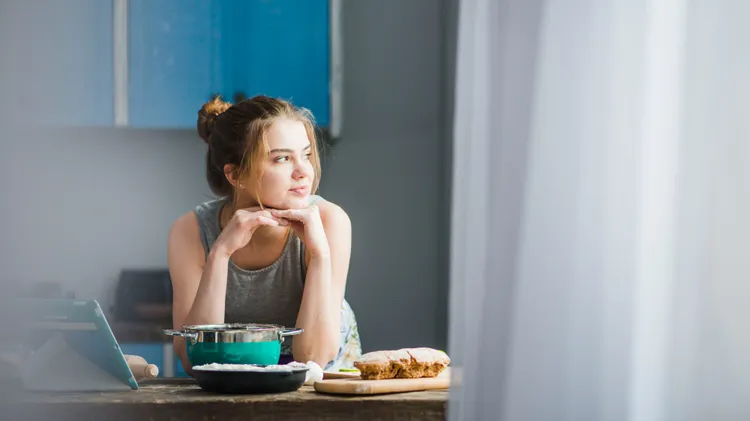
Cooking for one carries a particular psychological weight. The portion calculations, the half-used ingredients, the absence of someone to cook for - all of it can make the kitchen feel like a reminder of solitude rather than a space of nourishment. But this is almost entirely a framing problem, and framing is something you can change.
Why Solo Cooking Feels Different
Shared meals are one of the oldest human rituals. Across cultures and throughout history, eating together has been the primary context for social bonding. The evolutionary wiring that makes eating alone feel hollow is real - and it is worth acknowledging rather than dismissing. You are not being irrational if cooking for one feels melancholy sometimes.
But the feeling is not inevitable, and it is separable from the cooking itself. The question is whether you cook in a way that reinforces the sense of isolation or in a way that actively counters it.
The Self-Care Reframe
The most fundamental shift is from "cooking for nobody" to "cooking for myself." These are not the same thing. Cooking for yourself with the same care you would give a guest - choosing an ingredient you love, plating the food properly, eating without distractions - is an act of self-respect that has measurable effects on mood and wellbeing.
Research on self-compassion consistently shows that treating yourself as you would treat a good friend produces better mental health outcomes than self-criticism or self-neglect. Cooking a proper meal for yourself, rather than eating cereal over the sink, is a small but concrete expression of self-compassion.
Practical Rituals for Solo Cooking
Ritual is what separates a meaningful practice from a mechanical chore. A few things that work:
- Set the table, even for one. A plate, a glass, a napkin. The physical act of setting a place signals that this meal matters.
- Choose music or a specific podcast, not TV. Audio keeps you present with the food in a way that visual media does not. The kitchen becomes your space, not just background noise.
- Cook one thing that is purely for pleasure. Not the most efficient meal, not the most macro-optimised - something you genuinely want to eat. An egg and cottage cheese omelet with herbs you like. A bowl of leek, potato and lentil soup that smells like a proper autumn evening.
Using Cooking to Build Connection
Solo cooking does not have to mean isolated cooking. Cooking for others - bringing food to a friend, making a dish for a colleague, sharing a batch of something - uses the kitchen as a bridge to connection. The act of cooking with someone specific in mind activates the same prosocial reward circuits as actually being with them.
Batch cooking also has a social dimension: the slow-cooker red lentil soup makes four to six servings. Bring some to a neighbour. Leave some for a friend who is having a hard week. The cooking becomes relational even when done alone.
When Cooking for One Becomes a Problem
There is a difference between contentedly independent cooking and cooking alone as a symptom of withdrawal. If you have stopped cooking altogether, if you are eating the bare minimum with no enjoyment, or if the kitchen feels like an actively painful place - these are worth taking seriously as potential signals of depression or significant loneliness.
In that case, the starting point is not an ambitious solo cook but a deliberately simple one. Garlic scrambled eggs. A can of soup heated on the stove. The goal is to re-establish the kitchen as a space that is on your side, not a space that underlines what is missing.
For the full picture of how cooking relates to mental health and wellbeing, see the complete guide to cooking as a mental health practice.
Latest