How to Reheat Pasta Without It Getting Mushy or Dry
Pasta either dries into a clump or turns mushy on reheat. Here's how much liquid to add and which method to use for sauced pasta, dry noodles, and baked dishes.
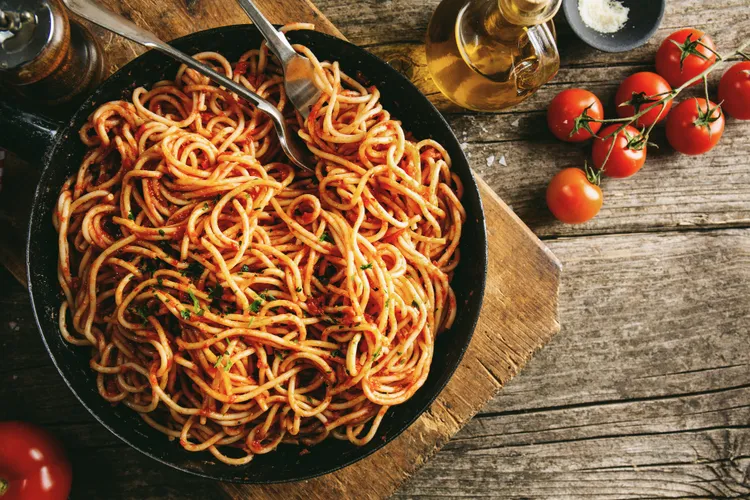
Pasta has two failure modes on reheat: it dries out and clumps together, or it turns mushy and falls apart. Which one happens depends mostly on whether it's sauced or dry, and on how much liquid you add back before reheating.
Sauced Pasta vs. Dry Pasta
Pasta that's already coated in sauce reheats more easily, since the sauce protects the noodles from direct heat. Plain, dry pasta (like a side of buttered noodles) needs a bit of added fat or water, or it will turn into a solid, dried-out block.
Stovetop Method (Best for Both Types)
Add the pasta to a skillet with a splash of water, broth, or extra sauce, about 2 tablespoons per serving. Cover and heat over medium-low, stirring occasionally, for 3-5 minutes until warmed through. The steam from the covered pan loosens the noodles without making them soggy.
Microwave Method
Add the same splash of liquid, cover the dish (a damp paper towel works fine), and microwave at 50-70% power in 30-second intervals, stirring between each. Full power tends to make the outer noodles rubbery while the center of the dish stays cold.
Why Pasta Gets Mushy the Second Time Around
Mushiness usually comes from either overcooking on the first pass or reheating with too much added liquid and too much time. Pasta keeps absorbing liquid even after it's been reheated, so it's better to add a little liquid at a time than to dump in a large splash and hope for the best.
Baked Pasta Dishes
Casseroles and baked pasta (lasagna, mac and cheese, baked ziti) do best in a 325°F oven, covered with foil, for 20-25 minutes. The foil keeps the top from drying out while the inside catches up to temperature.
How Long Reheated Pasta Lasts
Cooked pasta keeps for 3-5 days in the fridge. Sauced pasta generally reheats better than dry pasta, so if you're meal-prepping, it's worth tossing noodles with at least a light coating of oil or sauce before storing.
A dish like creamy vegan chili pasta reheats especially well using the stovetop method, since the coconut milk sauce keeps the noodles from drying out even after a day or two in the fridge.
For the reheating rules that apply across every dish type, check out the complete meal-prep reheating guide.
Latest