How to Reheat Salmon Without Drying It Out
Salmon goes chalky fast on high heat. Here's the low-and-slow oven method that keeps it moist, plus why the microwave is the wrong tool for the job.
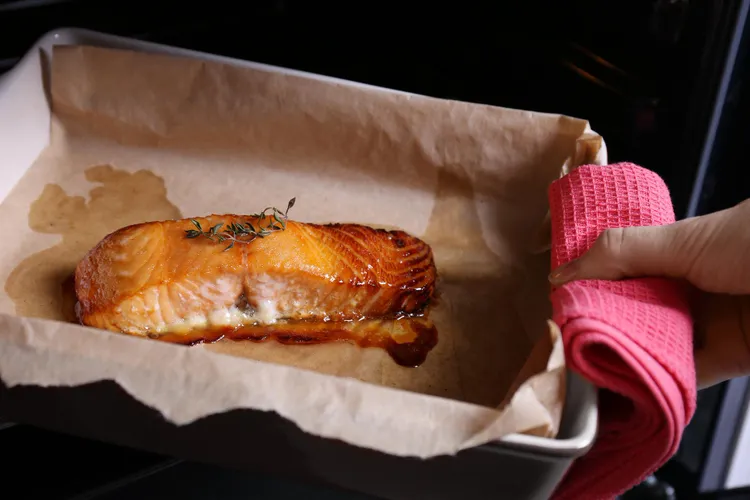
Salmon is more forgiving than chicken in some ways and less forgiving in others. It reheats well when you're gentle with it, but it goes from tender to chalky in a matter of seconds if you're not, and the microwave has a reputation for leaving the whole kitchen smelling like fish.
Why Salmon Needs Lower Heat Than Chicken
Salmon's fat renders out fast under high heat, which is exactly what makes it dry and chalky on a second reheat. It also cooks through much faster than chicken, so the margin between "warmed through" and "overcooked" is narrower.
The Best Method: Oven at Low Temperature
Preheat your oven to 275°F. Place the salmon on a lined baking sheet, drizzle with a little olive oil or a squeeze of lemon juice, and cover loosely with foil. Reheat for 10-15 minutes, until it's just warmed through. The low temperature keeps the fat from rendering out too fast.
Air Fryer for a Crispier Result
If your salmon had crispy skin originally, an air fryer at 300°F for 3-4 minutes brings back some of that crispness without drying out the flesh, since the short cook time limits how much moisture escapes.
Why the Microwave Is the Worst Option for Salmon
Microwaving salmon cooks it unevenly and releases strong-smelling compounds faster than gentler methods do, which is where the "fishy smell" complaint comes from. If it's your only option, cover the salmon, use 50% power, and check it every 20 seconds. It genuinely can be worth the extra minute to use the oven instead.
How Long Reheated Salmon Lasts
Cooked salmon keeps for 3 days in the fridge. It doesn't freeze and reheat as well as chicken does, since the texture change is more noticeable, so it's best eaten within a couple of days of cooking.
A dish like lemon-herb baked salmon with tomatoes and shallots reheats particularly well this way, since the tomato mixture keeps extra moisture right where the fish needs it.
For general reheating rules that apply across proteins, see the full meal-prep reheating guide.
Latest