How to Reheat Soup or Stew Without Separating the Sauce
Broth-based soups reheat easily, but cream-based ones can break if heated too fast. Here's how to keep the texture smooth on the second bowl.
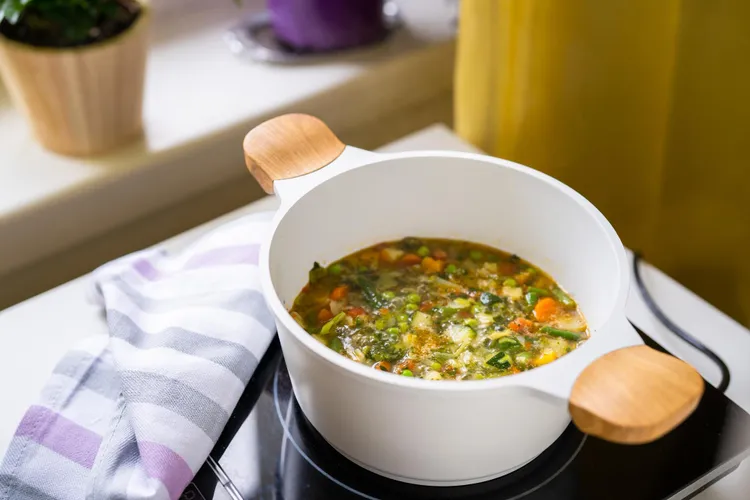
Soups and stews are some of the easier leftovers to reheat, with one major exception: cream-based soups can separate and turn grainy if you heat them too fast or let them boil.
Broth-Based Soups and Stews
These are the most forgiving reheat of anything in this guide. Warm them in a pot over medium heat, stirring occasionally, until they're simmering, or microwave in a covered bowl in 1-2 minute bursts, stirring between each. There's very little that can go wrong here since there's no delicate emulsion to break.
Why Cream-Based Soups Separate
Cream and milk-based soups can "break" (separate into liquid and curdled solids) when they're heated too fast or brought to a full boil. The proteins in the dairy tighten up under high heat the same way they do in meat, squeezing out the fat and liquid instead of staying blended.
The Best Method for Cream-Based Soups
Reheat cream-based soups over low heat on the stovetop, stirring frequently, and pull the pot off the burner the moment it's steaming, well before it reaches a boil. If it starts to look grainy or separated, whisking in a small splash of cold cream or milk off the heat can often bring it back together.
Microwave Method for Cream-Based Soups
Use 50% power and stir every 30-45 seconds. The lower power setting gives the soup time to warm evenly instead of overheating the parts closest to the container's edge, which is usually where separation starts.
Reheating Chunky Stews
Stews with larger pieces of meat and vegetables reheat well on the stovetop over medium-low heat, covered, for about 10 minutes, stirring occasionally so the bottom doesn't scorch before the rest of the pot catches up to temperature.
How Long Reheated Soup Lasts
Soups and stews keep for 3-4 days in the fridge and up to 3 months in the freezer. Cream-based soups don't freeze quite as well, since the dairy is more likely to separate after thawing.
A dish like pea and potato soup, which is finished with a bit of sour cream, is a good example of a soup worth reheating low and slow rather than microwaving on high.
For general reheating rules across other dishes, see the full meal-prep reheating guide.
Latest