Malaysian Fried Rice (Nasi Goreng): The Weeknight Version
Malaysian nasi goreng is faster and more flavourful than most fried rice you've had - day-old rice, shrimp paste, a couple of eggs, and high heat. Ready in 15 minutes, around 450 kcal per serving.
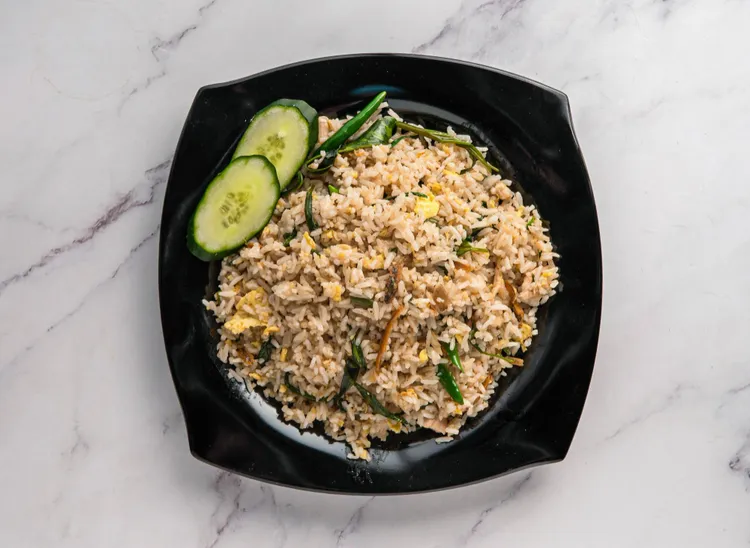
The key variables are simple: cold rice (fresh rice turns to mush), a hot pan, and belacan or shrimp paste to give it the savoury depth that separates Malaysian nasi goreng from generic fried rice. Everything else is adjustable.
Ingredients (serves 2)
- 2 cups cooked jasmine rice, refrigerated overnight (or at least 4 hours)
- 2 eggs
- 100g peeled prawns or diced chicken (optional)
- 1/2 tsp belacan (shrimp paste), or 1 tsp shrimp paste from a jar
- 2 tbsp kecap manis (sweet soy sauce)
- 1 tbsp light soy sauce
- 1 tbsp sambal oelek or homemade sambal (adjust for heat)
- 3 shallots, sliced thin
- 3 garlic cloves, minced
- 2 tbsp neutral oil
- Spring onions and sliced cucumber to serve
Instructions
- Get your wok or largest frying pan very hot - 2 minutes on high heat before adding oil.
- Add oil. When it shimmers, add shallots and garlic. Stir-fry 1 minute until softened.
- Add belacan and mash it into the oil with the back of your spatula. Cook 30 seconds.
- If using protein, add it now. Cook until just done - 2-3 minutes for prawns, 4 minutes for chicken.
- Push everything to the side. Add a little more oil to the cleared space, crack in the eggs, and scramble until just set. Break up and mix through.
- Add the cold rice. Use your spatula to break up any clumps. Press the rice against the hot pan surface - this is how you get colour and wok hei.
- Add kecap manis, soy sauce, and sambal. Toss everything together for 2-3 minutes until the rice is evenly coloured and fragrant.
- Taste. Adjust with soy for saltiness, kecap manis for sweetness, sambal for heat.
- Serve immediately with spring onions, cucumber, and a fried egg on top if you want the full presentation.
Nutrition (per serving, no added protein)
- Calories: ~450 kcal
- Protein: ~12g
- Carbs: ~68g
- Fat: ~14g
Add 100g prawns: approximately +90 kcal, +18g protein. Add 100g chicken: approximately +165 kcal, +25g protein.
The Day-Old Rice Rule
Freshly cooked rice has too much moisture. It steams rather than fries, goes gluey, and sticks in the wok. Day-old rice from the fridge has dried out slightly, so the grains separate and fry properly. If you need to use fresh rice, spread it on a tray and fan it for 30 minutes, or blast it briefly in the microwave uncovered to drive off steam. It's not ideal but it works.
Wok Hei at Home
Wok hei is the slight smokiness and char that comes from very high heat. Home stoves rarely get hot enough to replicate hawker stall wok hei fully, but you can get close: use the largest burner at maximum heat, cook in small batches (one or two portions at a time), and don't move the rice constantly - let it sit against the hot surface for 20-30 second intervals before tossing.
Meal Prep Notes
Nasi goreng doesn't reheat well - the rice dries out and loses the wok fragrance. Make it fresh each time. The prep work takes longer than the cook itself, so batch-prep aromatics in advance if you're making it multiple nights in a week. For a sauce to keep in the fridge all week, the sambal guide covers a batch-cook version that keeps for two weeks. For a broader introduction to Malaysian cooking, see the Malaysian home cooking guide.
Latest