Malaysian Sambal: The All-Purpose Chilli Paste You'll Use on Everything
Sambal is Malaysia's essential chilli condiment and cooking ingredient - a paste of dried chilies, shallots, garlic, and belacan that works as a table sauce, a stir-fry base, and a seasoning. Make a batch on the weekend and it changes the rest of the week's cooking.
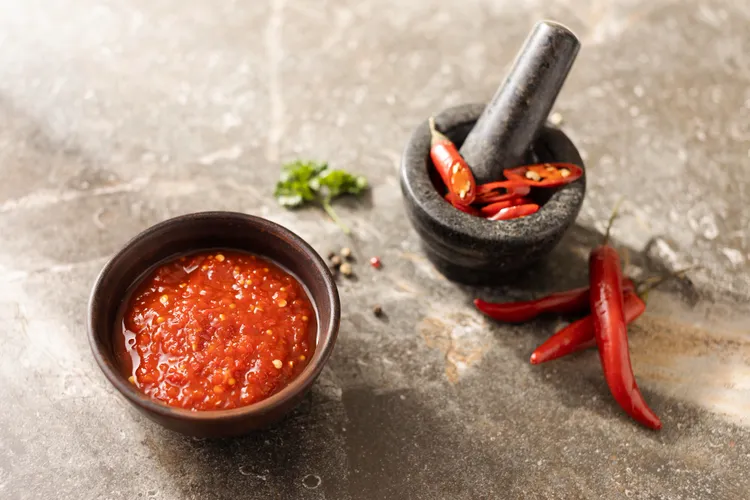
There are dozens of regional sambal variations across Malaysia and Indonesia. This guide focuses on the two most useful for home cooking: sambal belacan, a raw condiment served at the table, and sambal tumis, the cooked version that goes into nasi lemak, stir-fries, and dozens of other dishes. They share some ingredients but are built differently and used differently.
Sambal Belacan (Raw Condiment)
The simplest sambal. Pounded rather than cooked. Sharp, spicy, and sour - eaten in small amounts alongside rice, grilled fish, and vegetables.
Ingredients
- 6-8 fresh red chilies (bird's eye for maximum heat, large red for milder)
- 1 tsp belacan, toasted (wrap in foil and toast in a dry pan 2 minutes per side)
- 2 tbsp lime juice, freshly squeezed
- 1 tsp sugar, salt to taste
Method
Pound chilies and belacan in a mortar until broken down but still slightly chunky - this is not a smooth paste. Add lime juice, sugar, and salt. Taste: it should be spicy, tangy, salty, and slightly sweet. Serve immediately or refrigerate for up to 3 days.
Sambal Tumis (Cooked, for Cooking With)
This is the batch-cook sambal that goes into nasi lemak, fried rice, noodles, and eggs. More complex than sambal belacan, with more depth and sweetness, and it keeps much longer.
Ingredients
- 15 dried red chilies, soaked in hot water 20 minutes, drained
- 5 shallots, roughly chopped
- 4 garlic cloves
- 1 tsp belacan
- 3 tbsp tamarind paste
- 2 tbsp palm sugar or brown sugar
- 4 tbsp neutral oil
- Salt to taste
Method
- Blend dried chilies, shallots, garlic, and belacan with 2 tbsp water until smooth.
- Heat oil in a wok or saucepan over medium heat. Add paste. Fry, stirring almost constantly, for 12-15 minutes. The paste will darken from orange-red to brick red and the oil will separate from the paste around the edges. This is the tumis step - don't rush it.
- Add tamarind paste and sugar. Stir through and cook for 5 more minutes until thick and sticky.
- Season with salt. Cool and transfer to a jar.
Heat Level Adjustment
For this quantity of dried chilies, the sambal will be moderately hot. To reduce heat: remove the seeds from the soaked chilies before blending, or swap some dried chilies for dried ancho/guajillo which are milder. To increase heat: add 2-3 bird's eye chilies to the blend.
Storage and Shelf Life
- Sambal belacan: 3 days refrigerated. Doesn't freeze well (lime flavour degrades).
- Sambal tumis: 2-3 weeks refrigerated in a sealed jar with a thin layer of oil on top. Freezes well for 3 months - portion in an ice cube tray for convenience.
How to Use Sambal Tumis
Sambal tumis is the base for nasi lemak's condiment - serve 1-2 tbsp per person alongside the rice. It's also the starting sauce for many stir-fries: fry 2-3 tbsp sambal in hot oil, add protein and vegetables, season and serve. Use it as a flavouring for fried rice instead of chilli sauce. Stir into coconut milk for a quick curry base. Once you have a jar in the fridge, it becomes the answer to "what should I cook tonight?"
Nutrition (per tbsp sambal tumis)
- Calories: ~45 kcal
- Fat: ~3.5g
- Carbs: ~3g
Sambal is the most versatile ingredient in Malaysian cooking. For the broader context of how it fits into dishes like nasi lemak, nasi goreng, and laksa, see the Malaysian home cooking guide.
Latest